How to Plan a 4th of July Corporate Picnic Your Entire Team Will Look Forward To
The Picnic Nobody Wanted to Attend
You've been there. It's the week before the company's big summer event and the RSVP count is embarrassingly low. Your inbox has one reply from HR, two from the people who always show up to everything, and a suspicious amount of silence from the rest of the team. Someone whispers in the break room that last year's cookout was 'fine, I guess' — and you know exactly what that means.
Planning a 4th of July corporate picnic that people actually want to attend is harder than it sounds. Between juggling dietary restrictions, coordinating schedules, keeping things professional-but-fun, and making sure Karen from Accounting doesn't spend the whole afternoon complaining about the potato salad — it's a lot. But when it works? It genuinely builds team morale, strengthens relationships across departments, and gives people a reason to feel good about where they work.
This guide is your blueprint. Follow these steps and you'll go from 'mandatory fun' to the event people talk about all summer.
Step 1: Lock In the Logistics Early — Like, Really Early
The biggest mistake corporate event planners make is underestimating how fast venues, catering companies, and party rental services book up around the 4th of July. You're not the only company with this idea. Start planning at least 6–8 weeks out.
Choose the Right Venue
Consider your team size and culture. A rooftop terrace works for a 30-person tech startup; a sprawling public park shelter works better for a 200-person manufacturing company. Look for venues that offer:
- Covered or shaded areas (July heat is no joke)
- Accessible parking or proximity to public transit
- Restroom facilities — non-negotiable
- Space for both activities and relaxed seating
- Proximity to a fireworks display if you want to make an evening of it
Pro tip: If you're going the public park route, reserve your shelter the moment reservations open. In most cities, popular park shelters for July 4th weekend are gone by April.
Set a Realistic Budget
Break your budget into categories: venue, food and beverages, activities and entertainment, decorations, and a contingency fund (trust us on this one). A rough benchmark for a mid-range corporate picnic is $50–$100 per person, though this varies widely by region and company size.
Step 2: Send Invitations That Actually Get a Response
Here's an uncomfortable truth: a lot of corporate events suffer from low attendance not because people don't want to come, but because the invitation process is a mess. An email thread with 47 people CC'd, three different 'reply all' chains, and a Google Form that stopped working — that's a recipe for confusion and no-shows.
Use a dedicated event RSVP tool to send clean, professional invitations that make it effortless for team members to respond. Platforms like RSVPlinks let you create a custom event page with all the details — date, time, location, dress code, what to bring — and collect RSVPs in one organized place. You can track who's coming, who's not, and who hasn't responded yet, so you can follow up without hunting through email threads.
Send your invitations at least 3 weeks in advance. Include:
- Date, time, and exact location with a map link
- Parking or transit instructions
- What's being provided (food, drinks, activities)
- A clear RSVP deadline — and actually enforce it
- A note about plus-ones or family members if applicable
A well-designed invitation signals that this event was planned thoughtfully — and that alone increases the likelihood people will show up.
Step 3: Plan Food That Works for Everyone
Nothing derails a picnic faster than a spread that half your team can't eat. In a diverse workforce, you'll likely have vegetarians, vegans, people with gluten sensitivities, halal or kosher dietary needs, and people who are just plain picky. The good news: planning an inclusive menu isn't complicated — it just requires intention.
Build a Menu Around Flexibility
- Protein options: Classic burgers and hot dogs, plus veggie burgers and grilled chicken. Label everything clearly.
- Sides: Corn on the cob, watermelon, coleslaw, pasta salad, and fresh fruit are crowd-pleasers that cover most dietary needs.
- Accommodations: Have a clearly labeled allergen-free station if possible. Communicate this in your invitation so people with severe allergies know they're covered.
- Drinks: Offer plenty of non-alcoholic options — sparkling water, lemonade, iced tea. If you're serving alcohol, make it optional and never the centerpiece.
Consider hiring a local catering company that specializes in outdoor events. They'll handle the logistics of keeping food at safe temperatures — something that becomes genuinely dangerous in July heat.
Step 4: Design Activities That Don't Make People Cringe
The phrase 'team-building activities' has a bad reputation for good reason. Forced trust falls and awkward icebreakers are the fastest way to make people wish they'd stayed home. The goal is to create optional fun — activities that people can join if they want, or skip if they'd rather just eat and chat.
Winning Activity Ideas for a 4th of July Picnic
- Classic lawn games: Cornhole, bocce ball, ladder toss, and giant Jenga are universally loved, require no explanation, and work across all fitness levels.
- Trivia contest: A short 4th of July or American history trivia game with a fun prize (gift cards, extra PTO, a silly trophy) gets people engaged without being physically demanding.
- Photo booth: Set up a backdrop with patriotic props — flags, star-shaped glasses, signs. People will use it, and you'll get great content for the company's social media.
- Kids' corner: If families are invited, a dedicated space with bubbles, sidewalk chalk, and simple games keeps children entertained and parents relaxed.
- Raffle or prize draw: Collect raffle tickets at RSVP or arrival. Draw prizes throughout the afternoon to keep energy up.
The key is variety. Not everyone wants to play cornhole, but everyone wants to feel like there's something there for them.
Step 5: Nail the Patriotic Atmosphere Without Going Overboard
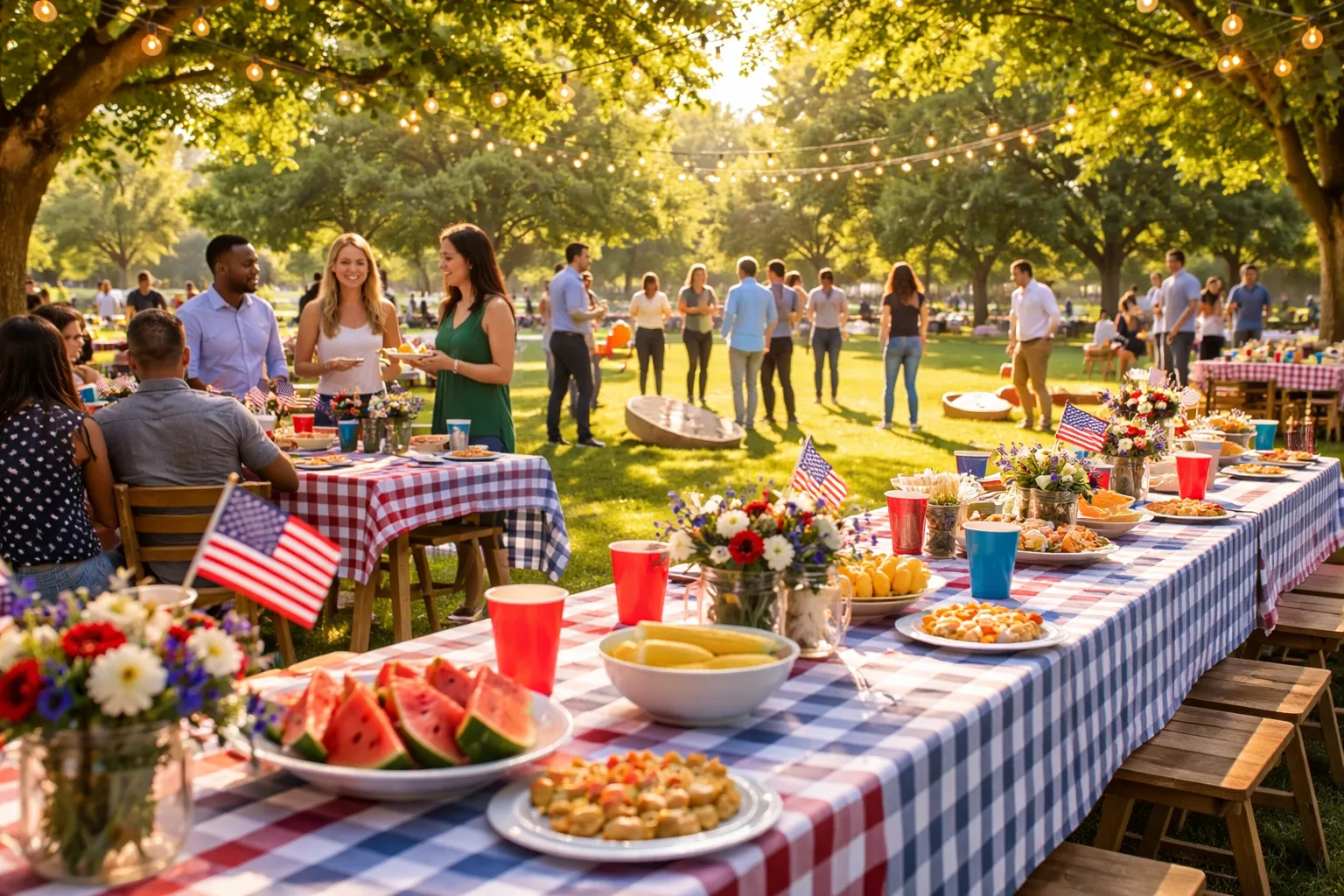
You want festive, not a theme park. A cohesive red, white, and blue color scheme goes a long way: tablecloths, napkins, balloons, and a few simple centerpieces (think mason jars with small flags and flowers) create a polished look without requiring a design degree or a massive budget.
Create a playlist in advance — a mix of classic summer hits and upbeat patriotic songs keeps the energy right without anyone having to think about it. Assign someone to manage the speaker and volume throughout the event.
If your event runs into the evening, check whether your venue has a view of a local fireworks display. There's no better way to close out a 4th of July event than watching fireworks together — it's a natural, memorable ending that costs you nothing extra.
Step 6: Follow Up After the Event
The event isn't over when the last burger is eaten. A quick follow-up email the next day — thanking everyone for coming, sharing a few photos, and maybe including a short feedback survey — shows your team that the effort was genuine and that their experience matters.
This also sets the tone for next year. People who felt seen and appreciated at this year's event will be the first to RSVP next time.
Your 3 Next Steps Starting Today
You don't need to have everything figured out right now. Here's what to do in the next 48 hours:
- 1. Book your venue. Even if you haven't finalized the details, securing a date and location is the single most important first step. Everything else builds from there.
- 2. Set up your RSVP page. Head to RSVPlinks, create your event page, and get your invitation ready to send. The earlier you collect RSVPs, the better you can plan headcount for food and activities.
- 3. Draft your menu and activity list. Send a quick internal survey asking about dietary restrictions and activity preferences. Two questions, five minutes, and you'll have the data you need to make everyone feel included.
A 4th of July corporate picnic doesn't have to be the event people tolerate. With the right planning, it can be the highlight of the summer — the kind of day your team actually talks about. Start now, and make it one worth remembering.