
How to Host a 4th of July Lakeside Party and Know Exactly Who Is Coming
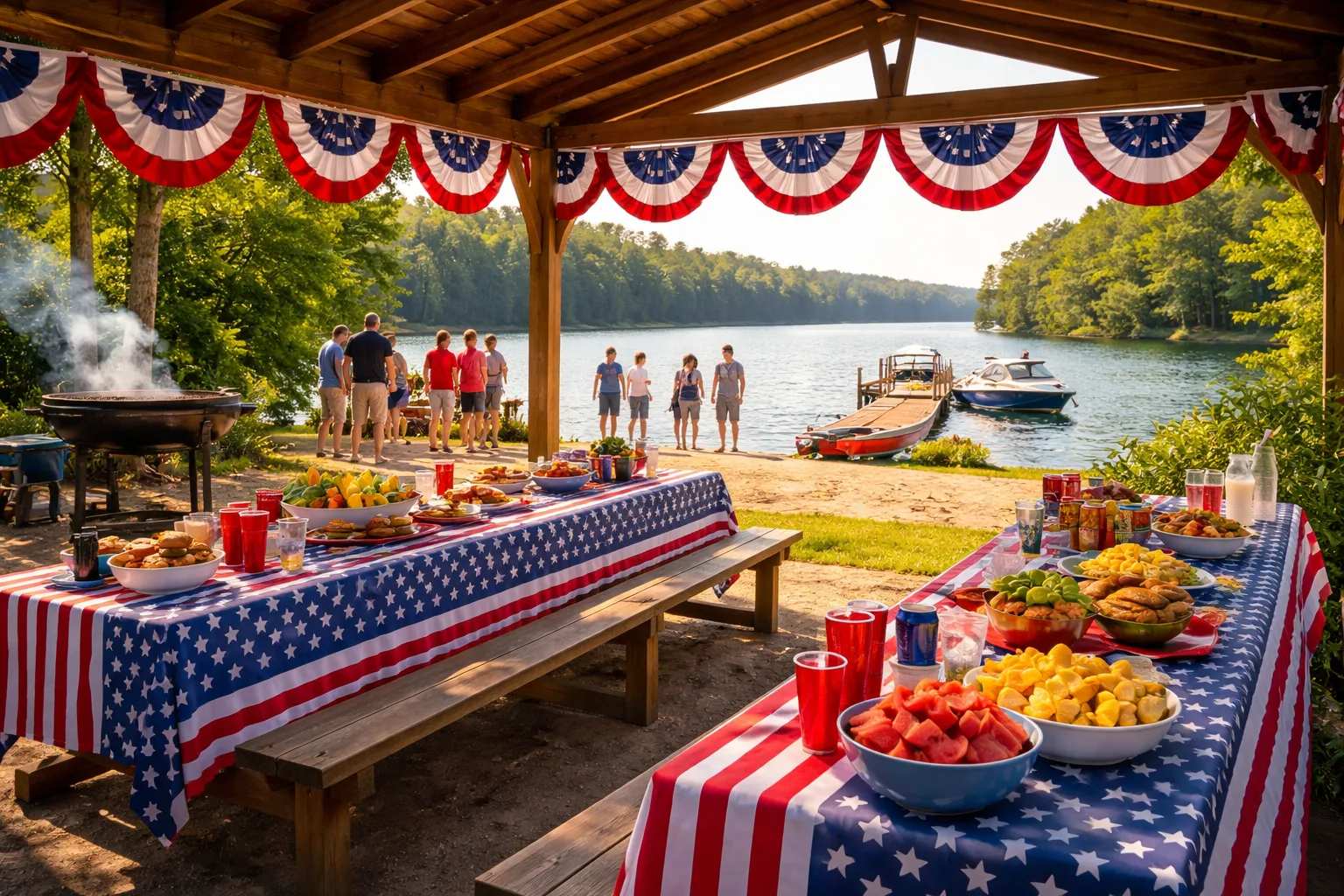
The Chaos Nobody Warns You About
You've reserved the best lakeside pavilion in town. You've ordered 60 hot dogs, 40 burgers, and enough potato salad to fill a canoe. The fireworks spot is marked with lawn chairs. And then — the day before your 4th of July party — your phone starts blowing up. 'Hey, can I bring my cousin?' 'We might be late, save us spots?' 'Wait, is this Saturday or Sunday?'
By the time the first sparkler gets lit, you've got 35 people when you planned for 50, three uninvited dogs, and a cooler that ran out of ice two hours ago. Sound familiar? Hosting a lakeside 4th of July party is one of the most rewarding summer experiences you can create — but without a solid guest management plan, it can spiral into expensive, stressful chaos faster than a bottle rocket.
This guide will walk you through exactly how to plan a memorable lakeside Independence Day celebration and — most importantly — how to know precisely who is showing up before you buy a single hot dog bun.
Why Lakeside 4th of July Parties Are Uniquely Tricky to Plan
A backyard birthday party has a fence. A restaurant dinner has a reservation count. But a lakeside party? It's open-air, festive, and almost magnetically attracts the 'I'll just show up and see' crowd. Add in the holiday weekend chaos — family road trips, competing BBQs, last-minute weather checks — and your headcount can swing wildly in either direction.
There are also real logistical stakes at play:
- Pavilion or permit capacity limits — Many lakeside parks cap the number of guests allowed under a reserved shelter.
- Food and drink quantities — Catering for 30 vs. 60 people is a completely different budget conversation.
- Parking and boat access — If guests are arriving by water, you need to coordinate slips and dock space.
- Fireworks viewing spots — Prime real estate on a lake fills up fast. You can't hold 20 chairs for maybes.
- Safety headcounts — If kids are swimming, you need to know exactly how many children are in the water.
This is why a casual 'text me if you're coming' approach simply doesn't cut it for a lakeside 4th of July event.
Step 1: Lock In Your Location Details First
Before you send a single invitation, nail down your venue specifics. Know your pavilion's maximum capacity. Confirm whether outside alcohol is permitted. Check if there's a designated swimming area and whether lifeguards are on duty. Find out parking limits and whether boat docking is available.
Why does this matter for RSVPs? Because your invitation needs to contain accurate information — and your RSVP form should collect relevant details. For example, if you're hosting at a lake with limited parking, you'll want to ask guests how they're arriving: by car, boat, or carpool. That's data you can only gather if you have a structured RSVP process.
Pro tip: Set your guest cap at 10–15% below your venue's maximum. This gives you buffer room for the inevitable 'surprise plus-ones.'
Step 2: Send Digital Invitations Early — and Make RSVPs Non-Negotiable
For a holiday weekend event, send your invitations at least 3 weeks in advance. The 4th of July draws competing plans like moths to a flame — family reunions, neighborhood cookouts, concert tickets. If you wait until two weeks out, you'll lose half your potential guests to prior commitments.
Here's the critical move most hosts skip: make RSVPs a clear requirement, not a polite suggestion. Instead of 'Let us know if you can make it,' your invitation should say: 'Please RSVP by June 25th — we need your headcount for food, parking, and lake access.' Give people a real reason to respond.
Using a platform like RSVPlinks makes this seamless. You can create a custom event page with your lake party details, embed a response form that captures names, headcounts, dietary needs, and arrival method, and then share a single clean link across text, email, or social media. Guests click, fill in their info in under a minute, and you get a live dashboard of confirmed attendees — no spreadsheet juggling required.
Step 3: Ask the Right Questions on Your RSVP Form
A generic 'Yes or No' RSVP won't give you the information you actually need to host a lakeside party. Your form should collect:
- Full name and number of guests attending (adults and children separately)
- Dietary restrictions or allergies — critical for food planning
- Arrival method — car, boat, or rideshare — so you can manage parking and docking
- Estimated arrival time — especially useful if you're coordinating a group boat ride or shuttle from a parking lot
- Whether they'll be swimming — important for safety and towel/life jacket logistics
Imagine you ask about arrival method and discover that 8 of your 40 guests are arriving by boat. Now you know to coordinate dock space in advance rather than scrambling on the day. That one question saves you a genuine headache.
Step 4: Set a Firm RSVP Deadline and Follow Up
Set your RSVP deadline 7–10 days before the event. This gives you time to finalize food orders, confirm pavilion headcount with the park, and arrange any rentals — kayaks, paddleboards, extra tables.
After your deadline passes, send a single, friendly follow-up to non-responders. Something like: 'Hey! We're finalizing our food order for the lake party — if you're planning to join us, please RSVP by tomorrow so we can make sure you're counted!' Keep it warm but clear. After that follow-up, plan your event around confirmed numbers only. The 'I'll probably come' crowd is not your responsibility to accommodate.
With RSVPlinks, you can send automated reminder messages to guests who haven't responded — saving you the awkward individual text messages to 20 different people.
Step 5: Plan Your Food and Drink Around Confirmed Numbers
Once you have your confirmed headcount, use the classic lakeside party formula as your starting point:
- Proteins: Plan for 2 servings per adult, 1 per child (hot dogs, burgers, or grilled chicken)
- Sides: One large serving bowl of each side dish per 8–10 guests
- Drinks: 3–4 beverages per person over a 4–5 hour party (water, sodas, and adult beverages combined)
- Ice: 1–1.5 pounds of ice per person — always more than you think you need on a July afternoon
- Dessert: Classic red, white, and blue options — strawberry shortcake, blueberry pie, or flag-themed cupcakes work perfectly
If your RSVP form flagged three guests with gluten allergies and one with a shellfish allergy, you can plan accordingly — labeling dishes clearly and ensuring those guests have safe options. This is the difference between a host who 'threw a party' and one who made every guest feel genuinely welcomed.
Step 6: Create a Day-Of Arrival Flow
Even with perfect RSVPs, lakeside parties can get chaotic at arrival time — especially when guests are pulling in from multiple directions, some by car and some by boat. Create a simple arrival plan:
- Designate a 'welcome point' — a specific spot at the pavilion entrance where guests check in
- Have a printed or phone-accessible guest list so you can track who has arrived
- Assign a friend or family member as the 'dock coordinator' if guests are arriving by water
- Set up a clear signage path from the parking area to your pavilion
Knowing your confirmed guest list in advance means you'll notice immediately if a family of four hasn't shown up by the time food is served — and you can check in rather than wondering if they were ever coming.
Step 7: Build In a Fireworks Viewing Plan
The whole point of a lakeside 4th of July party is that spectacular water-reflected fireworks show. Don't leave this to chance. Based on your confirmed headcount, reserve your viewing area early in the day — lay out blankets, set up chairs, and mark your space before the crowds arrive. Calculate exactly how much space you need per person (roughly 3–4 feet of blanket space per adult) and set up accordingly.
If you've done your RSVP homework, you'll know you're expecting 42 people — not a vague 'around 40 to 50.' That precision means your viewing area is the right size, your food is the right quantity, and your evening runs smoothly instead of frantically.
Three Things to Do Today
If your 4th of July lake party is on the horizon, here's where to start right now:
- 1. Lock in your venue and confirm capacity limits today — don't wait until invitations go out to discover there's a 40-person cap on your pavilion.
- 2. Set up your digital invitation and RSVP form — use a tool like RSVPlinks to build a custom event page, add your specific questions (arrival method, dietary needs, swimming plans), and share the link with your guest list this week.
- 3. Set your RSVP deadline for at least 7 days before the event — and commit to planning your food, space, and logistics around confirmed numbers only, not hopeful estimates.
A lakeside 4th of July party is one of summer's greatest gifts — the water, the sunshine, the fireworks, the people you love gathered in one beautiful place. The only thing that should be unpredictable is how stunning the fireworks look reflected on the water. Everything else? That's entirely plannable. Start with your RSVPs, and the rest falls into place.