
How to Plan a Back-to-School Night Open House Parents Will Genuinely Enjoy (Not Just Endure)
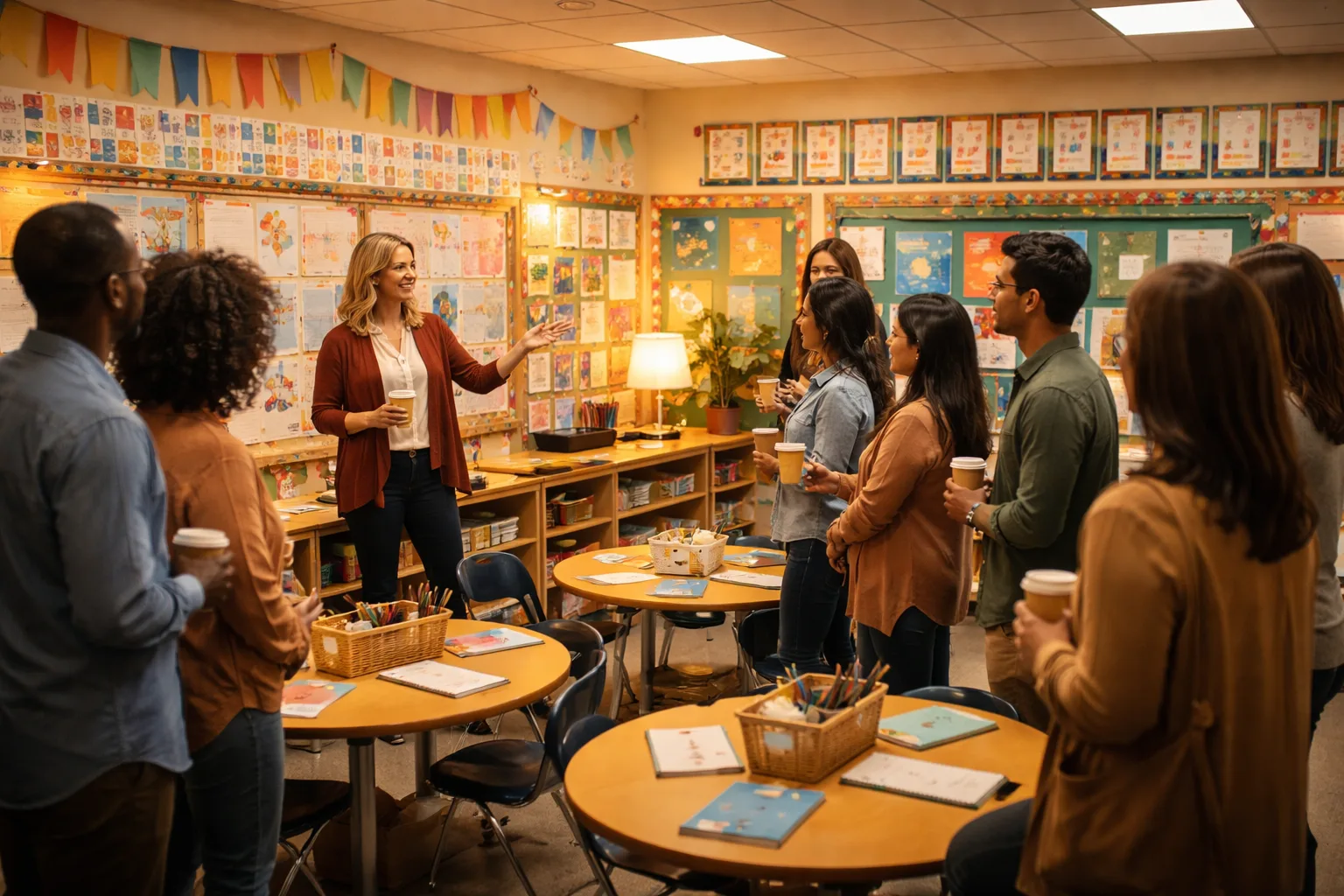
The Open House Nobody Wanted to Attend
Picture this: It's 6:47 PM on a Tuesday. A parent has rushed straight from work, skipped dinner, found parking three blocks away, and is now sitting in a plastic chair designed for an eight-year-old while a teacher reads — word for word — from a printed syllabus they could have emailed. By 7:15, half the room is sneaking glances at their phones. By 7:30, the parent is mentally drafting their grocery list. By 8:00, they leave having learned almost nothing useful, vowing to skip next year.
Sound familiar? Back-to-School Night open houses have a reputation problem. They're often treated as a bureaucratic checkbox — something schools have to do rather than something they want to do well. The result? Low attendance, disengaged parents, and a missed opportunity to build the kind of school-family partnership that actually improves student outcomes.
The good news: it doesn't have to be this way. With thoughtful planning, the right structure, and a few smart tools, you can turn Back-to-School Night into an event parents genuinely look forward to — and talk about positively for weeks.
Why Back-to-School Night Actually Matters
Before we get into the how, let's be clear about the why. Research consistently shows that parental engagement is one of the strongest predictors of student success. Back-to-School Night is often the first real impression parents get of a teacher and classroom environment. Get it right, and you build trust that carries through the entire school year. Get it wrong, and you signal — unintentionally — that their time and involvement don't really matter.
For school administrators, a well-attended, well-reviewed open house also boosts community confidence in the school. For teachers, it means fewer misunderstandings, fewer frustrated emails, and more parents who are genuinely on your side when challenges arise.
Step 1: Start With a Real Invitation Strategy
Most schools send home a paper flyer — or a single email — and call it done. Then they're puzzled when only 40% of families show up. Attendance starts with communication, and communication in 2024 means meeting parents where they are: on their phones, on multiple platforms, with reminders that don't get buried.
Here's a concrete approach:
- Send a personalized digital invitation at least two weeks out. Generic mass emails feel like spam. A message that says "We'd love to see you at Emma's classroom on September 12th" feels like a real invitation.
- Include an RSVP link. This is a game-changer. When parents RSVP, they're psychologically committed. They've made a small decision that increases follow-through. Platforms like RSVPlinks make it easy to create a professional event page with RSVP functionality in minutes — no tech skills required.
- Send two reminders: one five days before, one the morning of the event. Keep them short, warm, and specific about what parents will gain by attending.
- Offer a multilingual option if your school community includes non-English-speaking families. A beautiful invitation in a language a parent can't read is no invitation at all.
Real-world example: A third-grade teacher in Austin sent personalized RSVPs through a digital platform with a simple one-click response. She got 78% attendance — nearly double the school average — simply because parents felt personally invited and could confirm in seconds without making a phone call.
Step 2: Design the Evening Around Parent Needs, Not Teacher Convenience
The most common mistake in Back-to-School Night planning is designing the agenda around what's easy for staff rather than what's valuable for parents. Ask yourself: What do parents actually want to know?
Parents consistently report they want answers to four core questions:
- Will my child be safe, seen, and supported here?
- What does a typical day actually look like?
- How will I know if my child is struggling?
- How can I help at home without doing their homework for them?
Structure your presentation around these questions. Ditch the policy recitation. Instead:
- Show a 60-second video clip of a typical classroom moment. Parents will feel connected instantly.
- Walk through one real assignment from last year so parents understand expectations concretely.
- Explain your communication style — when you respond to emails, how you handle concerns — so parents know exactly what to expect.
- Reserve 10–15 minutes for genuine Q&A, not the last two minutes when everyone's already gathering their bags.
Step 3: Make the Logistics Frictionless
Friction kills attendance and enjoyment. Every obstacle between a parent and the event — confusing parking, unclear schedules, no childcare — is a reason not to come, or a reason to leave frustrated.
- Provide clear parking instructions in your invitation. Better yet, coordinate with a nearby lot or church parking area if school parking is limited.
- Offer a childcare option in the gym or library staffed by older students earning service hours. This removes the single biggest barrier for many families.
- Use a clear, printed schedule posted at the entrance. If parents are visiting multiple classrooms, a color-coded rotation guide prevents chaos.
- Start and end on time. Nothing says "we respect your time" like actually respecting their time. If you say 7:00–8:00, mean it.
Real-world example: One middle school in Chicago introduced a simple rotation system with laminated color-coded cards for families with multiple children in different grades. Confusion dropped, and post-event survey scores jumped 40% in the "Would you attend again?" category.
Step 4: Create Genuine Connection Moments
The best Back-to-School Nights feel less like a presentation and more like a welcome. Small touches create belonging — and belonging brings people back.
- Display student work prominently. Parents will spend ten minutes studying their child's artwork or writing sample. It's the most magnetic thing in the room.
- Set up a "Getting to Know You" station where parents fill out a short card about their child's interests, strengths, and any concerns. Teachers gain gold-mine information; parents feel heard.
- Have light refreshments. Coffee, tea, and a simple snack signal hospitality. It also slows people down and encourages conversation.
- Introduce support staff — the school counselor, the reading specialist, the librarian. Parents rarely know who these people are until there's a crisis. Introduce them now.
Step 5: Follow Up Within 48 Hours
Most schools treat Back-to-School Night as a one-night event. The smartest ones treat it as the beginning of a year-long relationship. Within 48 hours of the event:
- Send a thank-you message to everyone who attended — and a brief recap to those who couldn't make it.
- Share any resources mentioned during the evening (reading lists, supply requests, volunteer sign-ups).
- Open a clear channel for follow-up questions so parents don't feel like they missed their only chance to connect.
If you used a platform like RSVPlinks to manage your RSVPs, you already have everyone's contact information organized and ready for a follow-up message — no scrambling through paper sign-in sheets.
Bonus: What NOT to Do
A few practices that reliably tank Back-to-School Night satisfaction:
- Reading directly from a handout. If it can be read, email it. Use your face time for what can't be emailed.
- Discussing individual students publicly. Back-to-School Night is for the group. Individual concerns belong in a private conference.
- Overloading parents with information. Three things remembered are better than thirty things forgotten. Prioritize ruthlessly.
- Skipping the "why this matters" framing. Tell parents explicitly: "What you learn tonight will help you support your child all year." Give them a reason to pay attention.
Three Things You Can Do Today
You don't need a massive budget or a committee of ten to transform your Back-to-School Night. Start here:
- Create your RSVP page today. Set up a digital event invitation with an RSVP link so you can track who's coming and send targeted reminders. The earlier you launch it, the more RSVPs you'll collect.
- Audit your agenda. Look at last year's program and cut anything that could have been an email. Replace it with one interactive or visual element that parents can't experience at home.
- Plan one genuine connection moment. Whether it's displaying student work, setting up a parent input card, or simply standing at the door to greet every family by name — choose one thing that makes parents feel like individuals, not an audience.
Back-to-School Night doesn't have to be the event everyone dreads. With intentional planning and genuine respect for parents' time and intelligence, it can be the event that sets the tone for a whole year of partnership, trust, and student success.