How to Plan a Back-to-School Teacher Meet-and-Greet That Parents Actually Show Up To
The Empty Chairs Problem Nobody Talks About
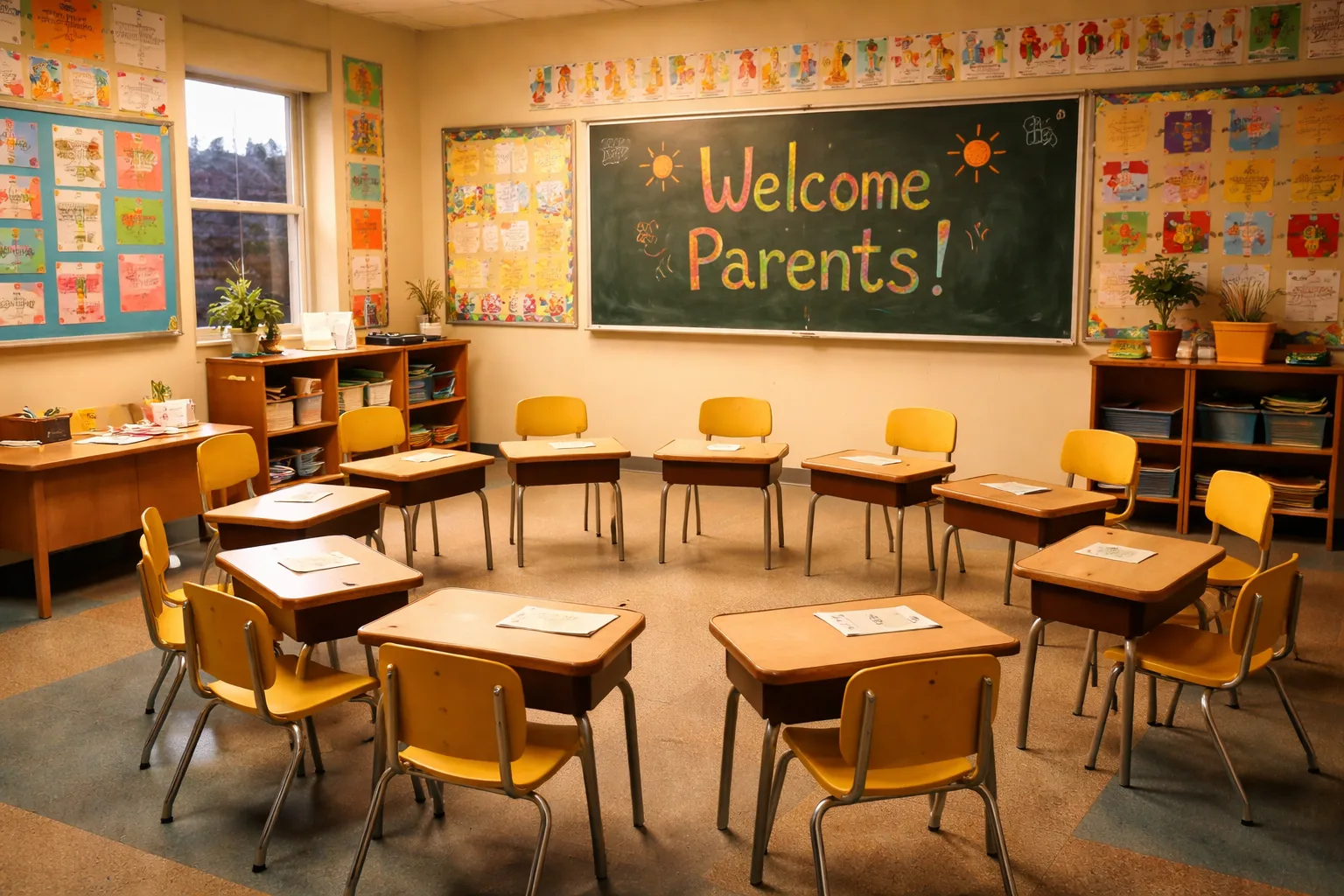
You spent three evenings decorating your classroom. You printed name tags, arranged chairs in a welcoming semicircle, set out a plate of cookies, and rehearsed your introduction. Then 7:00 PM arrived — and so did six parents out of twenty-eight families. Six. The cookies went stale. The semicircle looked like a joke. You smiled through it, but inside you were asking the same question every teacher asks after a disappointing meet-and-greet: What went wrong?
Low parent turnout at back-to-school events isn't a sign that families don't care. It's almost always a logistics and communication failure — and the good news is, it's completely fixable. Whether you're a teacher organizing your own classroom night, a PTA coordinator running a school-wide event, or a principal trying to rebuild community trust after a rough year, this guide gives you a concrete, step-by-step plan to fill those chairs.
Why Parents Don't Show Up (And It's Not What You Think)
Before we fix the problem, we need to understand it. Most educators assume low turnout means parents are disengaged. Research and experience tell a different story. The real culprits are almost always:
- Scheduling conflicts: A Tuesday at 6:30 PM competes with soccer practice, work shifts, younger siblings' bedtimes, and a dozen other obligations.
- Unclear value: If the invitation says "Come meet your child's teacher!" without explaining what parents will actually learn or gain, busy families deprioritize it.
- Friction in RSVPing: A paper form that has to be returned in a backpack — that may or may not make it home — is a silent event killer.
- Feeling unwelcome: First-generation families, non-English speakers, and parents who had negative school experiences themselves often assume these events aren't really for them.
Fix these four problems, and attendance climbs. It's that straightforward.
Step 1: Choose the Right Date and Time — With Data
Stop guessing. Before you book the school library for the third Thursday of August, send a quick availability poll to your families. Ask them to mark which evenings and time slots work best. This takes five minutes to set up and immediately signals that you value their schedules.
When analyzing responses, look for patterns by family type. Working parents often prefer Friday evenings or Saturday mornings — counterintuitive, but true. Families with multiple kids in the school may prefer a single consolidated event over separate classroom nights. If your school has a significant population of shift workers or parents who commute, a 5:00–6:30 PM slot often beats a traditional 7:00 PM start.
Mini-scenario: Lincoln Elementary in a suburb of Chicago switched their meet-and-greet from a Wednesday at 6:30 PM to a Saturday morning from 9:00–11:00 AM after polling families. Attendance jumped from 41% to 78% in one year. The only thing that changed was the time slot.
Step 2: Write an Invitation That Sells the Event
Your invitation is your marketing. Treat it like one. The phrase "Back-to-School Night" tells a parent nothing about why they should rearrange their Tuesday. Instead, your invitation should answer three questions instantly:
- What will I learn? ("You'll leave knowing exactly how homework is graded, how to reach me, and what your child will master this year.")
- How long will it take? ("The event runs exactly 45 minutes.")
- What's in it for my child? ("Kids who have parents attend meet-and-greets tend to start the year with more confidence — here's why.")
Use warm, specific language. "We reserved a spot for you" lands differently than "All are welcome." Personalization — even just using the family's last name in the subject line — increases open rates and attendance.
Step 3: Make RSVPing Effortless
This is where most schools leave attendance on the table. If your RSVP process involves a paper form, a phone call during school hours, or navigating a clunky district portal, you will lose families at this exact step.
The solution is a clean, mobile-friendly RSVP link that parents can tap and complete in under 60 seconds. Platforms like RSVPlinks let you create a custom event page with your school's details, collect RSVPs instantly, and send automated reminders — without requiring parents to create an account or download an app. You can embed the link directly in your email, text message, or school newsletter.
Mini-scenario: A third-grade teacher in Atlanta texted her class families a single RSVPlinks link on a Monday morning. By Wednesday, 19 of 24 families had confirmed. She sent one reminder the day before, and 21 showed up. No paper. No follow-up phone calls. No chasing down backpacks.
Collect just enough information in your RSVP: name, number of adults attending, and whether they need language interpretation or accessibility accommodations. This data helps you prepare — and it shows families you thought about their needs before they even walked in the door.
Step 4: Remove Every Barrier You Can Think Of
Now go through your event plan and ask: what would stop someone from coming? Then eliminate as many of those barriers as possible.
- Childcare: Partner with your school's older student council or a local high school's National Honor Society chapter to offer free childcare in the gym during the event. This single change can dramatically increase attendance from families with young children.
- Language: If 20% of your families speak Spanish at home, have a bilingual staff member or volunteer present. Print key materials in both languages. This isn't extra — it's basic hospitality.
- Transportation: If your school serves families without reliable transportation, coordinate a simple carpool sign-up through your RSVP form.
- Virtual option: Offer a live stream or a recorded version for parents who genuinely cannot attend in person. Make clear this is a backup, not the preferred option — but having it prevents the all-or-nothing dropout.
Step 5: Design a 45-Minute Event That Respects Everyone's Time
Nothing kills future attendance like an event that runs long, meanders, or feels like a waste of time. Commit to a tight, valuable agenda and stick to it.
A proven structure for a classroom meet-and-greet:
- 0–5 min: Welcome and introductions. Teacher shares one personal fact and one classroom philosophy.
- 5–15 min: Curriculum overview — what kids will learn, how it connects to next year, what mastery looks like.
- 15–25 min: Homework and grading policies explained clearly. Show parents the actual gradebook system.
- 25–35 min: Communication expectations — how and when to reach you, what response time to expect.
- 35–45 min: Open Q&A, then a structured "meet your child's desk" moment where parents sit in their child's seat and find a personal note from their kid.
That last element — the personal note from the child — is a small touch that creates an emotional connection and gives parents a tangible reason to have shown up. Word spreads.
Step 6: Follow Up With Everyone — Attendees and Absentees
Within 24 hours of the event, send two different messages. Attendees get a thank-you note with a one-page summary of everything covered and a link to any handouts. Families who couldn't make it get a warm, non-shaming message: "We missed you — here's everything from last night, and here's how to reach me with any questions."
This follow-up does two things: it reinforces the value of attending for those who came, and it keeps absentee families engaged rather than letting them drift into disconnection for the rest of the year.
3 Things You Can Do Today
You don't need to overhaul everything at once. Start here:
- 1. Send a scheduling poll this week. Use any free polling tool to ask your families which dates and times work best before you book anything.
- 2. Set up a mobile-friendly RSVP page. Tools like RSVPlinks take minutes to configure and eliminate the friction that kills attendance. Share the link via text, email, and your class app.
- 3. Rewrite your invitation with the three-question framework. What will parents learn? How long will it take? What's in it for their child? Answer all three in the first paragraph.
The empty-chair problem is solvable. It just requires treating your meet-and-greet like an event worth attending — because when you do, parents will treat it that way too.