How to Plan a Late Summer Church Family Fun Day (And Manage RSVPs Without Losing Your Mind)
The Signup Sheet That Ate Your Sanity
You volunteered to coordinate the church family fun day — how hard could it be, right? Fast forward three weeks and your kitchen table is buried under paper signup sheets, your phone won't stop buzzing with texts asking "Are we still bringing potato salad?", and you've received seventeen different answers to the question "How many kids are coming?" Meanwhile, the church secretary keeps asking for a headcount so she can order the right number of hot dog buns, and you genuinely have no idea what to tell her.
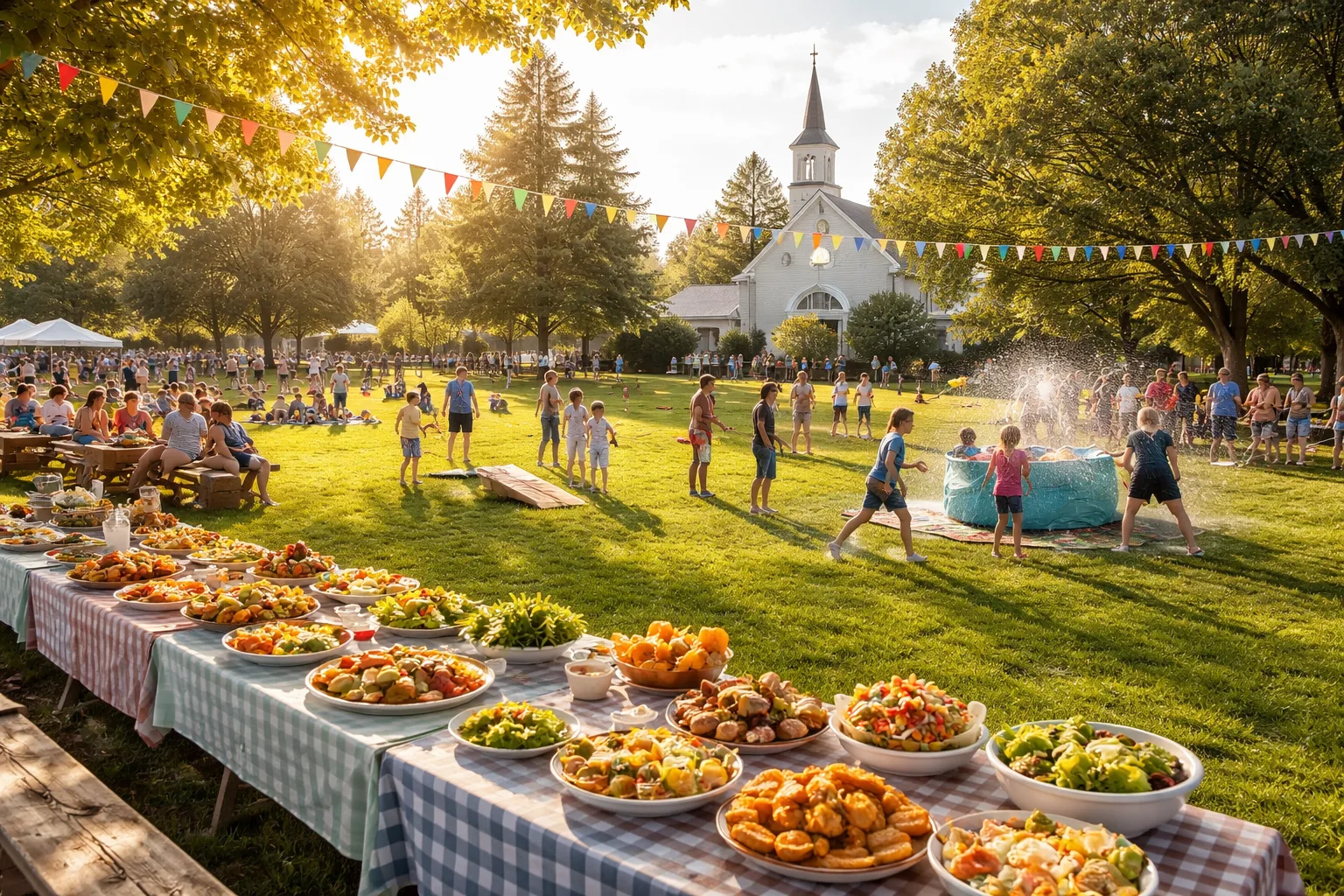
If this sounds familiar, you're not alone. Organizing a late summer church family fun day is one of the most rewarding — and most chaotic — events a congregation can take on. The stakes feel low until suddenly they don't: too little food, not enough seating, activities planned for 40 kids when 90 show up, or a bouncy castle rental that nobody confirmed. The joy of the event is real, but so is the organizational nightmare that precedes it.
The good news? With the right approach and the right tools, you can pull off a spectacular late summer celebration that your congregation will talk about until Christmas — without spending the week before the event in a stress spiral.
Why Late Summer Church Events Are Uniquely Tricky
Late summer sits in a scheduling sweet spot that's actually a minefield. Families are squeezing in last-minute vacations. School supply shopping is happening. Youth sports are starting back up. College students are heading off. The window between "summer mode" and "back-to-school chaos" is narrow, and your event is competing with all of it.
This means two things: first, you need to get your invitations out early — at least four to six weeks in advance. Second, you need a reliable RSVP system that captures not just a yes or no, but the details that actually help you plan: how many adults, how many children, dietary restrictions, whether they're bringing a dish to share, and whether they can volunteer to help set up or run an activity booth.
A paper signup sheet in the church foyer simply cannot do all of that. And group texts are a recipe for missed messages and conflicting information. You need a centralized, digital solution — and you need it to be simple enough that your congregation's less tech-savvy members will actually use it.
Step-by-Step: Planning Your Church Family Fun Day
Step 1: Lock Down Your Logistics First
Before you send a single invitation, nail down the non-negotiables. Choose your date and have a rain plan ready (a backup indoor date or a covered pavilion option). Confirm your venue — whether it's the church grounds, a local park, or a rented pavilion. Secure any permits required for outdoor gatherings. Book any rentals like tables, chairs, tents, bounce houses, or dunk tanks at least six weeks out, because late summer is peak season for party rentals.
Write down your budget ceiling before you start making decisions. It's easy to get excited and over-commit. Assign a small planning committee — even just three or four reliable people — with clear roles: food coordinator, activities coordinator, setup/teardown lead, and communications lead.
Step 2: Build Your Invitation Around Information Gathering
Your invitation isn't just announcing an event — it's your first opportunity to gather the data you need to plan. A great church fun day invitation should include the date, time, location, rain plan, what to bring (lawn chairs, sunscreen, a covered dish?), and a clear RSVP link with a deadline.
This is where a platform like RSVPlinks becomes genuinely useful. Instead of a generic "let us know if you're coming" message, you can build a custom RSVP form that asks exactly what you need to know: number of adults attending, number and ages of children, food allergies, whether they're bringing a dish and what kind, and whether they'd like to volunteer. Every response goes into one organized dashboard — no more cross-referencing paper sheets with text messages.
Send your invitation through every channel your congregation uses: the church email list, the bulletin, the church Facebook group, and a text blast if you have one. Post a QR code on the bulletin board that links directly to the RSVP form. Make it as frictionless as possible to respond.
Step 3: Plan Activities That Scale With Your Headcount
Late summer fun days live or die by their activities. The key is planning a mix of activities that work whether 30 families show up or 100. Lawn games like cornhole, horseshoes, and ladder toss scale effortlessly. A water balloon station is a hit with kids of all ages and costs almost nothing. A photo booth with a simple backdrop and some props creates memories and shareable content for your church social media.
For structured activities — relay races, a pie-eating contest, a kids' craft table — you'll need a rough headcount. This is exactly why your RSVP form should ask for the number and ages of children attending. If your form shows 45 kids under 12 are coming, you know to set up a proper kids' zone with age-appropriate activities and enough adult volunteers to supervise safely.
Consider a "talent showcase" or "congregation trivia" segment in the late afternoon when energy starts to dip. These cost nothing, require minimal setup, and bring the community together in a way that bouncy castles can't.
Step 4: Coordinate the Potluck Without the Chaos
The church potluck is a beloved tradition and a logistical puzzle. Without coordination, you'll end up with fourteen pasta salads and no desserts. Use your RSVP form to ask attendees what category of dish they plan to bring: main dish, side dish, salad, dessert, or drinks. Set soft limits — "we have plenty of sides, please consider bringing a dessert" — and communicate those limits in your reminder messages.
Send a reminder email or message two weeks before the event and again three days before. Include a running tally of what's been committed so people can see what's still needed. This transparency encourages people to fill gaps rather than duplicate.
Step 5: Communicate, Confirm, and Follow Up
The biggest mistake event coordinators make is sending one invitation and then going silent until the day of the event. Your congregation needs touchpoints. Send a "two weeks out" update with the activity schedule, a reminder of what to bring, and a nudge for anyone who hasn't RSVPed yet. Send a "three days out" message with final logistics, parking information, and a weather update if relevant.
After the event, send a thank-you message within 48 hours. Include a few photos, acknowledge the volunteers who made it happen, and — if you're already thinking ahead — drop a teaser about next year. People love being part of something that has momentum.
Managing RSVPs: The System That Actually Works
Let's be direct: the single biggest source of stress in church event planning is not knowing how many people are coming. Everything else — food, seating, activities, budget — flows from that number. When your RSVP process is scattered across paper, text, email, and word of mouth, you never have a reliable number. You're always guessing.
Centralizing your RSVPs through a dedicated platform changes everything. RSVPlinks lets you create a branded event page with a custom form, set an RSVP deadline, send automated reminders to people who haven't responded, and view your responses in a clean dashboard. When the church secretary asks for a headcount on Thursday afternoon, you can give her an actual number in thirty seconds instead of a stressed estimate.
Set your RSVP deadline five to seven days before the event. This gives you time to finalize food orders, confirm rentals, and brief your volunteers with accurate numbers. Make it clear in your communications that the deadline exists for a reason — it respects the volunteers who are working hard to make the event great.
The Week Of: Stay Calm and Stay Organized
By the week of the event, your job is execution, not planning. Your headcount is set. Your food is coordinated. Your activities are confirmed. Print your volunteer assignments and distribute them the Sunday before. Do a venue walkthrough the day before to catch any surprises. Prepare a simple day-of checklist and assign someone to manage it so you're not the only person holding all the information.
Accept that something unexpected will happen — a vendor will be late, it'll be hotter than forecast, someone will forget the extension cord. Build 30 minutes of buffer into your setup timeline and designate one calm, resourceful person as your "problem solver" for the day. Then let yourself enjoy the event you worked so hard to create.
Three Things to Do Today
- Set your date and book your venue — even a tentative hold is better than nothing. Late summer dates fill up fast.
- Build your RSVP form now — use a platform like RSVPlinks to create a custom form that captures headcount, dietary needs, potluck contributions, and volunteer interest all in one place.
- Recruit your planning committee — send a message today to three or four trusted, organized people in your congregation and assign clear roles before your first planning meeting.
A late summer church family fun day done right is more than a party — it's a moment of genuine community that carries your congregation into the fall season with warmth and connection. The planning doesn't have to be painful. Get your systems right, get your RSVPs organized, and get ready to enjoy the day you built.