How to Plan a Flag Day Block Party That Brings Your Whole Neighborhood Together
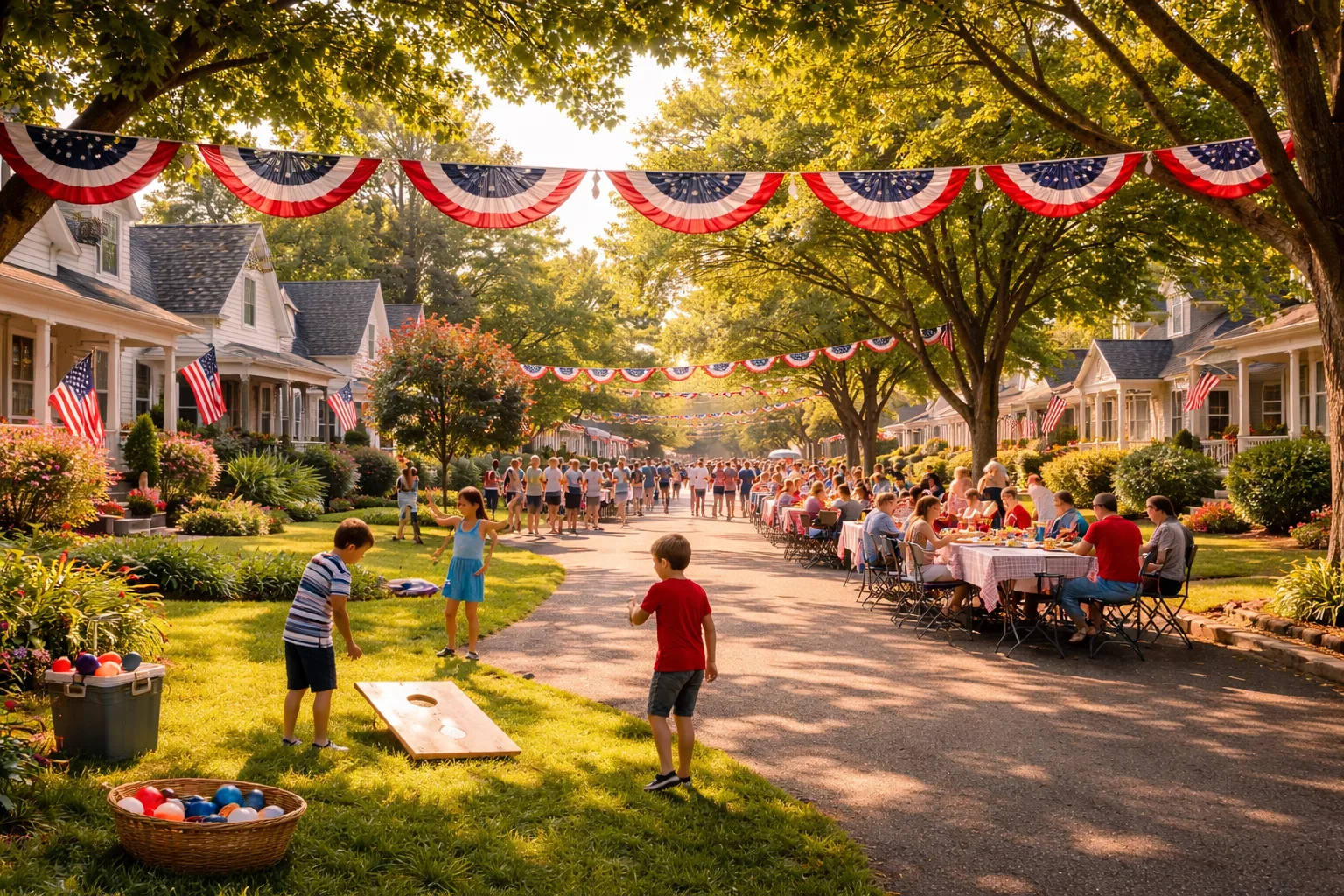
The Neighbor You Never Actually Talk To
You wave at them from the driveway. You nod in the elevator. You've lived three houses apart for four years, and you still don't know their last name. Sound familiar? Most neighborhoods are full of people who want to connect but never quite find the right moment — until someone finally throws a block party.
Flag Day, celebrated every June 14th, is one of the most underrated opportunities on the American calendar. It's patriotic without the pressure of a major holiday, it falls in the sweet spot of early summer when the weather is perfect and school is just letting out, and it gives you a built-in theme that practically decorates itself. Red, white, and blue bunting. A few flags on every porch. A cooler full of cold drinks. That's the beginning of something real.
But here's where most well-intentioned block party planners hit a wall: the logistics. Who's coming? Who's bringing what? How do you actually get 40 households to show up at the same time without spending three weeks chasing down RSVPs through text messages, sticky notes on mailboxes, and awkward doorbell conversations? That's the part nobody talks about — and that's exactly what this guide is here to solve.
Step 1: Anchor Your Event With a Date, Time, and Location
Before you invite a single person, lock in three things: the date (aim for the Saturday closest to June 14th for maximum attendance), the time (4:00–8:00 PM works beautifully — it's post-nap, pre-bedtime, and catches the golden-hour light), and the location (your street, a cul-de-sac, or a nearby park with open space).
Don't wait until everything is perfect to start inviting people. The sooner you get the date out, the fewer scheduling conflicts you'll face. A neighborhood block party lives or dies by its headcount — and headcount is all about early momentum.
Real-world scenario: Maria in Austin started planning her Flag Day block party six weeks out. She locked in the date first, then sent digital invitations through RSVPlinks to all 34 households on her street. Within 48 hours, she had 22 confirmed RSVPs and a clear picture of how many people were coming — which helped her plan food quantities, seating, and activities without guessing.
Step 2: Send Invitations That Actually Get Responses
Here's the painful truth about neighborhood invitations: paper flyers get lost, group texts get ignored, and Facebook event invites disappear into the algorithm. If you want real RSVPs from real neighbors, you need a dedicated, easy-to-use system.
A clean digital invitation does three things a flyer can't: it tracks who's coming, it lets guests indicate what they're bringing (so you don't end up with 11 bags of chips and zero lemonade), and it sends automatic reminders so you're not the person texting everyone the night before.
When you create your invitation, include:
- The event name and date — something fun like 'Red, White & Block Party: Flag Day 2025'
- Start and end time — neighbors with kids especially need this
- Address and parking notes — will the street be closed? Where should people park?
- What to bring — a dish to share, lawn chairs, a side dish, or drinks
- RSVP deadline — give yourself at least one week before the event to finalize numbers
Platforms like RSVPlinks make it easy to build a custom event page, share a single link with your whole neighborhood, and track responses in real time — no spreadsheet juggling required.
Step 3: Assign a Potluck Structure (Not a Free-for-All)
The fastest way to ruin a block party spread is to say 'just bring something!' and hope for the best. Structure your potluck by category: mains, sides, desserts, and drinks. Assign categories based on household size or let guests self-select when they RSVP.
A good rule of thumb for a 40-person party: 3–4 mains (grilled items, a pasta salad, a veggie option), 6–8 sides, 4–5 desserts, and a communal drink station with lemonade, iced tea, and a cooler of canned drinks.
Mini-scenario: David and Keisha on Maple Street used a sign-up sheet embedded in their digital invite. By the time RSVPs closed, they could see exactly who was bringing what — and they had time to reach out to the three households who hadn't signed up for anything yet. No duplicate potato salads. No dessert shortage. Just a well-balanced spread that felt effortless on the day.
Step 4: Plan Activities That Mix Age Groups
A block party that only works for one age group isn't really a neighborhood party — it's a gathering that leaves half your neighbors feeling like they don't belong. Plan at least one activity per age group, and try to include one or two that mix everyone together.
For kids under 10: a patriotic sidewalk chalk station, a flag-decorating craft, or a water balloon toss.
For tweens and teens: a cornhole tournament, a trivia game about American history and Flag Day facts, or a scavenger hunt around the block.
For adults: lawn games like bocce ball or ladder toss, a neighborhood trivia contest (who's lived here the longest? who has the most pets?), or a 'best decorated porch' contest judged by a panel of kids.
For everyone: a group photo at the end of the night in front of a flag-decorated backdrop. This one simple act creates a memory and gives people a reason to share the event on social media — which builds buzz for next year's party before this year's is even over.
Step 5: Handle the Logistics That Derail Most Parties
The details that feel small in planning become enormous on the day. Address these in advance:
- Street closure permit: Contact your city or HOA at least 3–4 weeks out. Most municipalities have a simple process for temporary street closures for neighborhood events.
- Tables and chairs: Ask neighbors to bring their own folding chairs and one table each. Coordinate via your RSVP platform so you know what's covered.
- Power and music: Designate one household to handle a Bluetooth speaker and a Flag Day playlist (think classic Americana, summer hits, and a few crowd-pleasers). Keep the volume neighborly — you want conversation, not a concert.
- Trash and cleanup: Set up clearly labeled recycling and trash stations. Assign a small cleanup crew of volunteers — ask for them in your invitation so it's not a surprise ask on the day.
- Rain plan: Have a backup date or a backup location (a neighbor's garage, a covered pavilion nearby) and communicate it clearly in your invitation so nobody is left wondering if the event is canceled.
Step 6: Build the Patriotic Atmosphere Without Overspending
You don't need a budget of hundreds of dollars to create a festive Flag Day atmosphere. Focus on a few high-impact, low-cost touches:
- Ask every household to display their American flag on the day — it costs nothing and immediately transforms the street.
- String red, white, and blue bunting between trees or along a fence line. A 50-foot roll costs under $10 at most craft or dollar stores.
- Use mason jars filled with red, white, and blue flowers (carnations work perfectly and are inexpensive) as centerpieces on food tables.
- Print a simple 'Happy Flag Day' banner at a local print shop or use a free online design tool — it becomes a natural photo backdrop.
The goal isn't Instagram perfection. The goal is warmth, color, and a sense of occasion that tells your neighbors: this day was worth celebrating, and so are you.
Your 3 Next Steps — Starting Today
You don't need to have everything figured out to get started. Here's what to do right now:
- Pick your date and reserve it. Aim for the Saturday closest to June 14th. Put it in your calendar and tell two neighbors today — verbal commitment creates momentum.
- Create your digital invitation. Use a platform like RSVPlinks to build a simple event page with your date, location, and a potluck sign-up. Share the link via your neighborhood group chat, email list, or by dropping a note in mailboxes with the URL. Give yourself at least four weeks of lead time.
- Recruit one co-organizer. Block parties are better with a partner. Ask one enthusiastic neighbor to co-host — they'll handle half the logistics, double the outreach, and make the whole thing feel less like a solo project and more like a community effort.
Flag Day isn't just about a piece of cloth. It's about what that flag represents: a shared identity, a common ground, a reason to stand together. Your block party is a small, real, and powerful way to make that tangible — one lawn chair, one shared dish, and one conversation at a time.