How to Host a Juneteenth Heritage Dinner Party That Honors History and Brings Family Together
When the Date Arrives and Nobody Knows What to Do With It
You want this year to be different. You want Juneteenth to feel like more than a day off — more than a cookout where the holiday gets mentioned once, briefly, between bites of potato salad, and then everyone moves on to talking about something else. You want your family — aunts who flew in, cousins who barely know each other, kids who are old enough to understand — to actually feel something. To leave the table knowing more than when they arrived. But every time you try to plan something meaningful, it slips into vague territory: 'We'll do something special.' And then June 19th comes and goes like any other Saturday.
That frustration is real, and it's common. Juneteenth — the commemoration of June 19, 1865, when enslaved people in Galveston, Texas finally received word of their freedom, more than two years after the Emancipation Proclamation — deserves a gathering that matches its weight. A Heritage Dinner Party is one of the most powerful ways to do that. It combines food, story, ritual, and community in a single evening that your family will talk about for years.
Here's exactly how to pull it off.
Step 1: Set the Intention Before You Send a Single Invitation
Before you pick a menu or choose a playlist, decide what you want people to walk away with. Is this about reconnecting with family roots? Educating the younger generation? Honoring an ancestor? Celebrating Black joy and resilience?
Write it down in one sentence. For example: 'This dinner is about honoring where we came from and celebrating how far we've come — together.'
That sentence becomes the north star for every decision you make — from the invitation wording to the table decorations to the conversation prompts you place at each seat. When your intention is clear, your guests arrive prepared to engage, not just to eat.
Step 2: Send Invitations That Set the Tone
The invitation is the first impression of the evening — and it does more work than most hosts realize. A generic 'Come over for Juneteenth dinner' text message signals a casual hangout. A thoughtfully designed invitation signals: this matters.
Include the purpose of the gathering in your invitation copy. Something like: 'Join us for an evening of food, family stories, and remembrance as we celebrate Juneteenth and the freedom our ancestors fought for.' Ask guests to come prepared — maybe to bring a dish tied to their family's heritage, a photograph of an ancestor, or a memory or story to share at the table.
Using a platform like RSVPlinks makes this seamless. You can create a beautiful, themed digital invitation, collect RSVPs so you know exactly how many people are coming, and even include a note field where guests can tell you what dish or story they're bringing. That information helps you plan the meal and the program — and it gets guests thinking about their contribution before they even arrive.
Step 3: Build a Menu Rooted in History
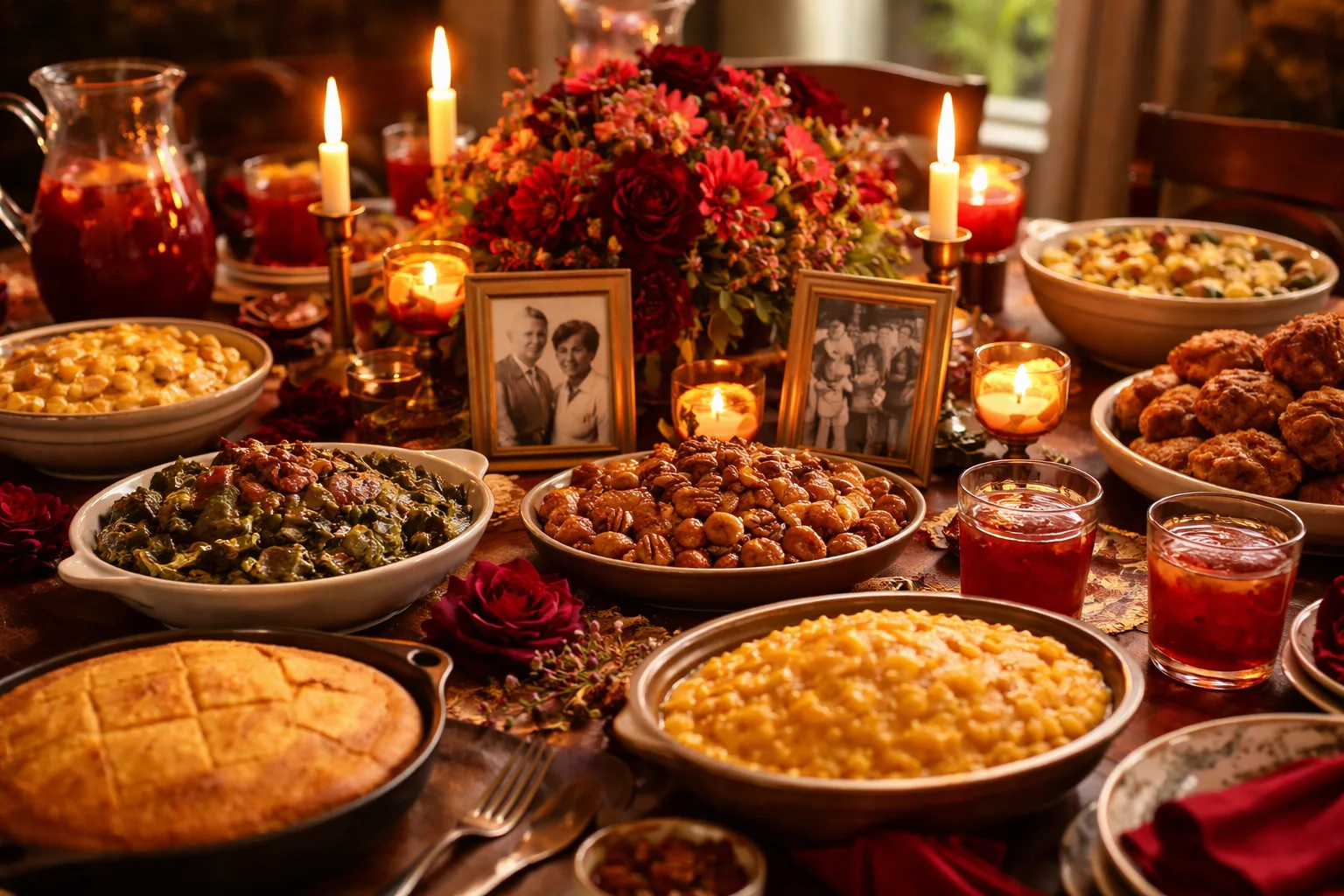
Food is memory. The dishes on your table should tell a story. Juneteenth has its own culinary traditions — many rooted in West African foodways, Southern cooking, and the ingenuity of enslaved and free Black cooks who created extraordinary meals from limited resources.
Here's a framework for your menu:
- Red foods as a centerpiece: Red is a symbolic color in Juneteenth celebrations, tied to West African traditions and the red hibiscus drinks of the Yoruba people. Serve red drinks — hibiscus tea, red lemonade, strawberry agua fresca — and consider red velvet cake, watermelon, or tomato-based dishes as part of the spread.
- Ancestral staples: Black-eyed peas (a West African tradition brought to America), cornbread, collard greens, okra, sweet potatoes, and rice dishes like Hoppin' John all carry deep cultural significance. Research the history of each dish and share it at the table.
- Family recipes: Ask each guest to bring one dish from their own family's tradition. A great-grandmother's peach cobbler. A grandmother's mac and cheese. These dishes carry stories — and the act of bringing them is itself an act of remembrance.
- Something new: Celebrate the present by including a dish from a contemporary Black chef or a cuisine from the African diaspora — Jamaican jerk chicken, Nigerian jollof rice, Gullah Geechee red rice. This honors the breadth and global reach of Black culture.
Step 4: Design the Space to Tell a Story
Your table and space should feel intentional, not decorated. The difference is meaning.
Use the colors of the Juneteenth flag — red, black, and white — as your palette. Place a centerpiece that includes something from your family's history: an old photograph in a frame, a family Bible, a piece of fabric or quilt. Print out short historical facts about Juneteenth and place them on small cards around the table — conversation starters that are already built in.
Create a small 'ancestor table' or memory corner: a side table with photographs, names, and brief notes about family members who are no longer living. Invite guests to add to it when they arrive. This simple gesture transforms a dinner party into a living memorial.
Step 5: Create a Program That Moves the Evening Forward
The biggest mistake hosts make with heritage dinners is letting the evening drift. People eat, chat, and leave without the meaningful moment ever happening. A loose structure prevents this — without making the night feel like a school assembly.
Here's a simple program that works:
- Welcome and intention (5 minutes): Before the first plate is passed, the host stands and reads the evening's intention aloud. Acknowledge why everyone is gathered. Light a candle if that feels right.
- A moment of remembrance (3–5 minutes): Read aloud a short passage — from Frederick Douglass, from a Juneteenth proclamation, from a family letter if you have one. Ask for a moment of silence for those who came before.
- Food introductions (during the meal): As each dish is passed, the person who made it shares its story — where the recipe came from, who taught them to make it, what it means to their family. This turns a meal into a living history lesson.
- Story circle (after the main course): Go around the table. Each person shares one memory, one story, or one thing they know about a family member or ancestor. No pressure — even 'I don't know much, but I want to learn' is a valid contribution.
- A toast to freedom: End with a collective toast. Red drinks raised. Something simple and true: 'To those who came before us, and to those who come after.'
Step 6: Give Guests Something to Take Home
A heritage dinner should leave a mark. Consider sending guests home with something tangible: a printed copy of the evening's recipes with their histories, a small card with a Juneteenth reading or quote, a QR code linking to a family history document or shared photo album.
If you used RSVPlinks to manage your invitations, you can follow up with all your guests after the event — share photos, send a thank-you message, or invite them to next year's gathering while the memory is still fresh.
Step 7: Plan for the Kids
Children are the reason heritage dinners matter most. Don't let them sit at a separate table scrolling through phones while the adults talk. Pull them in deliberately.
Before the dinner, give older kids a research assignment: find one fact about Juneteenth or one ancestor to share at the table. For younger children, prepare a simple activity — a coloring page of the Juneteenth flag, a 'family tree' worksheet they can fill in with help from the adults. During the story circle, ask each child to share their fact or drawing. Make them feel like essential contributors, not observers.
Three Things You Can Do Today
You don't need months to pull this off. Here's where to start right now:
- Write your intention sentence — the one-line purpose of your gathering. Everything else flows from this.
- Send your invitations this week — give guests enough time to prepare a dish, find a photo, or think of a story. Use a tool like RSVPlinks to make RSVPs easy and to collect what each person is bringing.
- Start your recipe list — research the history behind two or three dishes you plan to serve. That research becomes the conversation at your table.
Juneteenth is a day that deserves to be felt, not just observed. A Heritage Dinner Party gives your family a structure to do exactly that — to eat together, remember together, and celebrate together in a way that honors the weight of the day and the joy of being free.