How to Plan a Late Summer Neighborhood Ice Cream Social Everyone Will Actually Show Up To
The Neighborhood Event That Nobody Came To
You spent a Saturday morning blowing up balloons, hauling out folding tables, and buying three different flavors of ice cream — plus toppings, cones, sprinkles, the works. You texted a few neighbors, posted something vague in the neighborhood Facebook group, and figured people would just... show up. By 3 PM, it was you, your dog, and a rapidly melting tub of Rocky Road.
Sound familiar? Late summer neighborhood gatherings have a sneaky way of falling flat — not because people don't want to come, but because the planning falls apart in the small details. The invitation was unclear. Nobody RSVP'd. Half the street didn't even know it was happening. And now you're eating ice cream alone wondering why you bothered.
Here's the good news: a neighborhood ice cream social is genuinely one of the easiest, most universally loved community events you can throw. Kids love it. Adults love it. Even the grumpy neighbor who never waves loves ice cream. You just need a plan that actually works — from the invitation to the last scoop.
Step 1: Lock In Your Date and Time Before You Tell Anyone
Late summer has a narrow window. August and early September are packed with back-to-school chaos, vacations, and last-minute weekend trips. Before you announce anything, spend five minutes thinking through the calendar.
The sweet spot: A Sunday afternoon between 3–5 PM. Early enough that families with young kids can attend before bedtime routines kick in, late enough that the worst of the afternoon heat has passed. Avoid holiday weekends — Labor Day weekend sounds perfect in theory, but half your neighbors will be out of town.
Pick your date. Commit to it. Then move to step two.
Step 2: Send a Real Invitation — Not Just a Text
This is where most neighborhood events die. A text to three people and a vague Facebook post is not an invitation — it's a rumor. If you want people to show up, you need to make them feel genuinely invited.
A proper invitation does three things: it tells people exactly what's happening, exactly when and where, and gives them a clear way to RSVP. That last part is critical. When people RSVP, they mentally commit. They tell their spouse. They mention it to their kids. The event becomes real to them.
Use a free platform like RSVPlinks to create a simple, shareable event invitation. You can set it up in minutes, add your event details, and share a single link via text, email, or your neighborhood group chat. Neighbors click the link, RSVP yes or no, and you get a real headcount — which means you know how much ice cream to buy instead of guessing and either running out or drowning in leftovers.
Mini-scenario: Sarah in the house on the corner almost skipped the last block party because she heard about it second-hand and wasn't sure if she was actually welcome. When she received a personal invitation link with her name on it and a simple RSVP button, she not only came — she brought her famous brownies and stayed two hours longer than planned.
Step 3: Make the Ice Cream Setup Actually Interesting
A tub of vanilla and some plastic spoons is not an ice cream social — it's a school cafeteria. The difference between an event people talk about for weeks and one they forget by Monday is the experience you create around the food.
Here's a simple setup that works every time:
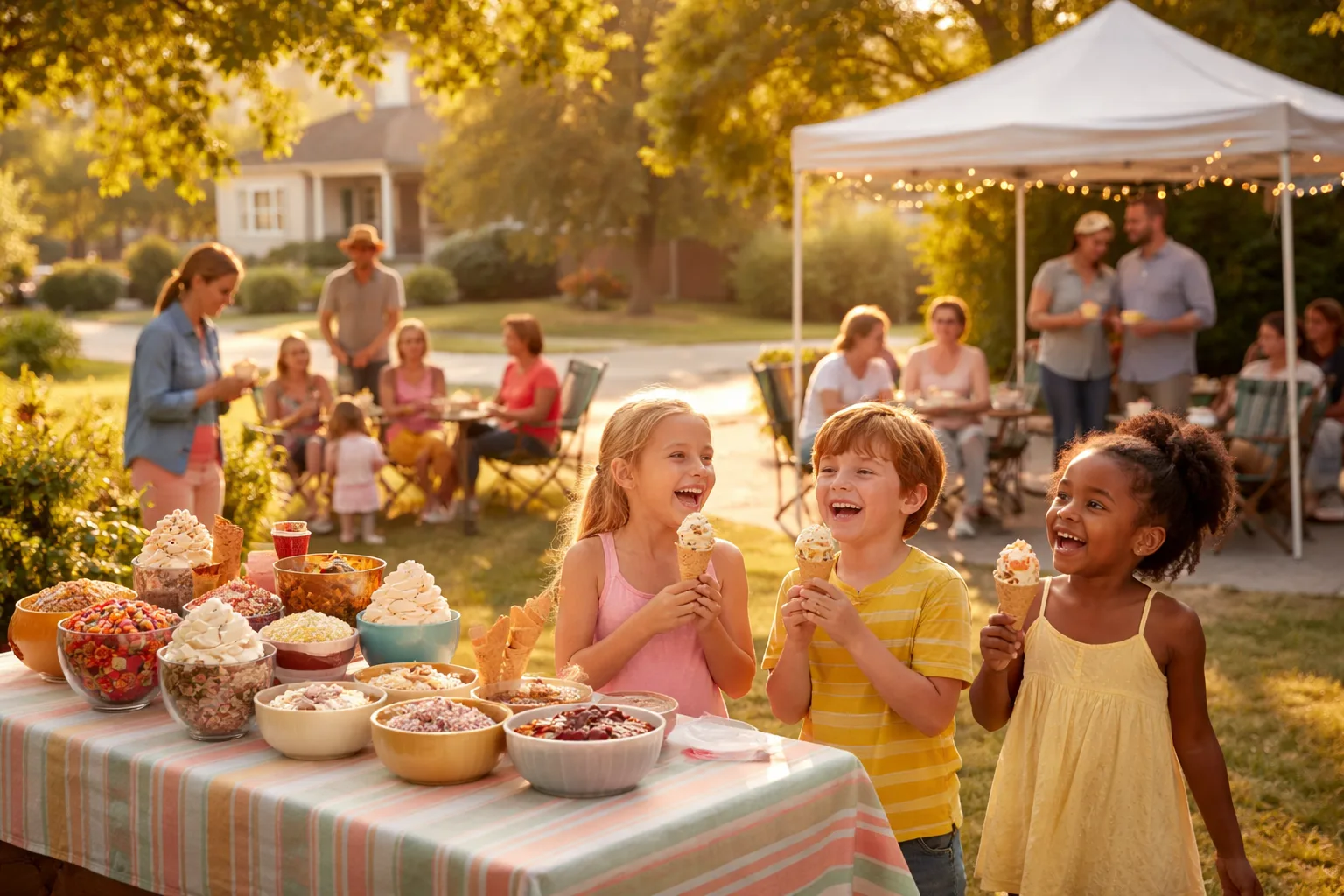
- The Sundae Bar: Set out 3–4 ice cream flavors in coolers or buckets of ice. Provide toppings in small bowls: hot fudge, caramel, sprinkles, crushed Oreos, fresh strawberries, whipped cream, and cherries. Let people build their own creation. This alone adds 20 minutes of fun and conversation.
- The Mystery Flavor Contest: Include one unusual or regional flavor — lavender honey, sweet corn, black sesame — and challenge guests to guess what it is. Winner gets bragging rights and maybe a small prize. This becomes an instant conversation starter.
- Kid's Cone Station: Set up a low table where kids can serve themselves (with supervision). This keeps little ones engaged and gives parents a moment to actually talk to each other.
- The Topping Swap: Ask a few neighbors in advance to each bring one topping to contribute. This builds community investment before the event even starts.
Step 4: Handle the Logistics That Kill Events
Most neighborhood socials fail not because of bad intentions but because of avoidable logistical problems. Here's how to head them off:
Ice and Temperature Management
Ice cream melts. This is not a surprise, and yet it surprises people every time. Plan on having more ice than you think you need — large coolers, dry ice if you can get it, or a dedicated freezer extension cord running from your garage. Serve in small batches and replenish rather than putting everything out at once.
Shade and Seating
Late summer sun is brutal. If your yard or street doesn't have natural shade, rent or borrow a canopy or two. People will not stand in direct sunlight to eat ice cream — they'll take their bowl and retreat inside. Seating matters too: a mix of folding chairs, blankets on the grass, and a few lawn chairs creates a relaxed, stay-awhile atmosphere.
Dietary Considerations
At least one person on your street is dairy-free, and at least two kids have nut allergies. Include one non-dairy option (coconut milk or oat milk ice cream is widely available now) and label all toppings clearly. This small gesture makes a big impression and ensures nobody feels left out.
The Headcount Problem
This is where your RSVP system earns its keep. When you use a platform like RSVPlinks and collect actual responses, you can plan quantities accurately. A general rule: plan for 2–3 scoops per person, plus 20% buffer for unexpected guests and second helpings. Without an RSVP count, you're just guessing.
Step 5: Create a Reason to Linger
Ice cream takes about ten minutes to eat. If that's all you've planned, people will finish their bowl, say "great, thanks," and wander home. The goal of a neighborhood social isn't just to feed people — it's to build the kind of easy, relaxed connection that makes your street feel like a community.
Add one or two low-key activities that encourage people to stick around:
- A lawn game corner: Cornhole, bocce ball, or a simple ring toss. Adults will gravitate toward these naturally.
- A kids' activity table: Coloring pages, sidewalk chalk nearby, or a simple craft. This is the single best thing you can do to keep families from leaving early.
- A neighborhood memory board: Pin up a large piece of paper or poster board and ask guests to write their favorite memory from the neighborhood or their hopes for the coming year. This becomes a genuine conversation piece and a keepsake.
- Background music: A simple Bluetooth speaker with a feel-good summer playlist does more for the atmosphere than almost anything else. Keep it low enough that people can talk over it.
Step 6: Follow Up After the Event
The event isn't over when the last guest leaves. A quick follow-up keeps the community momentum going and sets you up for an even better turnout next time.
Send a thank-you message to everyone who attended — a simple text or email works fine. If you collected RSVPs through a platform, you already have contact info ready to go. Share a photo or two from the event. Mention that you're already thinking about a fall version. People who had a great time will immediately start looking forward to the next one, and they'll tell their neighbors who missed it.
Your 3 Next Steps — Do These Today
You don't need to plan everything at once. Here's what to do right now:
- 1. Pick your date. Open your calendar, find a Sunday afternoon in the next three to four weeks, and block it off. Don't wait for the perfect weekend — it doesn't exist in late summer.
- 2. Create your invitation. Head to RSVPlinks, set up your event page in under ten minutes, and share the link in your neighborhood group chat or via text to your street. Real invitations get real RSVPs.
- 3. Recruit one neighbor. Text one person on your block today and ask them to help. Having a co-host makes the whole thing more fun to plan, splits the work, and guarantees at least one enthusiastic attendee spreading the word in person.
Late summer doesn't last. But the feeling of sitting outside with your neighbors, watching the kids run around with ice cream dripping down their arms, laughing about nothing in particular — that's the kind of memory that sticks around long after the season ends. Go make it happen.