How to Plan a Sukkot Outdoor Celebration Dinner for Your Family and Community
The Sukkot Dinner That Almost Fell Apart
You spent three evenings building the sukkah. Your kids decorated it with paper chains and hanging gourds. You invited 30 people — family, neighbors, members of your synagogue — and you told everyone, "Come Friday at 6!" Then Thursday night hits and you realize: you have no idea who's actually coming. Did Aunt Miriam confirm? Are the Kleins bringing their four kids? Is anyone keeping gluten-free this year? You're standing in your kitchen with a notepad, calling people one by one, trying to piece together a headcount for a meal that needs to feed anywhere between 15 and 40 people.
Sound familiar? Sukkot is one of the most joyous holidays on the Jewish calendar — a week-long harvest festival centered on gathering, gratitude, and community. But the logistics of hosting an outdoor dinner in a sukkah, especially for a large group, can turn that joy into stress fast. Between managing RSVPs, planning a menu that works for diverse dietary needs, weatherproofing your setup, and creating an atmosphere that feels festive and meaningful, there's a lot to coordinate.
This guide walks you through exactly how to plan a Sukkot outdoor celebration dinner your family and community will talk about for years — without the chaos.
Step 1: Nail Down Your Guest List and RSVPs Early
The single biggest mistake Sukkot hosts make is treating RSVPs casually. A verbal "we'll try to make it" from 20 people does not a dinner plan make. Sukkot falls in early autumn (usually late September or October), which means weather is unpredictable, schedules are busy with back-to-school season, and people genuinely forget.
Start collecting RSVPs at least two weeks before the dinner. Use a digital RSVP tool like RSVPlinks to send a clean, mobile-friendly invitation that guests can respond to in seconds. Include a simple form that captures: number of guests attending, any dietary restrictions (kosher, gluten-free, nut allergies, vegetarian), and whether they'd like to bring a dish to share.
Here's a real scenario: Sarah, a community organizer in New Jersey, hosts a Sukkot dinner for 50 people every year. Before she started using digital RSVPs, she'd routinely over-prepare food for 50 and have 32 show up — or under-prepare and scramble. Once she switched to a structured RSVP system, she had confirmed headcounts and dietary info five days before the event, which cut her food waste and grocery bill significantly.
Action steps:
- Send invitations 2–3 weeks before the dinner
- Set an RSVP deadline 5–7 days before the event
- Ask specifically about dietary needs in the RSVP form
- Send a reminder 48 hours before the deadline to anyone who hasn't responded
Step 2: Design a Menu That Honors Tradition and Feeds Everyone
Sukkot is a harvest festival, so your menu should celebrate seasonal abundance. Think: roasted root vegetables, stuffed peppers, brisket or slow-cooked lamb, challah, apple and honey desserts, pomegranate salads, and warm soups. The goal is food that feels generous, earthy, and communal.
But here's the practical challenge: you're likely feeding people with a range of dietary needs. A well-planned Sukkot menu accounts for this without making anyone feel like an afterthought.
A sample menu framework that works for most groups:
- Starter: Butternut squash soup (naturally vegan, gluten-free)
- Main proteins: Slow-braised brisket + a hearty stuffed acorn squash option for vegetarians
- Sides: Roasted carrots with za'atar, wild rice pilaf, roasted beet and pomegranate salad
- Bread: Challah (label clearly if it contains eggs for vegan guests)
- Dessert: Honey cake, fresh fruit platter, and a gluten-free almond cake
If you're hosting a potluck-style dinner — which is a beautiful way to build community — assign categories to guests based on their RSVP. Ask some to bring sides, others desserts, and a few to bring drinks. This spreads the load and ensures variety without duplicates.
Step 3: Set Up Your Sukkah for a Real Dinner Experience
A sukkah is not just a symbolic structure — for your dinner, it needs to function as an actual dining room. That means thinking through lighting, seating, weather contingencies, and ambiance.
Lighting: String lights are your best friend. Warm Edison bulbs or soft white string lights woven through the schach (the natural roof covering) create a magical atmosphere and provide practical visibility after sunset. Add battery-powered lanterns on tables for supplemental light.
Seating: For large groups, rent or borrow folding tables and chairs. Arrange them in one long harvest-table style for a communal feel, or in clusters if your sukkah space is wider. Cover tables with kraft paper rolls for an easy, festive look — guests can even write what they're grateful for directly on the table covering.
Weather contingency: Sukkot in October can mean a 70-degree evening or a 45-degree windy one. Have a plan. Portable propane heaters (positioned safely away from the schach) can extend comfort significantly. Keep a stack of blankets or shawls in a basket near the entrance. If rain is forecast, have a backup indoor space or a large canopy tent ready to extend coverage.
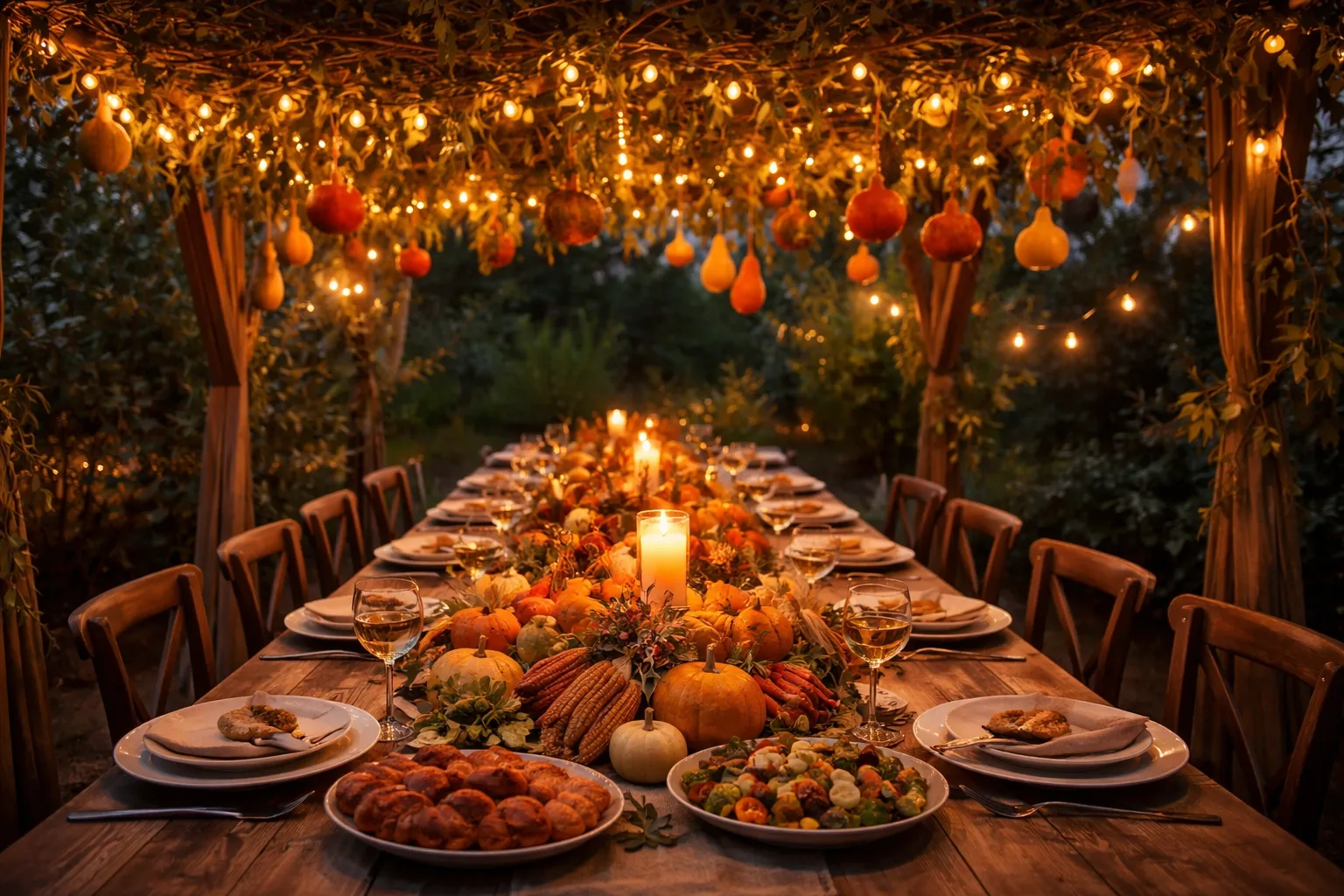
Decor: Lean into the harvest aesthetic. Hang dried corn, gourds, and pomegranates from the schach. Use small pumpkins as centerpieces. Scatter autumn leaves or eucalyptus sprigs on tables. Let your kids' paper decorations take center stage — that's part of what makes a sukkah feel alive.
Step 4: Build a Timeline That Keeps You Calm on the Day
The day-of chaos at most dinner parties comes from not having a clear timeline. Here's a practical framework:
- 3 days before: Confirm final headcount from RSVPs. Finalize grocery list. Prep any make-ahead dishes (brisket actually tastes better reheated the next day).
- 1 day before: Decorate the sukkah. Set up tables and chairs. Prepare all cold dishes and store them. Confirm any rental pickups.
- Day of, 4 hours before dinner: Begin reheating slow-cooked mains. Set the table. Arrange lighting.
- Day of, 1 hour before guests arrive: Light candles or turn on string lights. Set out appetizers. Brief any helpers on their roles (who's greeting guests, who's managing the food table).
- During dinner: Designate someone to manage the food flow so you, as the host, can be present with your guests.
Step 5: Create Moments of Meaning, Not Just a Meal
Sukkot is about more than eating — it's about dwelling together, expressing gratitude, and welcoming guests (the mitzvah of ushpizin). Build that into your dinner intentionally.
Open the meal with a brief blessing over the lulav and etrog if you have them, and invite guests to share one thing they're grateful for before the meal begins. This takes five minutes and transforms the energy in the room. Consider printing a simple one-page Sukkot trivia card or a short reading about the holiday's meaning for guests who may be less familiar with the traditions.
If children are present — and at a community Sukkot dinner, they usually are — have an activity station near the sukkah entrance where kids can make paper fruit chains or decorate small gourds with markers. Engaged kids mean relaxed parents, which means a better dinner for everyone.
Use the Right Tools to Make It Happen
Planning a community dinner of this scale doesn't have to mean endless group texts and spreadsheets. Platforms like RSVPlinks let you create a beautiful digital invitation, collect structured RSVPs with dietary info, and send automated reminders — all in one place. When you know exactly who's coming and what they need, every other part of the planning gets easier.
3 Things You Can Do Today
Don't let this stay theoretical. Here are three concrete actions to take right now:
- 1. Set your date and create your invitation today. Even if Sukkot is weeks away, locking in the date and getting invitations out early is the single highest-leverage action you can take.
- 2. Build your RSVP form with dietary fields. Don't just ask "are you coming?" — ask what people need so you can plan a menu that works for everyone.
- 3. Walk your sukkah space and make a list. Stand in the space where you'll host and write down what you need: lighting, seating, heating, decor. A five-minute assessment now prevents a Friday-night scramble later.
Sukkot is one of the rare holidays that asks you to step outside, sit under the stars, and share a table with the people you love. With the right planning, you won't just survive hosting it — you'll actually get to enjoy it.