How to Plan a Summer Neighborhood Block Party (And Actually Know Who's Coming)
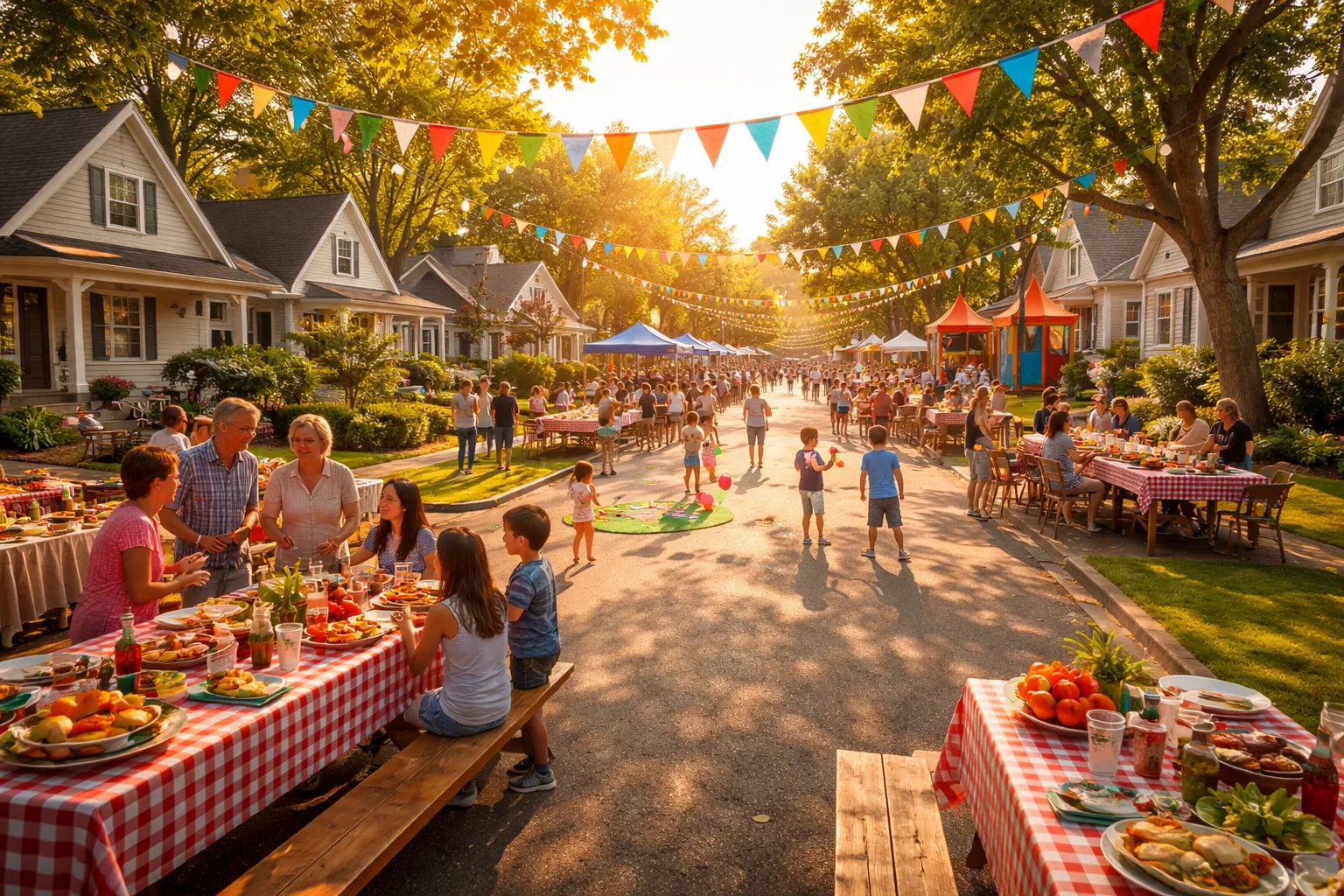
The Chaos Nobody Warns You About
You spent three weekends planning the ultimate summer block party. You knocked on every door, texted the group chat, posted in the neighborhood Facebook group, and even taped a flyer to the mailbox of that one neighbor who never checks their phone. You ordered food for 60 people. You rented tables and chairs for 60 people. You bought enough paper plates, napkins, and lemonade for — you guessed it — 60 people.
Then Saturday arrives. Forty-three people show up. Twelve of them bring uninvited guests. You run out of burgers by 2pm, have leftover potato salad for a small army, and spend half the party fielding the question: 'Did you get my text saying we were coming?'
Sound familiar? This is the block party planning trap — and it happens every single summer to well-meaning organizers who rely on informal, scattered RSVPs. The fix isn't working harder. It's working smarter, starting with how you collect responses.
Why Block Parties Are Uniquely Hard to Organize
Unlike a birthday party or wedding, a neighborhood block party has a uniquely chaotic guest dynamic. You're inviting people you know well, people you've never actually spoken to, renters who just moved in, and homeowners who've lived there for 30 years. Everyone has a different communication preference, a different level of commitment, and a wildly different definition of 'I'll probably come.'
The result? You end up with responses scattered across text messages, Facebook comments, verbal confirmations at the mailbox, and sticky notes handed to you by a seven-year-old. There's no single source of truth. And without that, you can't plan food quantities, arrange seating, schedule entertainment, or know whether you need one bouncy castle or three.
Step 1: Lock In Your Date, Location, and Permits Early
Before you send a single invitation, get your logistics locked down. Summer weekends fill up fast — especially July and August — so aim to start planning at least six to eight weeks in advance.
- Date: Avoid holiday weekends (Labor Day, Fourth of July) when many neighbors travel. A mid-July or mid-August Saturday afternoon tends to get the best turnout.
- Location: Most block parties use the street itself. Contact your city or county office to apply for a street closure permit. This typically takes two to four weeks to process, so don't wait.
- Rain plan: Decide upfront whether you'll reschedule or move to a park pavilion if the weather turns. Communicate this clearly in your invitation so guests aren't left guessing.
Pro tip: Once you have a confirmed date and location, that's when you open RSVPs — not before. Inviting people before logistics are locked in creates confusion and premature drop-offs.
Step 2: Create One Central Online RSVP (Not a Group Chat)
Here's where most block party organizers lose control of their headcount: they rely on informal channels. The neighborhood Facebook group, the HOA email thread, the group text — these are great for awareness, but terrible for tracking confirmed attendance.
Instead, create a single online RSVP page that does the work for you. A platform like RSVPlinks lets you build a custom event page in minutes — no design skills needed. You add your event details, set a guest limit if needed, and get a shareable link that you can drop anywhere: text, email, Facebook, Nextdoor, or a printed QR code on your flyer.
When a neighbor clicks the link, they fill in their name, how many people they're bringing, and any other details you need (dietary restrictions, whether they'll bring a dish, etc.). You see every response in one dashboard — no more hunting through comment threads at midnight trying to build a spreadsheet.
Real-world example: Sarah, a block party organizer in Austin, used to manage RSVPs through her neighborhood Facebook group. 'I'd have 47 comments on the post, but half of them were just people tagging their spouses or saying 'sounds fun!' — I had no idea who was actually coming,' she said. After switching to an online RSVP link, she had a confirmed headcount of 58 households three weeks before the event and ordered food with confidence for the first time in four years of organizing.
Step 3: Distribute Your Invitation Everywhere — With One Link
The beauty of a single RSVP link is that it works across every channel simultaneously. Here's how to maximize your reach:
- Physical flyers with a QR code: Print simple flyers and tape them to mailboxes, community bulletin boards, and the entrance to your street. Include a QR code that links directly to your RSVP page. Older neighbors or those who aren't on social media will appreciate a physical touchpoint.
- Nextdoor and neighborhood Facebook groups: Post your event with the RSVP link and a clear call to action: 'Click here to reserve your spot — we're capping attendance at 80 to make sure there's enough food for everyone!'
- HOA email list: If your neighborhood has one, a brief email with the event details and RSVP link reaches residents who aren't active on social media.
- Personal texts to key neighbors: Identify the five or six neighbors who are social connectors — the ones everyone knows. Text them personally and ask them to spread the word. Personal outreach dramatically increases engagement.
Step 4: Plan Food, Activities, and Supplies Based on Real Numbers
Once your RSVP link is live and responses are coming in, you can start making real decisions instead of educated guesses.
Food planning: Use your confirmed headcount to calculate quantities. A general rule: plan for 10–15% more than your confirmed count to account for last-minute additions. If 60 people confirmed, prep for 66–69. For a potluck-style party, use your RSVP form to assign dish categories — appetizers, mains, sides, desserts — so you don't end up with 14 pasta salads and nothing to grill.
Activities and entertainment: Knowing your headcount helps you right-size your entertainment. Fifty guests might need one lawn game station and a playlist. A hundred and twenty guests might justify hiring a DJ or renting a dunk tank. Don't guess — let your RSVPs guide the budget.
Rentals: Tables, chairs, canopies, and grills are typically rented per unit. Overbooking rentals wastes money; underbooking creates chaos. Your confirmed RSVP count eliminates the guesswork.
Step 5: Send Reminders and Day-Of Updates Automatically
Life happens. Neighbors forget. The weekend fills up. A well-timed reminder can be the difference between 60 people showing up and 60 people meaning to show up.
Set up automated reminder emails or texts through your RSVP platform — typically one week out and one day before the event. Include the start time, address, parking notes, and your rain plan. This keeps your confirmed guests engaged and dramatically reduces no-shows.
You can also use this channel to share last-minute updates: 'We've got a face painter coming at 3pm!' or 'We hit our food cap — please bring a lawn chair!' These small updates make guests feel like insiders and build excitement leading up to the day.
Step 6: Build a Simple Day-Of Checklist
Even with perfect RSVPs, the day itself needs structure. Here's a lean checklist that keeps things running smoothly:
- Set up 90 minutes before guests arrive — tables, chairs, food stations, activity areas
- Designate one or two helpers for greeting and directing guests
- Have a printed copy of your RSVP list for check-in (optional, but helpful for larger parties)
- Assign someone to manage the grill so you're free to host
- Set a clear end time on your invitation and stick to it — neighbors with kids appreciate knowing when to plan around
The Three Things That Make or Break a Block Party
After all the planning, the parties that people talk about for years share three things in common:
- A real headcount: Enough food, enough seating, enough space. Nothing kills a party faster than running out of burgers at 1pm or having nowhere to sit.
- A reason to mingle: Lawn games, a shared activity, or even a simple 'bring a dish to share' tradition gives strangers an easy way to connect. Don't just park people in front of a food table.
- A host who's actually present: When you've done the planning work upfront — especially the RSVP logistics — you get to actually enjoy the party instead of running around solving problems. That energy is contagious.
Your Next Steps, Starting Today
You don't need to wait until June to start planning a great summer block party. Here's what you can do right now:
- Pick your date and check permit requirements for your city or county — this is the step most people skip and then regret.
- Set up your free RSVP page on RSVPlinks so it's ready to share the moment you confirm your date and location. It takes less than ten minutes.
- Identify your five neighborhood connectors and reach out to them personally — their word-of-mouth is worth more than any flyer.
A great block party doesn't happen by accident. It happens because one person decided to do it right — and now that person is you.