How to Plan a Summer Neighborhood Block Party That Every Family on the Street Shows Up To
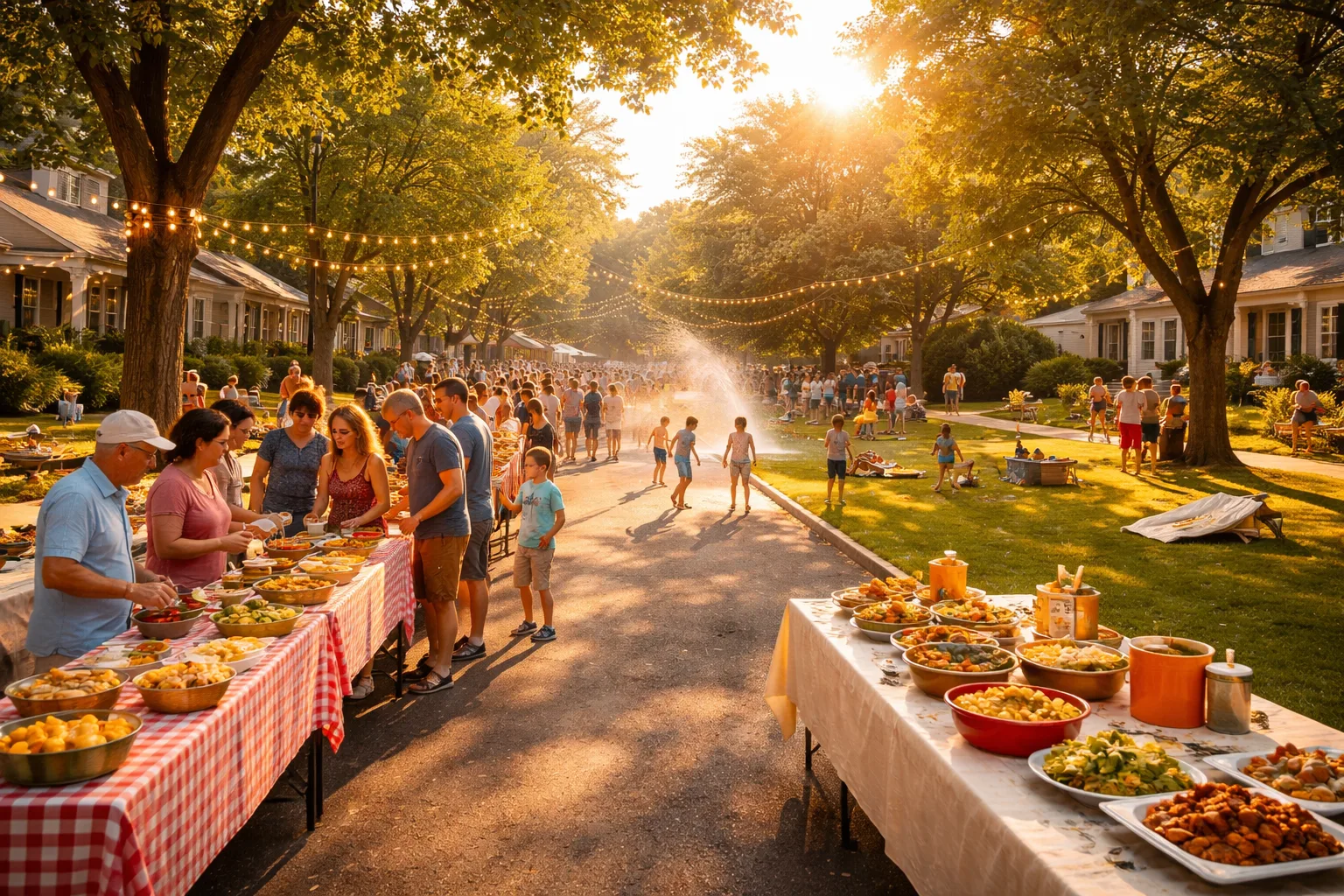
The Block Party Nobody Came To
You spent two weekends planning it. You bought the paper plates, the citronella candles, the lawn games. You even splurged on a bounce house. Then Saturday afternoon arrived — and so did six people. Your next-door neighbor, two kids from down the street, and a couple who felt obligated because you'd waved at them that morning.
Sound familiar? The summer neighborhood block party has incredible potential — a real chance to build the kind of community where neighbors actually know each other's names, kids roam freely between yards, and you feel genuinely connected to where you live. But too many of them fizzle out not because the idea was bad, but because the logistics were handled informally. A flyer tucked under a windshield wiper. A Facebook post nobody saw. A verbal invite that got forgotten by Tuesday.
This guide fixes all of that. Whether you're organizing your first block party or trying to revive a tradition that lost its spark, here's exactly how to plan a summer block party that every family on your street actually shows up to.
Step 1: Start Earlier Than You Think You Need To
The number one mistake neighborhood organizers make is announcing the event too late. Summer calendars fill up fast — family vacations, youth sports tournaments, weddings, weekend trips. If you want maximum attendance, you need to get on people's radar at least four to six weeks in advance.
Pick your date first. Saturday afternoons in late June or early July tend to work well — school is out, the weather is peak summer, and people haven't yet hit the mid-August vacation crunch. Avoid holiday weekends when families often travel. Then lock in your location (your street, a cul-de-sac, or a nearby park) and your rough time window (typically 3–8 PM works for families with young kids).
Once you have a date and location confirmed, your invitations can go out immediately. Don't wait until everything is perfectly planned — a save-the-date is enough to hold the spot on people's calendars.
Step 2: Send a Real Invitation — Not Just a Text Blast
Here's the hard truth: a group text or a neighborhood Facebook post is not an invitation. It's noise. People scroll past it, mean to respond later, and forget. If you want families to commit, you need to make the invitation feel intentional and personal.
This is where a dedicated RSVP system changes everything. Using a platform like RSVPlinks, you can create a custom event page with all the details — date, time, location, what to bring, fun theme — and share a single clean link with every household. Neighbors can RSVP in seconds from their phone, and you get a real-time headcount instead of trying to piece together who said "maybe" in a comment thread three weeks ago.
Consider going door-to-door with a printed card that includes the RSVP link and a QR code. Yes, actually knock on doors. It takes an afternoon, but the personal touch signals that this is a real event worth showing up to — and it gives you a chance to personally invite neighbors you've never formally met.
Mini-scenario: Sarah, who organized her street's first block party in years, went door-to-door with handmade cards and an RSVPlinks link. Within 48 hours, 22 of 28 households had RSVPed. She later said the door-knocking was the single most important thing she did — not because of the card, but because looking someone in the eye and saying "I really hope you'll come" is impossible to ignore.
Step 3: Make It Easy for Families to Contribute
Block parties work best as a communal effort, not a one-person production. When neighbors have a role — even a small one — they're far more likely to show up. Ownership creates attendance.
Use your RSVP form to ask families what they'd like to contribute: a dish to share, drinks, a lawn game, a folding table, or a skill (someone's dad is always secretly a grill master). This turns your headcount into a logistics tool. When you know 30 people are coming and eight families are bringing food, you're not guessing — you're coordinating.
Divide contributions into clear categories:
- Food: Assign savory dishes, sides, and desserts so you don't end up with 14 bags of chips and no protein.
- Drinks: A few families handle lemonade, iced tea, and water. Someone else handles a cooler of adult beverages if appropriate.
- Equipment: Tables, chairs, a grill, a speaker, extension cords — ask who has what before you rent anything.
- Activities: Cornhole, a slip-and-slide, a sprinkler, face painting — let families with kids volunteer to run stations.
Step 4: Design the Day Around Every Age Group
The block parties that become annual traditions are the ones where everyone has a reason to stay. That means designing the event so that a 4-year-old, a 14-year-old, a 40-year-old, and a 75-year-old all feel like it was made for them.
For young kids (under 8): A sprinkler, sidewalk chalk station, bubbles, or a simple bounce house. Keep it low-stakes and safe.
For tweens and teens: Competitive games with a prize — a cornhole tournament, a water balloon battle, or a trivia challenge about the neighborhood. Give them a job, too: running the music playlist, helping set up, or managing a game station. Teens with a role are teens who stay.
For adults: Good food, cold drinks, comfortable seating, and the chance to actually talk. Don't over-program adults — they'll entertain themselves if the environment is right. A lawn game like bocce or horseshoes gives them something to do without demanding their full attention.
For older neighbors: Shade, seating away from the loudest noise, and a genuine welcome. Older residents often have the deepest roots in the neighborhood and the best stories — seat them near the action, not on the periphery.
Step 5: Handle the Logistics That Kill Parties Before They Start
Nothing deflates a block party faster than logistical chaos. Here are the practical details that organizers often overlook:
- Permits: Many cities require a street closure permit for block parties. Apply 3–4 weeks in advance. Your city's website or a quick call to the local non-emergency police line will tell you what's needed.
- Street closure: Rent or borrow traffic cones and barricades. Post a notice on both ends of the block the morning of the event.
- Trash and cleanup: Set up clearly labeled bins for trash and recycling. Assign a small cleanup crew from your RSVP list — people who volunteered to help.
- Weather backup plan: Have a rain date ready and communicate it in advance. If there's a 30% chance of rain, send a reminder the night before confirming the event is on.
- Noise and timing: Agree on a wind-down time — usually sunset or 8 PM in family-heavy neighborhoods. Neighbors who weren't invited (or chose not to come) will appreciate a clear end time.
Step 6: Follow Up and Build the Tradition
The day after your block party is as important as the day of. Send a thank-you message — through your RSVPlinks event page, a group text, or a quick note in mailboxes — that celebrates what you built together. Share a few photos. Name the families who contributed. Make people feel seen.
Then, while the energy is fresh, plant the seed for next year. A simple poll — "Should we make this an annual thing?" — will almost always come back with a resounding yes. Get a few volunteers to form a small planning committee so the weight doesn't fall on one person. The best block parties become self-sustaining traditions because the community owns them collectively.
3 Things You Can Do Today
You don't need everything figured out to get started. Here are three concrete actions you can take right now:
- 1. Pick a date. Open your calendar, find a Saturday in late June or July that works for you, and commit to it. Everything else flows from this.
- 2. Create your event page. Head to RSVPlinks and set up your block party event in minutes. Add the date, a fun description, and a link to share. You can fill in details as they develop — the important thing is having a place for RSVPs to land.
- 3. Knock on three doors today. Not all of them — just three. Tell your neighbors you're planning something for the street and you'd love for them to come. That personal conversation will do more for your turnout than any post or flyer ever could.
A neighborhood where people know each other is safer, friendlier, and genuinely better to live in. Your block party is the spark. Light it.