How to Plan a Yom Kippur Break-Fast Gathering That Feels Warm, Welcoming, and Stress-Free
The Moment the Fast Ends — And the Chaos Begins
Picture this: it's 7:43 PM on Yom Kippur. The final shofar blast has just echoed through the sanctuary. You're lightheaded from 25 hours of fasting, your feet ache from standing through Neilah, and your phone is already buzzing. Aunt Miriam wants to know if she should bring rugelach. Your brother-in-law is asking for the address again. Your teenager just texted that three friends are coming too. And somewhere in your kitchen, a platter of lox is waiting — hopefully still fresh.
If you've ever hosted a Yom Kippur break-fast, you know this scene intimately. It's one of the most meaningful gatherings of the Jewish year, yet it often unfolds in a blur of exhaustion, last-minute logistics, and the particular stress of feeding a crowd after a full day of fasting — when everyone is hungry right now.
The good news? With a little intentional planning, your break-fast can be exactly what it's meant to be: a warm, joyful, deeply nourishing gathering that honors the solemnity of the day while welcoming everyone back to the table — literally and spiritually.
Why Break-Fast Gatherings Feel Different (and Why That Matters)
Unlike a Passover Seder or Hanukkah party, a break-fast has a unique emotional texture. Guests arrive having just spent the holiest day of the year in prayer, reflection, and fasting. They're physically depleted but spiritually open — tender, grateful, and unusually present. The atmosphere you create in those first moments matters enormously.
This is not the occasion for a chaotic, everyone-fend-for-themselves buffet scramble. It's a moment for warmth, ease, and the feeling that someone thought about you before you arrived. That's the goal of this guide: to help you create that experience without running yourself into the ground.
Step 1: Get Your Guest Count Right — Early
The single biggest source of break-fast stress is not knowing how many people are coming until the last minute. Break-fast gatherings have a way of expanding organically — and that's beautiful — but it can also mean you've prepared for 12 and 22 people show up.
Send your invitations at least 10–14 days before Yom Kippur. This gives guests time to plan their holiday and gives you accurate numbers for food, seating, and supplies.
Use a digital RSVP tool like RSVPlinks to create a simple, shareable invitation link. You can send it via text, WhatsApp, or email — no paper chasing required. Set a clear RSVP deadline (three days before the holiday works well) and include a note asking guests to flag any dietary restrictions. This one step alone will save you enormous stress.
Real scenario: Sarah hosts break-fast for her extended family every year. For years, she'd text everyone individually and lose track of replies. Last year, she sent a single RSVPlinks link to the family group chat. Within 48 hours she had confirmed counts, knew her sister-in-law was now dairy-free, and could actually plan her menu. She called it a game-changer.
Step 2: Build a Menu That's Gentle, Festive, and Mostly Make-Ahead
Traditional break-fast foods exist for good reason — they're gentle on a body that hasn't eaten all day. Think hydrating, not too heavy, with a balance of salt, protein, and carbohydrates. The classic Ashkenazi spread is genuinely brilliant: bagels, lox, cream cheese, eggs, herring, fruit, and something sweet.
Here's how to build your menu strategically:
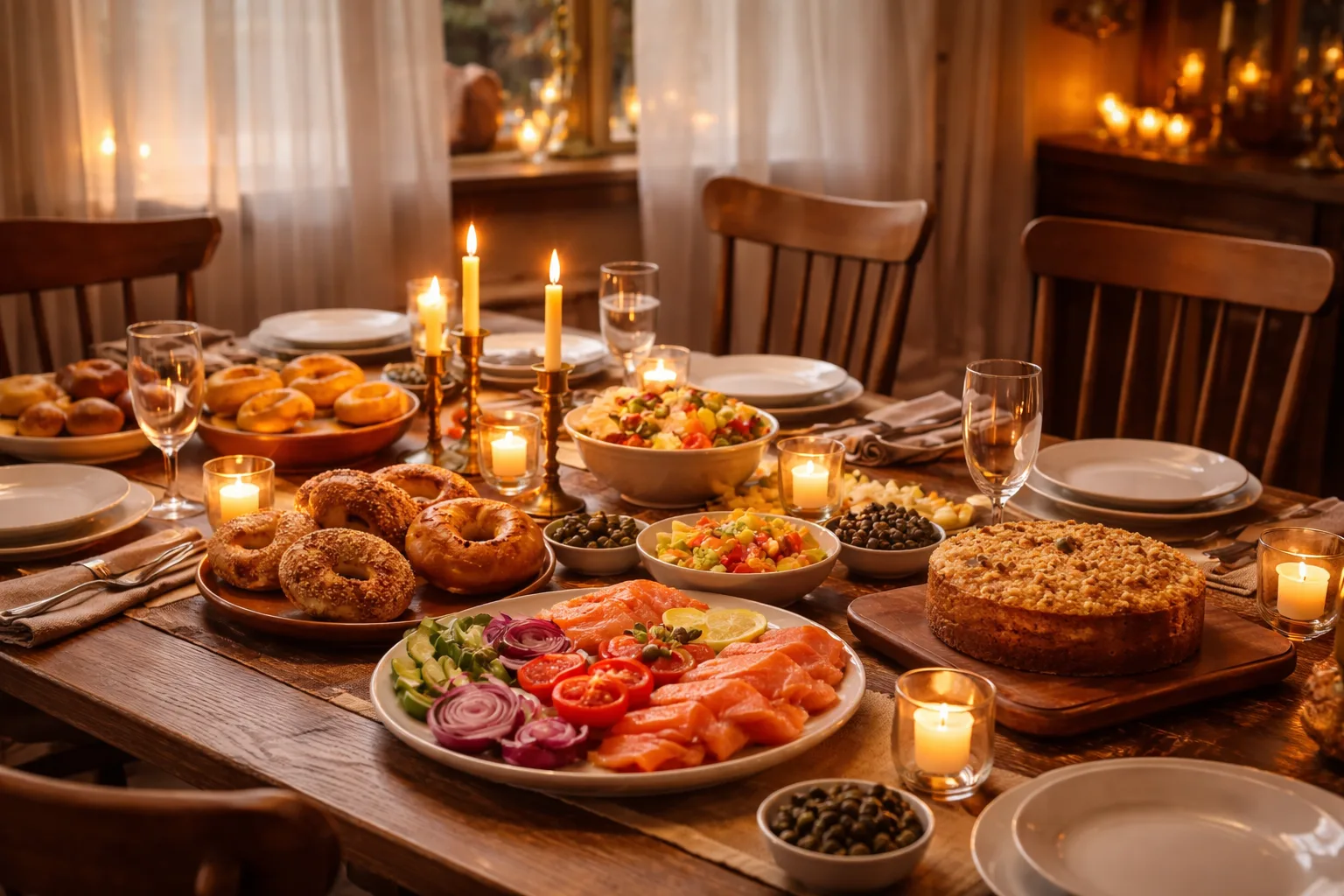
- Anchor with a classic spread: Bagels, a variety of cream cheeses, smoked salmon or lox, sliced tomatoes, red onion, capers, and cucumbers. This requires zero cooking and can be fully assembled the day before.
- Add one warm dish: A kugel (noodle or potato), a frittata, or a simple egg casserole that you can prep the night before and bake while you're at synagogue. Set a timer or ask someone to pop it in the oven.
- Include something sweet: Honey cake (leftover from Rosh Hashanah is perfect), rugelach, or babka. Again — no baking required if you source these from a local bakery or ask a guest to contribute.
- Don't forget drinks: Orange juice, sparkling water, coffee, and tea. After a fast, people crave hydration before food. Have drinks ready the moment guests walk in.
- Accommodate dietary needs: If you collected this information via your RSVP (you did!), you'll know to have a dairy-free option or a gluten-free bagel alternative on hand.
Pro tip: Resist the urge to over-cater. People are hungry but their stomachs have been empty all day — they'll fill up faster than you expect. A well-curated spread beats an overwhelming one.
Step 3: Set the Atmosphere Before Anyone Arrives
The physical environment you create is the difference between a gathering that feels thrown together and one that feels like a true homecoming. And it doesn't require much — just intention.
- Lighting: Soft, warm lighting immediately signals comfort. Candles on the table (if safe and practical) echo the holiday's spiritual energy. Avoid harsh overhead fluorescents if you can.
- Music: A quiet playlist of gentle Jewish music, Israeli folk songs, or even soft instrumental music creates atmosphere without demanding attention. Save the upbeat playlist for later in the evening when energy returns.
- Seating: Make sure there's enough seating for everyone to sit down. After a long day of standing in synagogue, your guests will deeply appreciate a chair. If you're short on seating, borrow or rent folding chairs in advance.
- A welcoming entry: Something as simple as a handwritten sign, a small flower arrangement near the door, or a candle on the entryway table signals that this gathering was prepared with love.
Step 4: Delegate — and Make It Easy for People to Help
One of the most common break-fast hosting mistakes is trying to do everything yourself. You've also been fasting all day. You're also depleted. Let people contribute — they want to.
When you send your RSVPlinks invitation, include a simple note: "We'd love help with the spread — feel free to bring a dessert, a salad, or drinks if you'd like to contribute!" You can even add a sign-up note in the invitation details so people can coordinate and avoid four people bringing rugelach (though honestly, is that the worst problem?).
Assign a trusted family member to be your day-of helper — someone who can let early guests in, start the coffee, and put the kugel in the oven while you're finishing up at synagogue or taking 20 minutes to decompress before guests arrive.
Step 5: Create a Moment of Transition
One of the most meaningful things you can do as a host is acknowledge the transition from the holiness of the fast to the joy of eating together. This doesn't need to be elaborate or religious — it just needs to be intentional.
Consider one of these simple rituals before the food begins:
- A short, heartfelt welcome from the host — even just 30 seconds of gratitude for everyone being together
- A round of "G'mar chatima tova" — wishing each other a good final sealing in the Book of Life
- Lighting a havdalah candle if your family observes it, marking the end of the holy day
- A simple blessing over the food before everyone digs in
This moment of pause honors what everyone just experienced and transforms a meal into a gathering. It takes two minutes and guests will remember it.
Step 6: Think About the Kids (and the Teenagers)
Break-fast gatherings span generations. Young children who didn't fast may be restless by evening. Teenagers who fasted for the first time may be especially emotional or proud. Older relatives may need quieter seating away from the commotion.
Have a small activity or screen option ready for young children so parents can decompress. Acknowledge the teenagers who fasted — a simple "I'm proud of you" goes a long way. Seat elderly relatives near the food so they don't have to navigate a crowded room while hungry.
The Week-Before Checklist
- Send RSVPlinks invitation and set RSVP deadline
- Confirm headcount and dietary needs
- Order or buy bagels, lox, and specialty items (don't leave this to the day before)
- Prep kugel or egg dish — refrigerate until baking day
- Set up seating and check you have enough plates, cups, and utensils
- Assign a day-of helper
- Prepare a simple playlist
- Buy candles, flowers, or any atmospheric touches
Three Things to Remember
After all the planning, here's what actually matters most:
- Warmth over perfection. A slightly imperfect spread served with genuine love will always beat a flawless spread served with stress. Your guests came to be with you.
- Prepare so you can be present. The whole point of planning ahead — using tools like RSVPlinks, prepping food in advance, delegating tasks — is so that when the fast ends, you can actually sit down, eat, and be in the room with the people you love.
- The transition moment matters. Take 60 seconds to mark the shift from fast to feast. It transforms a dinner into a memory.
Shanah tovah. May your break-fast be everything it's meant to be — nourishing, joyful, and filled with the people who matter most.