How to Plan a Back-to-School Classroom Volunteer Kickoff Event That Parents Will Actually Attend
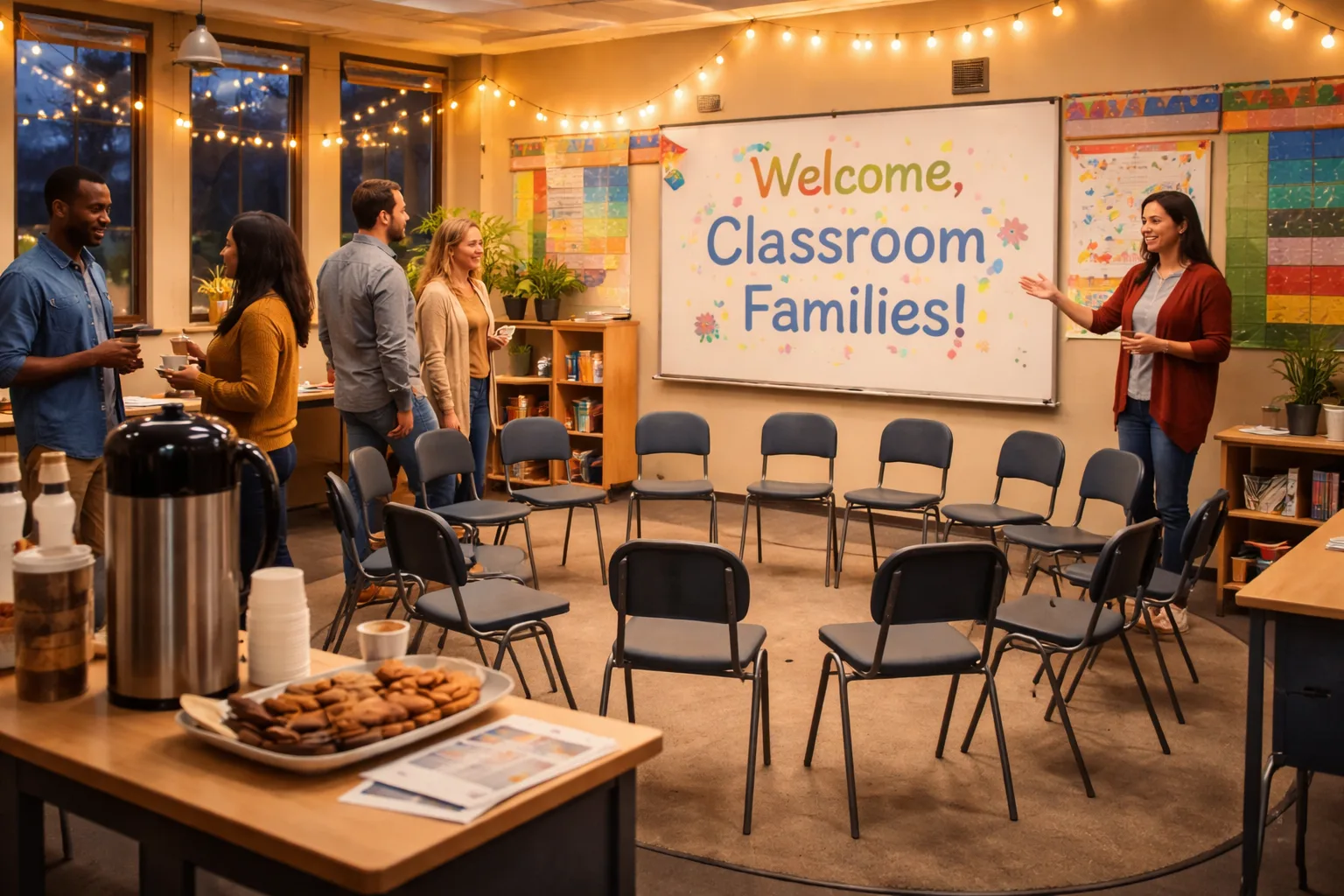
The Empty Chairs Problem Nobody Talks About
You spent three evenings designing the perfect flyer. You sent it home in backpacks on Monday. You posted it on the class Facebook group, the school app, and the hallway bulletin board. You even asked the teacher to remind students verbally. And on the night of your Classroom Volunteer Kickoff, you sat in a room with six chairs arranged in a hopeful circle — and watched three parents trickle in, two of whom were already your co-chairs.
If you've organized a school volunteer event before, that scene is painfully familiar. And it's not because parents don't care. Most of them desperately want to be involved. The problem is almost always execution: wrong timing, unclear value, friction-filled sign-up processes, and outreach that gets buried under a hundred other notifications. The good news? Every single one of those problems is fixable — and this guide walks you through exactly how to fix them.
Why Kickoff Events Fail (And Why It's Not the Parents' Fault)
Before we get into solutions, let's name the real culprits behind low attendance:
- Vague invitations: "Come learn about volunteering opportunities!" tells a busy parent almost nothing. What will I actually be doing? How long will this take? Will there be childcare?
- Friction-heavy RSVPs: If a parent has to fill out a paper form, mail it back, or navigate a clunky website to confirm attendance, most will simply skip it.
- Bad timing: A Tuesday at 3:30 PM works great for stay-at-home parents and terribly for everyone else. A Thursday at 8 PM might be the opposite.
- No perceived value: Parents are busy. If they don't understand what they'll get out of showing up — a clear picture of the year, a chance to meet the teacher, a real say in how they contribute — they'll stay home.
- One-channel outreach: Sending one flyer home once is not a communication strategy. It's a wish.
Understanding these failure points is the foundation. Now let's build something better.
Step 1: Lock In the Right Date and Time (With Data, Not Guesswork)
Stop picking dates based on what's convenient for the organizing committee. Instead, poll your parent community before you commit to anything. A simple online poll asking parents to select their preferred day of the week and time window takes five minutes to create and can save you from planning a well-organized event that nobody attends.
In general, research and school organizer experience consistently point to a few sweet spots: Tuesday or Wednesday evenings between 6:30 and 8:00 PM tend to capture the widest range of working parents. Avoid Monday (weekend recovery) and Friday (family plans). If your school has a high percentage of dual-income households, a Saturday morning option — especially with on-site childcare — can dramatically boost attendance.
Mini-scenario: Jefferson Elementary's room parent, Dana, had always scheduled kickoffs on the first Tuesday after Labor Day at 4 PM. Attendance averaged eight parents. After polling her class of 28 families, she discovered that Wednesday evenings worked for 21 of them. She moved the event, offered a 30-minute childcare window in the adjoining classroom, and had 19 parents show up. Same event. Different time.
Step 2: Write an Invitation That Actually Communicates Value
Your invitation is doing sales work. It needs to answer four questions in the first five seconds a parent reads it:
- What is this? A 45-minute kickoff meeting for classroom volunteers in Ms. Rivera's 3rd-grade class.
- What will I get out of it? You'll meet other class parents, hear about flexible volunteer options that fit your schedule, and get a printed calendar of key dates for the year.
- What do I need to do? RSVP by Friday so we can have enough snacks and handouts ready.
- How easy is it to say yes? One click. That's it.
That last point is critical. A frictionless RSVP process is one of the highest-leverage changes you can make. Platforms like RSVPlinks let you create a clean, mobile-friendly RSVP page in minutes — parents tap a link in a text or email, confirm their attendance, and you instantly see who's coming. No paper, no login walls, no confusion. When the barrier to saying "yes" is low, more people say yes.
Step 3: Build a Multi-Touch Outreach Campaign
One announcement is not a campaign. Here's a simple sequence that works:
- Week 1, Day 1: Send the initial invitation via email and the school's messaging app. Include the RSVP link prominently.
- Week 1, Day 4: Post a friendly reminder in the class Facebook or WhatsApp group. Keep it casual: "Hey everyone — just a reminder about our kickoff next week! We'd love to see you there. RSVP takes 10 seconds: [link]"
- 3 days before: Send a personal-feeling email to parents who haven't yet RSVPed. "We haven't heard from you yet — no pressure, but we'd love to know if you can make it!"
- Day before: A quick reminder text or app notification to confirmed attendees with parking info, the room number, and what to expect.
This sequence feels attentive without being annoying. And because you're tracking RSVPs in real time, you always know who needs a nudge and who's already confirmed.
Step 4: Design an Event Worth Attending
Once parents are in the room, you have one job: make them glad they came. Here's a 45-minute agenda that delivers real value:
- 0–5 min — Welcome and name tags. Have light refreshments ready. First impressions matter.
- 5–15 min — Teacher spotlight. The classroom teacher shares three specific things parents can do this year that will directly help student outcomes. Not generic asks — specific ones. "We need someone to organize our reading corner library once a month" is infinitely more compelling than "we need volunteers."
- 15–25 min — Volunteer menu presentation. Present a visual "menu" of volunteer opportunities with time commitments clearly labeled. Include remote options for parents who can't come in person — editing the class newsletter, coordinating supply donations online, managing the class social media page.
- 25–35 min — Sign-up time. Use a physical sign-up sheet or a live digital form. Don't let people leave without having chosen at least one thing — even something small.
- 35–45 min — Open mingling. This is where real community gets built. Don't skip it.
Mini-scenario: At Maple Grove School, room parent Tomás introduced a "volunteer menu" for the first time — a one-page sheet listing 12 opportunities ranging from "30-minute monthly" to "full field trip chaperone." Parents who previously said they were "too busy" signed up for three low-commitment tasks each. The menu made it easy to say yes at the right level.
Step 5: Follow Up Fast and Make People Feel Seen
Within 24 hours of the event, send a follow-up to everyone — both attendees and those who couldn't make it. Include:
- A warm thank-you for those who came
- A summary of volunteer opportunities for those who missed it, with a link to sign up
- The year's key dates in a simple, printable format
- A direct contact for questions
This follow-up serves two purposes: it reinforces the commitment of people who attended, and it gives a genuine second chance to parents who genuinely wanted to come but couldn't. Using a platform like RSVPlinks makes it easy to export your attendee list and send targeted follow-ups without manually tracking who came and who didn't.
The Mindset Shift That Changes Everything
The most effective volunteer coordinators stop thinking about kickoff events as administrative tasks and start treating them as hospitality experiences. You're not running a meeting — you're welcoming people into a community. When parents feel genuinely welcomed, clearly informed, and given options that respect their time, they don't just attend your kickoff. They show up all year long.
3 Things You Can Do Today
- Send a date-preference poll to your class families right now. Don't guess — ask. Use a free polling tool and give parents 48 hours to respond before you book anything.
- Set up your RSVP page before you write a single word of your invitation. Having the link ready makes your outreach faster and more professional. RSVPlinks takes under five minutes to set up a clean, shareable event page.
- Draft your "volunteer menu" this week. Sit down with the teacher and identify 8–12 specific, time-labeled opportunities. This single document will do more to drive volunteer sign-ups than any amount of general appeals.