Dinner Party Checklist: A Host's Timeline
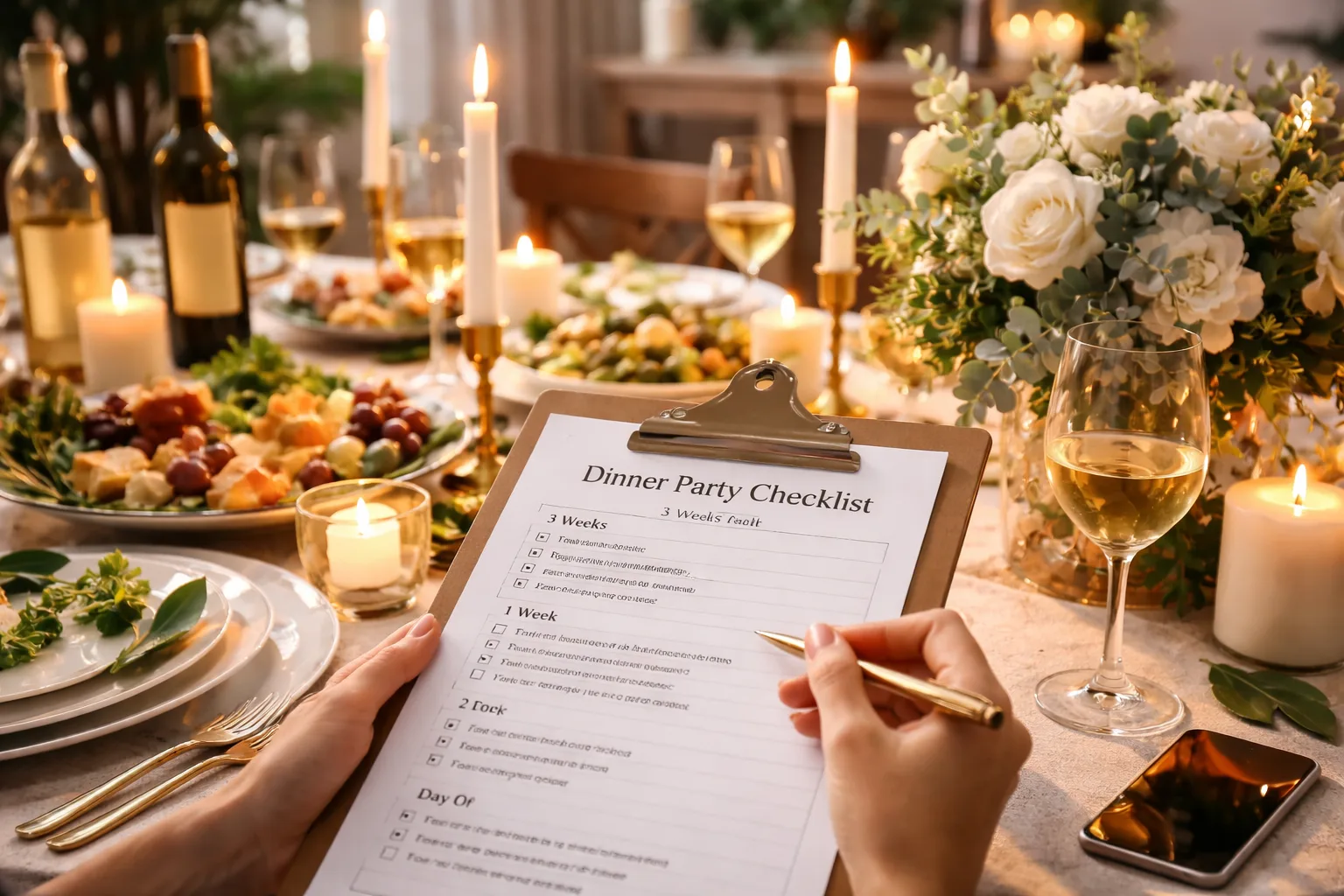
A dinner party checklist comes down to six stages: guest list and date three weeks out, invitations and menu two weeks out, a headcount and shopping plan one week out, make-ahead cooking two to three days out, table setup the day before, and an hour-by-hour plan for the day itself. The dinner party planning checklist below is built for a sit-down dinner of 6 to 12 guests, and every task has a day attached so nothing lands on the afternoon of the party.
If this dinner is your Friendsgiving on Saturday, November 21, count back from that date: guest list by October 31, invitations out by November 7, headcount locked by November 14. Hosting Thanksgiving itself on Thursday, November 26? The same steps apply, and this Thanksgiving dinner RSVP page example shows the headcount and dish questions set up.
Dinner party checklist and timeline at a glance
| When | Tasks |
|---|---|
| 3 weeks out | Pick the date, count your seats, write the guest list, choose the format, set a per-person budget |
| 2 weeks out | Send invitations with an RSVP deadline, ask about dietary needs, draft the menu |
| 1 week out | Close RSVPs, lock the headcount, write the shopping list, check plates, glasses, and chairs |
| 2–3 days out | Shop non-perishables and drinks, clean the main rooms, make dessert and sauces, move frozen proteins to the fridge |
| Day before | Shop fresh items, set the table, label serving dishes, chill drinks, prep vegetables |
| Day of | Follow the hour-by-hour plan below |
| Day after | Finish dishes, return borrowed items, send a thank-you text |
3 weeks out: date, guests, and format
Count seats before you count friends. Your table sets the ceiling. As a rule of thumb, each guest needs about 24 inches of table edge to eat comfortably, so a 6-foot rectangular table seats 6, or 8 if you use the ends. Six to eight guests keeps one conversation going around the table; past ten, the table splits into two conversations, which is fine if you plan for it.
Choose a format.
- Plated: most formal, most work for you at the moment of serving. Best for 6 or fewer.
- Family-style: platters passed around the table. Relaxed, and it works well up to about 10.
- Buffet: guests serve themselves from the counter. The practical choice for 12 or more.
- Host-plus-contributions: you cook the main; guests bring a side, dessert, or wine. Assign dishes rather than leaving it open.
Set a per-person budget. Multiply it by your headcount and split it roughly into food, drinks, and extras like flowers and candles. Knowing the number now keeps the menu realistic.
2 weeks out: invitations and menu
Send invitations with a clear RSVP deadline five to seven days before the dinner, since that's when you'll need a firm number to shop. Ask about allergies and dietary restrictions in the invitation itself rather than finding out at the table.
For a dinner party, an RSVP link does this neatly: RSVPlinks lets guests reply from a text or email with no app and no account, and you can turn plus-ones on or off, or add a custom question such as "Any allergies or foods you avoid?" on a paid plan. The free plan covers up to 20 RSVPs, which is enough for any dinner party. This walkthrough shows how to create an RSVP link in about three minutes, and the invitation page templates give you a finished design to start from.
Build a menu that doesn't trap you in the kitchen:
- One main you've cooked before. Save new recipes for a Tuesday night.
- At least one dish that's served at room temperature, like a grain salad or roasted vegetables.
- A dessert you make a day or two ahead.
- One thing you buy ready-made, such as good bread, cheese, or ice cream.
- One dish that works for every dietary need on your list, so no one eats only sides.
How much food and drink per person
These are common rules of thumb for a three-hour dinner. Round up for big eaters.
| Item | Per guest | For 8 guests |
|---|---|---|
| Appetizers before dinner | 3–4 pieces | 24–32 pieces |
| Boneless meat or fish (raw weight) | 6–8 oz | 3–4 lb |
| Bone-in meat (raw weight) | 12–16 oz | 6–8 lb |
| Each side dish | about ½ cup | 4 cups |
| Bread | 1–2 rolls or slices | 1–2 loaves |
| Wine (5 glasses per 750 ml bottle) | ½ bottle per wine drinker | 4 bottles |
| Ice | 1 lb | 8 lb |
Always have a non-alcoholic option beyond water, such as sparkling water with citrus or a pitcher of iced tea.
1 week out: headcount, shopping list, and gear
- Close RSVPs on your deadline and message anyone who hasn't answered by name.
- Lock the headcount and scale every recipe to it.
- Split the shopping list into two: non-perishables and drinks (buy 2–3 days out) and fresh produce, bread, herbs, and flowers (buy the day before).
- Count plates, forks, knives, glasses, napkins, and chairs against the headcount. Borrow or rent the gaps now.
- Sketch the seating: split up couples, put quieter guests next to good talkers, and seat yourself nearest the kitchen.
- Make a playlist longer than the party.
2–3 days out: shop, clean, and cook ahead
- Buy non-perishables, wine, and other drinks.
- Clean the entry, living room, dining area, and guest bathroom. Skip the rooms no one will see.
- Make anything that improves overnight: dessert, sauces, dressings, soups, braises.
- Move frozen proteins to the fridge. Large roasts can need a day or more to thaw safely.
Day before: set up
- Shop for fresh items.
- Set the table completely: plates, glasses, napkins, candles, and place cards if you're using them.
- Pull out every serving dish and label it with a sticky note naming the food and its serving utensil.
- Chill white wine, sparkling drinks, and water.
- Wash and chop vegetables; store them in containers.
- Empty the dishwasher and trash cans.
- Stock the guest bathroom with hand towels and spare toilet paper.
- Text guests the address, parking, and door details.
How to host a dinner party on the day: hour by hour
This schedule assumes guests arrive at 7:00 PM and you sit down at 7:45. Shift it to match your time.
- 12:00 PM — Buy ice and any last fresh items like bread or herbs.
- 2:00 PM — Start anything that cooks low and slow.
- 4:00 PM — Finish prep, set up the drinks station, fill the ice bucket, and wash every dish you've used so far.
- 5:30 PM — Shower and get dressed. Doing this before the last cooking push means you're ready if someone arrives early.
- 6:15 PM — Light candles, start the playlist, set out appetizers, open red wine.
- 6:30 PM — Main dish into the oven if it's a 60- to 75-minute roast; time it to finish resting at 7:45.
- 7:00 PM — Guests arrive. Hand everyone a drink within their first two minutes and introduce people who don't know each other.
- 7:45 PM — Sit down. Serve the main and sides.
- 8:45 PM — Clear plates, then serve dessert and coffee or tea.
- 10:00 PM — Offer leftovers in containers as guests leave.
When a guest asks "What can I do?", have an answer ready: open the wine, fill water glasses, or carry out the salad.
Dinner party supplies checklist
- Dinner plates, salad or appetizer plates, dessert plates
- Forks, knives, spoons, and serving utensils
- Wine glasses, water glasses, coffee mugs
- Cloth or good paper napkins
- Tablecloth or runner, candles, a lighter
- Low flowers or greenery that doesn't block sightlines
- Corkscrew, bottle opener, ice bucket, pitcher for water
- Serving platters and bowls, trivets
- Take-home containers for leftovers
Frequently Asked Questions
How far in advance should you plan a dinner party?
Plan two to three weeks ahead and send invitations about two weeks before the date. In November and December, send them three to four weeks out, since holiday calendars fill quickly.
How many guests should you invite to a dinner party?
Six to eight guests is a comfortable size for one table conversation, and it's a common rule of thumb for first-time hosts. Let your table and chairs set the limit: allow about 24 inches of table edge per person.
How much food do I need per person for a dinner party?
Plan 6–8 ounces of boneless protein per person (raw weight), about half a cup of each side, and 3–4 appetizer pieces before dinner. For wine, one 750 ml bottle pours about five glasses, so plan roughly half a bottle per wine drinker.
What time should a dinner party start?
Seven o'clock is a common start time for a weeknight or weekend dinner party. Plan to sit down 30 to 45 minutes after the invited time so late arrivals don't hold up the meal.
How do I ask dinner guests about dietary restrictions?
Ask in the invitation, not at the table. A question on your RSVP form such as "Any allergies or foods you avoid?" collects every answer in one place before you shop.
Your checklist is ready; the invitation is the first box to tick. Create an RSVP link for your dinner party, add a dietary question, and send it two weeks out.