How to Plan a Fall Back-to-School Fundraiser That Parents and Kids Actually Show Up To
The Fundraiser Nobody Came To
You spent three weeks organizing it. You printed flyers, sent emails, posted in the school Facebook group, and even cornered parents at drop-off. Then the day arrived — and half the tables sat empty, the bounce house operator looked bored, and the bake sale had more cookies than customers.
Sound familiar? Fall back-to-school fundraisers have a reputation problem. Parents are slammed with back-to-school chaos — supply lists, new schedules, after-school signups — and kids are still readjusting to early bedtimes. Getting both groups to show up, at the same time, to the same event, takes more than a flyer on a bulletin board.
But here's the good news: the schools and PTAs that consistently pull off high-attendance, high-revenue fall fundraisers aren't doing anything magical. They're just doing a few specific things better than everyone else. This guide breaks down exactly what those things are.
Why Fall Fundraisers Fail (And It's Not What You Think)
Most organizers assume low turnout is a marketing problem — send more emails, post more often. But the real culprits are usually:
- Poor timing: Scheduling on a weekend already packed with soccer games, fall festivals, or religious holidays.
- No RSVP process: When people don't commit in advance, they don't feel accountable to show up.
- Kid-unfriendly programming: Events that feel like adult obligation rather than genuine fun for children.
- Vague communication: Parents don't know what to expect, how long it runs, or what to bring.
Fix these four issues and your attendance — and your fundraising totals — will climb significantly.
Step 1: Pick the Right Date (This Alone Can Double Attendance)
Pull up a community calendar before you book your venue. Check for conflicts with local youth sports leagues, major school events, and community festivals. The sweet spot for fall fundraisers is typically the third or fourth weekend of September — school routines are settled, but the holiday crunch hasn't started yet.
Saturday late mornings (10 a.m. to 1 p.m.) outperform evening events for family fundraisers. Kids are energized, parents haven't lost the day, and you avoid competing with dinner and homework routines.
Real-world example: Jefferson Elementary in a mid-sized suburb moved their annual carnival from a Friday evening to a Saturday morning and saw attendance jump from 140 families to over 260 in a single year — with no other major changes to the event itself.
Step 2: Build a Theme That Kids Beg Their Parents to Attend
Generic fundraisers get generic turnout. A themed event creates anticipation — kids talk about it at school, which means parents hear about it at home. For fall, lean into the season:
- Harvest Festival: Pumpkin decorating, apple bobbing, scarecrow building contest
- Fall Olympics: Relay races, tug-of-war, sack races with fall-themed prizes
- Glow Night: Evening event with glow accessories, blacklight games, and neon face paint
- Trunk-or-Treat Kickoff: Early October event that doubles as community Halloween prep
The theme isn't just decoration — it shapes your activities, your marketing language, and the emotional hook that makes families feel like they'd be missing out if they didn't come.
Step 3: Create a Real RSVP Process (Not Just a Sign-Up Sheet)
This is the step most school fundraiser committees skip — and it's the one that makes the biggest difference in actual attendance.
When families RSVP, three things happen: they mentally commit to attending, you get a headcount that helps with planning and supplies, and you have a contact list for reminders. Without RSVPs, you're essentially hoping people remember to show up.
Use a dedicated event RSVP tool like RSVPlinks to create a clean, shareable invitation link that parents can open on their phones. Include the event name, date, time, location, what to expect, and a simple one-click RSVP. Send the link through your school's communication channels, text chains, and social media groups.
Pro tip: Set up an automated reminder to go out 48 hours before the event. Families who RSVP'd but might have forgotten will get a nudge — and your no-show rate will drop noticeably.
Step 4: Design Programming That Works for Both Kids AND Parents
The biggest mistake fundraiser planners make is building an event that's either all kid-focused (parents stand around bored) or all adult-focused (kids drag their parents to leave). You need programming that runs in parallel.
For kids (ages 4–12):
- Craft station with a fall theme (leaf printing, pumpkin painting)
- Active games with prizes (ring toss, bean bag throw)
- Photo booth with fall props — kids love it, parents share it on social media
For parents (while kids are occupied):
- Raffle ticket sales and silent auction items
- Local vendor or sponsor booths
- A comfortable seating area with coffee and food — parents stay longer when they're comfortable
When parents are comfortable and kids are entertained, families stay for the full event window instead of leaving after 20 minutes. Longer dwell time means more spending and more donations.
Step 5: Make the Fundraising Feel Fun, Not Obligatory
Nobody wants to feel like they're being squeezed for money. The most successful school fundraisers embed giving into the fun itself:
- Pledge-a-thon activities: Kids collect pledges for laps walked, goals scored, or games won at the event
- Raffle with desirable prizes: Gift cards, experience packages, or items donated by local businesses
- Matching challenge: Announce a donor who will match all contributions made during the event — creates urgency and excitement
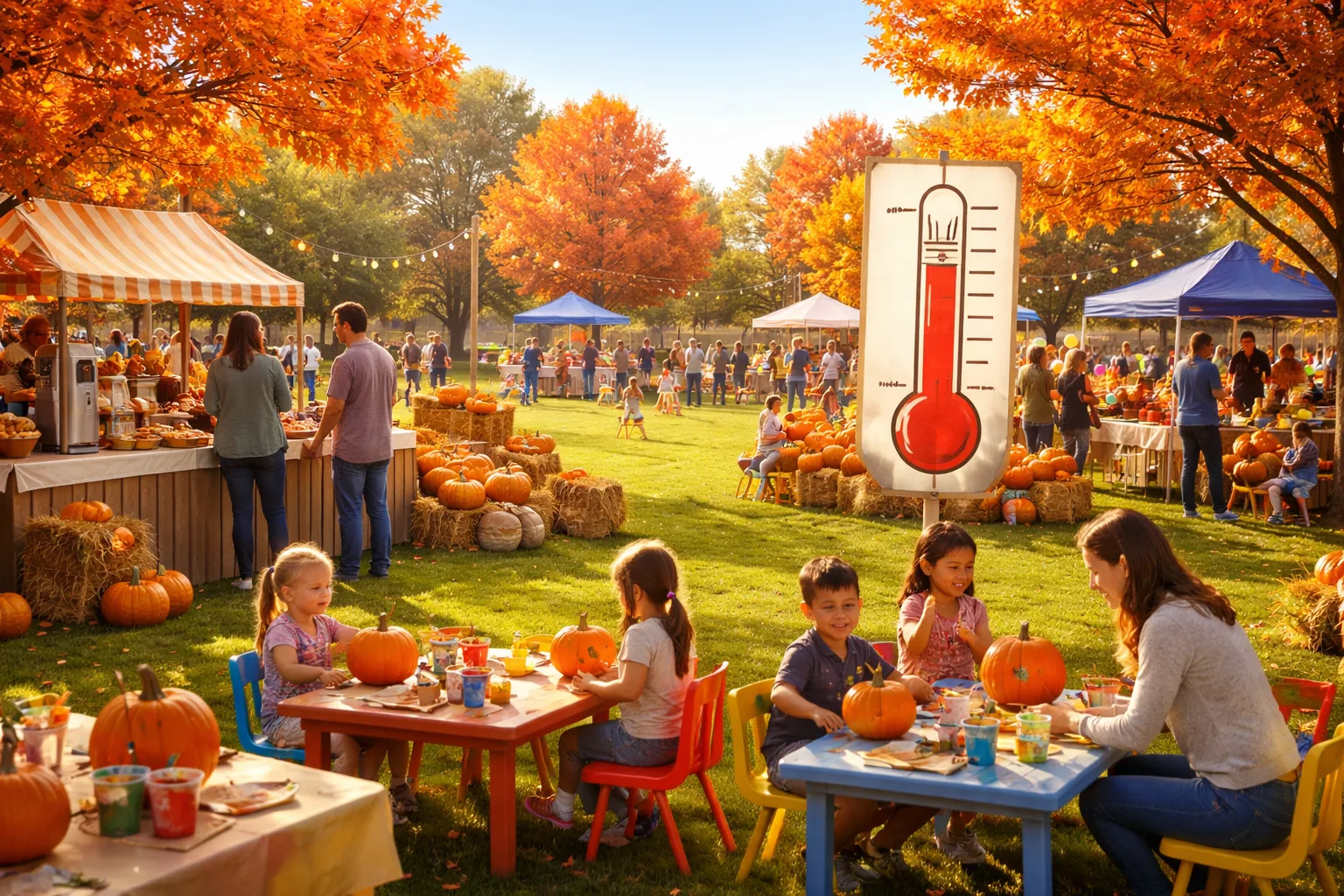
- Visible fundraising goal: A large thermometer display showing progress toward the goal in real time — families love watching the number climb
Real-world example: A PTA in the Pacific Northwest ran a "Walk-a-Thon Harvest Festival" where kids collected pledges per lap around the school field. The event raised 40% more than their previous bake-sale-only model — and kids were the ones driving parents to participate.
Step 6: Communicate Early, Often, and Through the Right Channels
Your communication strategy should start at least three weeks out and use multiple touchpoints:
- Week 3 out: Save-the-date with your RSVP link — send via school newsletter, email list, and parent Facebook/WhatsApp groups
- Week 2 out: Full event details — theme, activities, what to bring, how to donate or buy tickets in advance
- Week 1 out: Excitement-building post — share a sneak peek, announce a prize or special activity
- 48 hours out: Reminder to all RSVPs (automated through your RSVP platform)
- Day of: Quick social media post with a "we're ready for you!" message and any last-minute details
Use RSVPlinks to centralize your invitations so every parent has one clean link they can bookmark and return to for updates — no more digging through email chains.
Step 7: Capture the Moment to Build Next Year's Momentum
The event isn't over when the last family leaves. What you do in the 48 hours after determines how easy next year's fundraiser will be to fill.
- Post a photo recap on social media — tag the school, thank volunteers and sponsors
- Send a thank-you message to everyone who RSVP'd (even those who couldn't attend)
- Share the fundraising total — families love knowing their participation made a difference
- Ask for a quick one-question survey: "What would make next year's event even better?"
This follow-up builds community, creates goodwill, and gives you a warm audience who already opted in for next year's event.
3 Things You Can Do Today
You don't need to have everything figured out to start moving. Here are three concrete actions you can take right now:
- Lock in your date. Check your community calendar, pick a Saturday morning in late September, and block it before another school event claims it.
- Choose your theme. Pick one of the fall themes above, write it at the top of a planning doc, and let it guide every decision from here.
- Set up your RSVP link. Head to RSVPlinks, create your event invitation, and get a shareable link ready to drop into your school's communication channels. The sooner families commit, the better your turnout will be.
A well-planned fall fundraiser doesn't just raise money — it builds the kind of school community where parents want to be involved and kids are proud of where they go to school. Start with these steps, and this year's event might just be the one everyone talks about.