How to Write RSVP Reminder Messages That Are Polite and Actually Get Responses
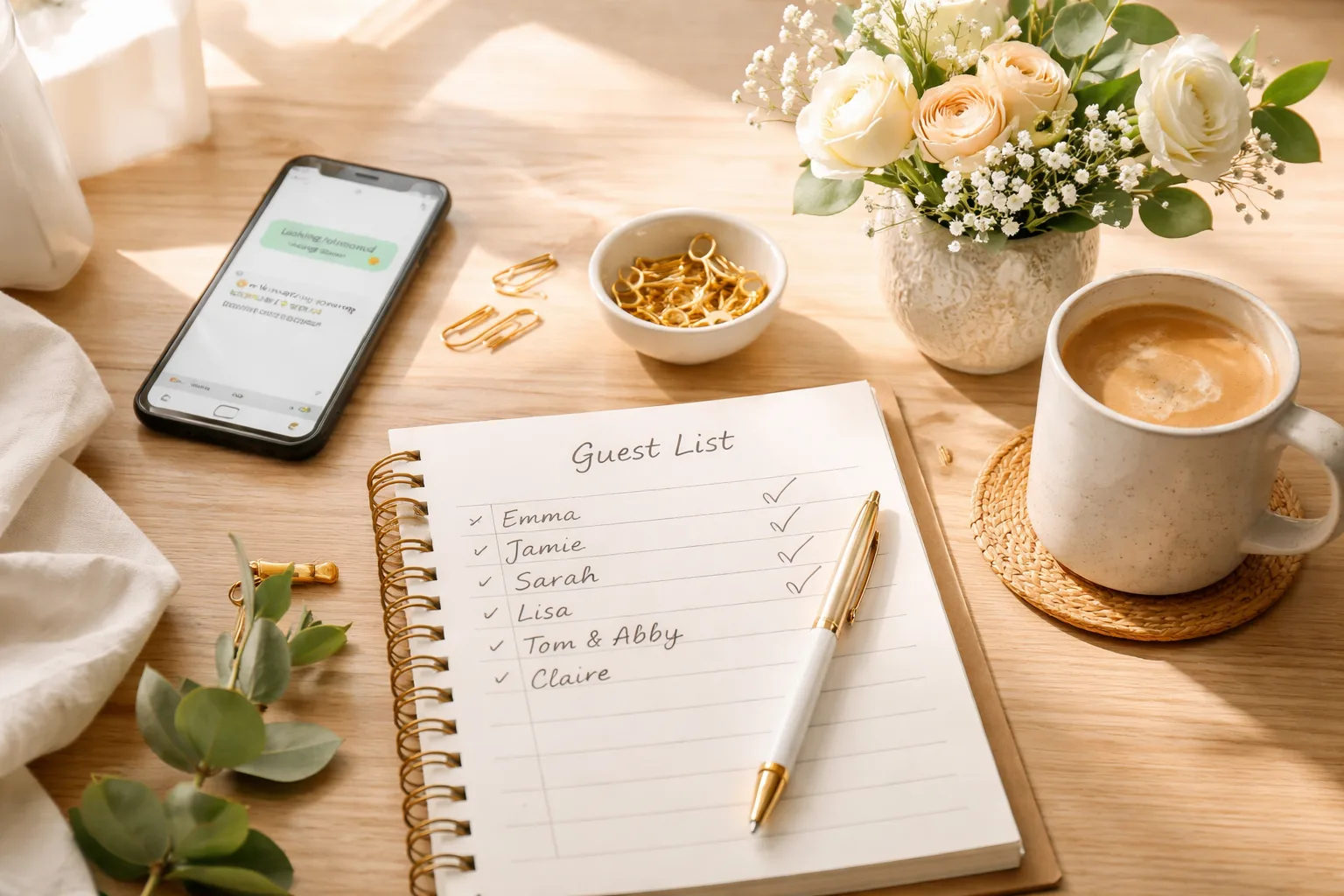
The Silence Is Deafening — And Your Deadline Is Tomorrow
You sent the invitations three weeks ago. You chose the wording carefully, included all the details, and even set a clear RSVP deadline. And yet, here you are — two days before the caterer needs a final headcount — staring at a guest list with 14 unanswered invitations. You know these people. You like these people. But now you have to chase them down like a bill collector, and every message you draft feels either too passive-aggressive or embarrassingly desperate.
Sound familiar? You are not alone. RSVP non-response is one of the most universally frustrating parts of planning any event, from a backyard birthday party to a formal wedding. The problem is not that your guests are rude — most of them genuinely mean to respond and simply forget. The real problem is that most reminder messages are either too vague to prompt action or so awkwardly worded that they create social tension before the party even starts.
This guide will show you exactly how to write RSVP reminder messages that feel warm, get read, and — most importantly — actually get responses.
Why Most RSVP Reminders Fail
Before we get to the templates, it helps to understand why the average reminder message falls flat. Most people send something like: 'Hey, just a reminder to RSVP for my party!' This message has three problems:
- No urgency: It does not tell the reader why they need to act right now.
- No clear action: It does not tell them exactly how to respond or how long it will take.
- No stakes: It does not communicate what happens if they do not respond — which means it is easy to ignore again.
A good reminder message fixes all three of these issues without sounding like a corporate email or a guilt trip. Here is how to do it.
Step 1: Choose the Right Channel for Your Reminder
The medium matters as much as the message. A text message has a 98% open rate. An email might sit unread for days. A Facebook comment can get buried. Match your reminder channel to how you originally sent the invitation and how your guest typically communicates.
- Text message: Best for close friends, family, and casual events. Direct and hard to ignore.
- Email: Best for formal events, professional contacts, or when the original invitation was sent by email. Use a clear subject line like 'Quick question about [Event Name] — can you make it?'
- WhatsApp or DM: Great for group chats or guests you regularly message on social platforms.
- Phone call: Reserve this for elderly relatives, people with limited digital access, or guests whose response is critical to your planning.
Mini-scenario: Sarah is planning a dinner party for 20 people. She originally sent paper invitations with a response card. Two weeks before the event, eight guests have not responded. Rather than sending a mass email blast, she texts each non-responder individually — a personal touch that takes 10 minutes and nets six responses within the hour.
Step 2: Open With Warmth, Not Pressure
The opening line of your reminder sets the entire emotional tone. Starting with 'I still have not heard back from you' immediately puts the reader on the defensive. Instead, lead with something that makes them feel like a valued guest, not a delinquent debtor.
Try openings like:
- 'We are so excited about [event] and really hoping you can join us!'
- 'Just thinking about [event] and wanted to make sure this did not get lost in the shuffle!'
- 'We would absolutely love to have you at [event] — just checking in!'
Notice that none of these mention the fact that they have not responded yet. You are not calling them out — you are giving them a graceful on-ramp to respond without embarrassment. This small shift dramatically increases response rates because it removes the social friction of admitting they forgot.
Step 3: State the Deadline Clearly and Specifically
Vague deadlines are ignored. 'Soon' means nothing. 'When you get a chance' means never. Give a specific date and, if possible, a brief reason why that date matters.
Weak: 'Please let me know when you can!'
Strong: 'I need to confirm numbers with the venue by this Friday, June 14th — could you let me know by Thursday evening?'
The reason does not need to be dramatic. Mentioning the caterer, the venue, the seating chart, or even just 'so I can plan the food' gives the deadline legitimacy. It transforms your request from a social nicety into a genuine logistical need — which is exactly what it is.
Step 4: Make the Response Ridiculously Easy
Every extra step between your guest and their response is a drop-off point. If they have to navigate to a website, create an account, and fill out a form, many will abandon the process entirely. Your reminder should include the single easiest possible way to respond.
- If you are using an online RSVP tool like RSVPlinks, include the direct link in your reminder message. A one-click response page removes virtually all friction.
- If you want a text response, tell them exactly what to type: 'Just reply YES or NO and I will take care of the rest!'
- If you need dietary information or a plus-one decision, ask only the most essential question in the reminder — you can follow up with details after they confirm.
Mini-scenario: Marcus is organizing a surprise 50th birthday party. He sends a reminder text that reads: 'Hey! Just making sure you saw the invite for Dad's surprise party on the 22nd — we need to finalize numbers by Sunday. Here is the link to RSVP in 30 seconds: [link]. Hope you can make it!' The message is friendly, specific, urgent, and frictionless. He gets 11 responses in 24 hours.
Step 5: Send the Right Number of Reminders at the Right Times
One reminder is often not enough. Three reminders in one week is too many. Here is a simple timeline that works for most events:
- First reminder: One week before the RSVP deadline. Friendly and low-pressure.
- Second reminder: Two days before the deadline. Slightly more urgent, still warm.
- Final nudge: The day of the deadline, for the truly unresponsive. Keep it brief and non-judgmental: 'Last chance to RSVP for [event] — hope to see you there!'
After three reminders with no response, it is reasonable to either assume they are not coming or make a direct phone call. Do not send a fourth message — at that point you risk damaging the relationship more than the non-response already has.
Step 6: Personalize for Your Relationship With the Guest
A reminder to your best friend sounds different from a reminder to your boss's spouse. Adjust your tone accordingly, but keep the core structure the same: warm opening, specific deadline, easy response path.
- Close friend: 'Babe, please tell me you are coming to my birthday dinner — I need to know by Friday! Just text me back. Love you!'
- Acquaintance: 'Hi [Name], just a friendly reminder about [event] on [date]. We would love to have you — could you let us know by [deadline]? You can RSVP here: [link].'
- Formal guest: 'Dear [Name], we wanted to follow up on our invitation to [event]. As we are finalizing arrangements, we would be grateful if you could confirm your attendance by [date] at your earliest convenience.'
Tools That Make RSVP Follow-Up Easier
If you are managing a large guest list, tracking who has and has not responded manually is its own headache. Platforms like RSVPlinks allow you to see real-time response tracking, send automated reminders to non-responders, and manage your guest list all in one place — so you are not cross-referencing spreadsheets at midnight the week before your event.
Automation does not mean impersonal. You can still customize the reminder message to match your event's tone, and the system handles the logistics of who still needs to respond.
What to Do When Someone Still Does Not Respond
Despite your best efforts, some guests will simply not respond. Here is a practical approach:
- For events with strict headcounts (weddings, ticketed dinners), assume non-responders are not attending after the deadline passes. Communicate this clearly in your final reminder.
- For casual events with flexible capacity, you can make a quick phone call or assume they may show up and plan a small buffer.
- Never guilt-trip a non-responder after the event. It is not worth the social cost.
Your 3 Takeaways — Do These Today
You do not need to overhaul your entire event planning process. Start here:
- 1. Audit your current reminder draft. Does it have a specific deadline? A clear response method? A warm opening? If not, rewrite it using the framework above before you send it.
- 2. Set a reminder for yourself. Schedule your follow-up messages in advance so you do not forget to send them at the right time — one week out, two days out, and the day of the deadline.
- 3. Reduce friction right now. If you are not already using an online RSVP tool, set one up today. A single shareable link that guests can respond to in under a minute will do more for your response rate than any perfectly worded message.