How to Plan a Rosh Hashanah Dinner Party for Family and Friends (With Online Invitations That Actually Work)
The Rosh Hashanah Headcount Problem Nobody Talks About
It's two weeks before Rosh Hashanah. You've already mentally planned the brisket, the honey cake, and the seating arrangement. Then your cousin texts: "Are we doing dinner at your place this year?" And suddenly you realize — you have no idea who's actually coming.
You sent a group text three weeks ago. Your aunt said "probably yes." Your brother-in-law said "we'll try." Your college friend who moved back to town said "I'd love to, remind me closer to the date." Now it's closer to the date, and you're staring at a grocery list with a question mark where the headcount should be.
Planning a Rosh Hashanah dinner is one of the most meaningful things you can do for the people you love — but it's also logistically complex in a way that sneaks up on you. Between dietary restrictions, family dynamics, travel schedules, and the sheer number of dishes involved, the last thing you need is uncertainty about who's showing up to your table.
This guide walks you through how to plan a beautiful, stress-free Rosh Hashanah dinner party — from sending invitations that actually get responses to setting a table that makes everyone feel welcome for the New Year.
Step 1: Lock In Your Guest List Early (Earlier Than You Think)
Rosh Hashanah falls in September or October, which means it often overlaps with back-to-school chaos, fall travel, and competing family obligations. People need time to plan — especially if they're traveling or coordinating with in-laws.
Aim to send your invitations three to four weeks in advance. This isn't just etiquette — it's practical. The earlier you get RSVPs, the earlier you can finalize your menu, order specialty items, and arrange seating.
Start by sketching two lists: your "definitely" guests and your "would love to include" guests. Be realistic about your space. A warm, intimate dinner for 12 is far more meaningful than a chaotic dinner for 22 where the brisket runs out.
Step 2: Send Online Invitations That Get Real Responses
Here's the truth about group texts and Facebook event invites: they get ignored. People see them, intend to respond, and then forget. Two weeks later you're following up individually, which defeats the entire purpose.
Online invitation platforms like RSVPlinks solve this problem by giving guests a single, clear link where they can confirm attendance, decline, or indicate a maybe — and you get a real-time dashboard showing exactly where everyone stands. No more "did you see my text?" conversations.
When creating your Rosh Hashanah invitation, include:
- Date, time, and address — including parking notes if relevant
- A warm, personal message — something like "We'd love to welcome the New Year with you at our table"
- Dietary question — ask upfront whether guests keep kosher, are vegetarian, or have allergies
- A clear RSVP deadline — "Please respond by [date] so we can plan accordingly"
- What to bring, if anything — whether you want it potluck-style or prefer guests bring wine or dessert
A well-crafted digital invitation does two things: it gives guests all the information they need to say yes confidently, and it makes it easy enough to respond that they actually do it.
Step 3: Build a Menu That Honors Tradition Without Overwhelming You
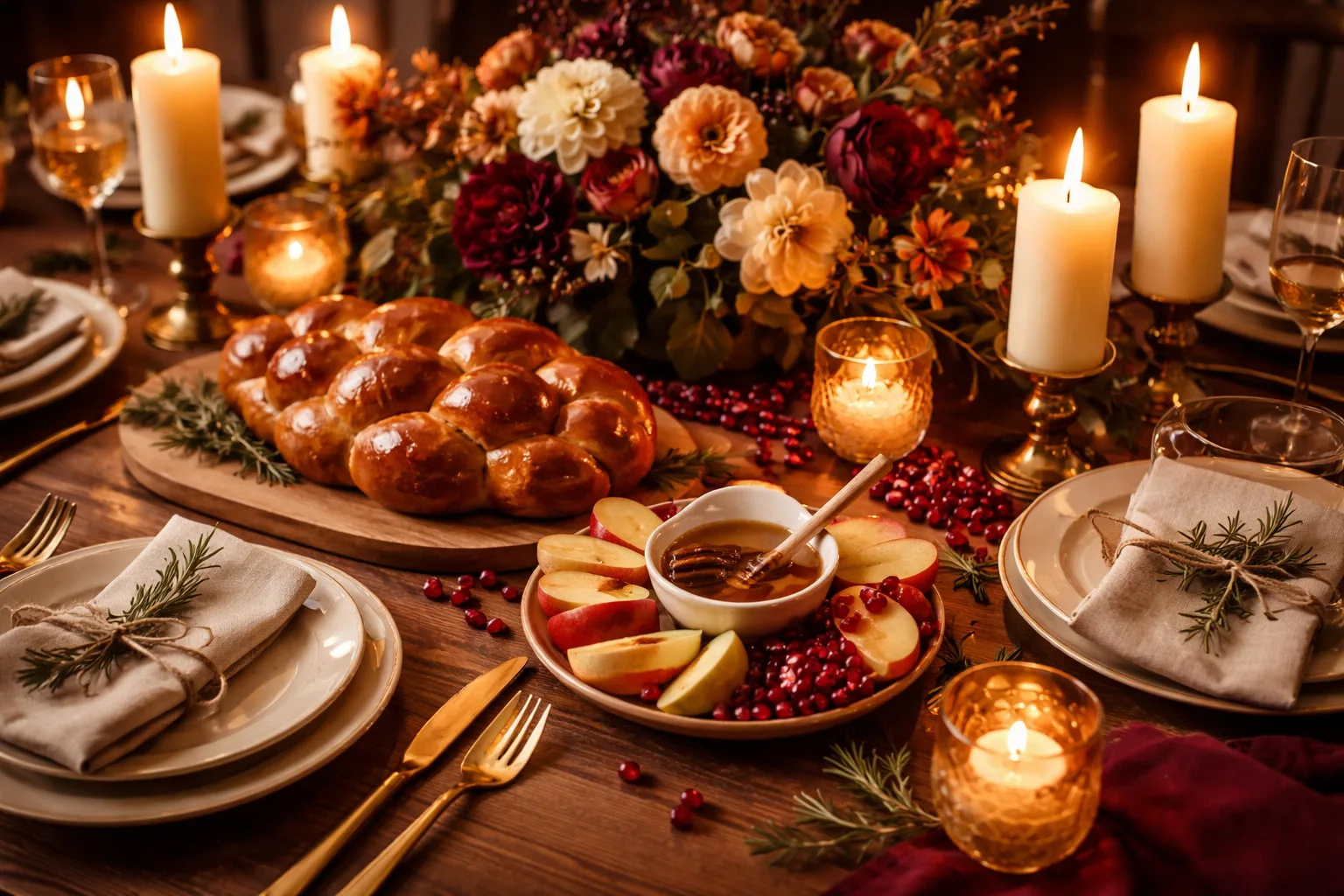
The Rosh Hashanah table is rich with symbolism. Apples and honey for a sweet new year. Round challah representing the cycle of life. Pomegranate seeds for abundance. Fish as a symbol of fertility and growth. These aren't just foods — they're conversation starters and meaningful rituals that make the dinner feel special.
But here's where many hosts go wrong: they try to cook everything from scratch, end up exhausted before the meal even starts, and spend the dinner running back and forth to the kitchen instead of being present with their guests.
Consider this tiered approach:
- Make from scratch: One showstopper dish — classic brisket, roast chicken, or a beautiful stuffed fish. This is your centerpiece and the dish guests will remember.
- Semi-homemade: Sides like roasted root vegetables, kugel, or tzimmes can be prepped days ahead and reheated.
- Outsource strategically: Challah from a local bakery, store-bought honey cake, or a prepared soup. Nobody will judge you — they'll just be glad to be there.
If you have guests with dietary restrictions — and once you send your RSVP with that question, you will know — plan at least two or three dishes that are naturally vegetarian or can be made without meat. A hearty lentil soup and a roasted vegetable platter can sit beautifully alongside a brisket without feeling like an afterthought.
Step 4: Set the Table for Meaning, Not Just Aesthetics
You don't need a Pinterest-perfect tablescape. What you need is a table that feels intentional and warm. A few specific touches go a long way:
- A honey dish at the center — with apple slices arranged around it. This becomes a natural gathering point and conversation piece before the meal starts.
- Place cards with a personal touch — write a brief wish or intention for each guest on the back. Something like "Wishing you health and joy in 5785." It takes 20 minutes and guests will remember it for years.
- Candles — lit before sundown on the first night, they add warmth and signal that this is a sacred, special occasion.
- A printed or handwritten blessing card — for the Kiddush or the Shehecheyanu, so guests who aren't familiar can participate and feel included.
Think about your seating arrangement with intention. Don't seat all the children at one end and all the adults at the other if you want the dinner to feel like a real family gathering. Mix it up. Put your most conversational guests next to the quieter ones. Seat the cousins who haven't seen each other in years side by side.
Step 5: Plan the Flow of the Evening
A Rosh Hashanah dinner isn't just a meal — it's an experience. Having a loose structure helps the evening feel meaningful rather than chaotic.
Here's a simple evening flow that works well for groups of 8–20:
- 6:00–6:30 PM — Arrival and cocktail hour: Light appetizers, drinks, and the natural chaos of people arriving. Let it breathe.
- 6:30 PM — Candle lighting and blessings: Gather everyone. Light candles, say Kiddush, bless the challah. Even non-observant guests appreciate the ritual.
- 6:45 PM — The symbolic foods: Serve the apple and honey, pomegranate seeds, and any other simanim (symbolic foods) with brief explanations of what each represents. This is a wonderful moment for children especially.
- 7:00 PM — Dinner: Soup first, then the main course and sides. Keep the kitchen trips minimal — have everything ready to serve before guests sit down.
- 8:30 PM — Dessert and conversation: Honey cake, rugelach, fruit. This is when the real conversations happen. Don't rush it.
Step 6: The Week-Before Checklist
With RSVPs confirmed and your menu set, the week before should be about execution, not decisions. Here's what to tackle:
- 7 days out: Confirm final headcount, finalize grocery list, order any specialty items (kosher wine, specific cuts of meat)
- 5 days out: Deep clean the dining area, pull out serving dishes, check that you have enough chairs and place settings
- 3 days out: Grocery shop for non-perishables, make any dishes that freeze or refrigerate well (brisket actually improves overnight)
- 1 day out: Set the table, prep vegetables, make desserts, chill wine
- Day of: Cook, breathe, and remind yourself that your guests are coming for you — not for a perfect meal
Three Things to Do Today
If you're reading this and Rosh Hashanah is coming up, here's where to start right now:
- Write your guest list today. Don't wait for the "right time." Open a notes app and write down every person you want at your table. You can edit later.
- Send your digital invitations this week. Use a platform like RSVPlinks to create a clean, trackable invitation with a dietary question and RSVP deadline built in. The earlier you send it, the better your response rate.
- Choose your one showstopper dish. Decide on the centerpiece of your menu — the dish that will anchor everything else. Once that's decided, the rest of the menu falls into place naturally.
Rosh Hashanah is a time for renewal, reflection, and gathering the people who matter most around a shared table. The logistics are just the scaffolding. What you're really building is a memory — one that your guests will carry with them into the new year and beyond. Shanah Tovah.