How to Plan a Rosh Hashanah Community Celebration (With Easy Online RSVPs That Actually Work)
The Group Chat Is a Mess and Nobody Knows If They're Coming
It's two weeks before Rosh Hashanah. You've volunteered to organize the community celebration — the big one, with 60 people, a catered dinner, honey cake, and a shofar ceremony at sundown. You're excited. You send a message to the synagogue WhatsApp group asking who's coming.
What follows is 48 hours of chaos. Fourteen people react with a thumbs up. Three say "maybe." Someone asks what time it starts. Someone else asks if it's kosher. A thread about dietary restrictions hijacks the conversation. By Sunday night, you have no idea how many people are actually attending, whether you need 40 chairs or 80, and whether that vegetarian option is necessary for two people or twelve.
Sound familiar? Planning a Rosh Hashanah community celebration is one of the most meaningful things you can do — and one of the most logistically exhausting. But it doesn't have to be. With the right approach and the right tools, you can organize a beautiful, stress-free celebration that honors the Jewish New Year and actually lets you enjoy it.
Why Rosh Hashanah Parties Are Uniquely Challenging to Plan
Rosh Hashanah isn't just a party — it's a sacred communal gathering that carries specific logistical demands most event planners don't face at a birthday brunch:
- Guest counts matter enormously. Whether you're ordering catered food, setting a Seder-style table, or arranging seating for a service, even a 10-person swing in attendance can throw off your entire budget and setup.
- Dietary requirements are non-negotiable. Kosher observance varies widely across a community — some guests keep strictly kosher, others are vegetarian, some have allergies. You need to know this in advance.
- The date is fixed and non-negotiable. Unlike a birthday party you can reschedule, Rosh Hashanah falls when it falls. Your planning window is tight and the deadline is absolute.
- Multi-generational attendance. Community celebrations often include elderly members, young families with small children, and everyone in between — each with different needs around accessibility, timing, and programming.
These aren't problems you can solve with a group chat. They require real information, collected cleanly, before you can make a single decision.
Step 1: Lock In Your Vision Before You Invite Anyone
Before you send a single invitation, spend 30 minutes answering these questions:
- Is this a dinner, a dessert reception, a full service-plus-meal event, or something else?
- Where is it being held — synagogue hall, someone's backyard, a rented venue?
- What's the maximum capacity you can realistically host?
- What's your budget per head, and who is covering costs?
- Will you need volunteers, and for what roles?
Write these answers down. They will inform every decision that follows — including what questions you need to ask your guests when they RSVP.
Mini-scenario: Sarah is organizing a Rosh Hashanah dinner for her synagogue's young families group. Before she invites anyone, she confirms the synagogue kitchen is kosher-certified, sets a cap of 50 guests, and decides she'll need to know each family's dietary needs and whether they're bringing children under 5 (for the kids' table setup). Now she knows exactly what to ask on her RSVP form.
Step 2: Build an RSVP That Collects What You Actually Need
This is where most community organizers lose control of their event. A vague "Are you coming? Yes/No" RSVP leaves you with a headcount and nothing else. You need a smarter form.
Your Rosh Hashanah RSVP should collect:
- Full name (not just a first name — you'll thank yourself later)
- Number of guests attending (adults and children separately if relevant)
- Dietary requirements — with specific options like: strictly kosher, vegetarian, vegan, nut allergy, gluten-free, no restrictions
- Will they be attending the shofar ceremony, the dinner, or both? (if your event has multiple components)
- Accessibility needs — wheelchair access, seating preferences for elderly guests
- Optional: Would they like to contribute a dish, volunteer, or sponsor a portion of the meal?
Using a platform like RSVPlinks lets you build a custom RSVP form with all these fields in minutes, send a clean digital invitation, and track responses in real time — so instead of scrolling through a chaotic group chat, you log in and see exactly who's coming, what they need, and what you still have to figure out.
Mini-scenario: David sends his Rosh Hashanah community invite via RSVPlinks. Within 72 hours, he can see that 43 people have confirmed, 11 are vegetarian, 3 need gluten-free options, and 2 families are bringing toddlers. He forwards the dietary breakdown directly to his caterer. No spreadsheet required.
Step 3: Send Invitations Early — and Follow Up Strategically
Rosh Hashanah falls in September or October, and many community members have busy fall schedules. Send your invitations at least three to four weeks in advance. Here's a timeline that works:
- 4 weeks out: Send the digital invitation with your RSVP link. Include the date, time, location, dress code if any, and a warm personal note about why this gathering matters.
- 2 weeks out: Send a gentle reminder to anyone who hasn't responded. Keep the tone warm, not nagging — something like "We'd love to know if you'll be joining us so we can save you a seat at the table."
- 1 week out: Send a final confirmation to all who RSVP'd yes. Include parking details, what to bring (if anything), and a note about the evening's schedule.
- 2 days out: Close your RSVP form and finalize your numbers with the caterer or kitchen team.
Automated reminders — available through tools like RSVPlinks — mean you don't have to manually track who responded and send individual follow-ups. The system does it for you.
Step 4: Design the Celebration With Intention
Now that you have your headcount and dietary data, you can actually plan the celebration itself. Here's what makes a Rosh Hashanah community party memorable:
Symbolic Food Traditions
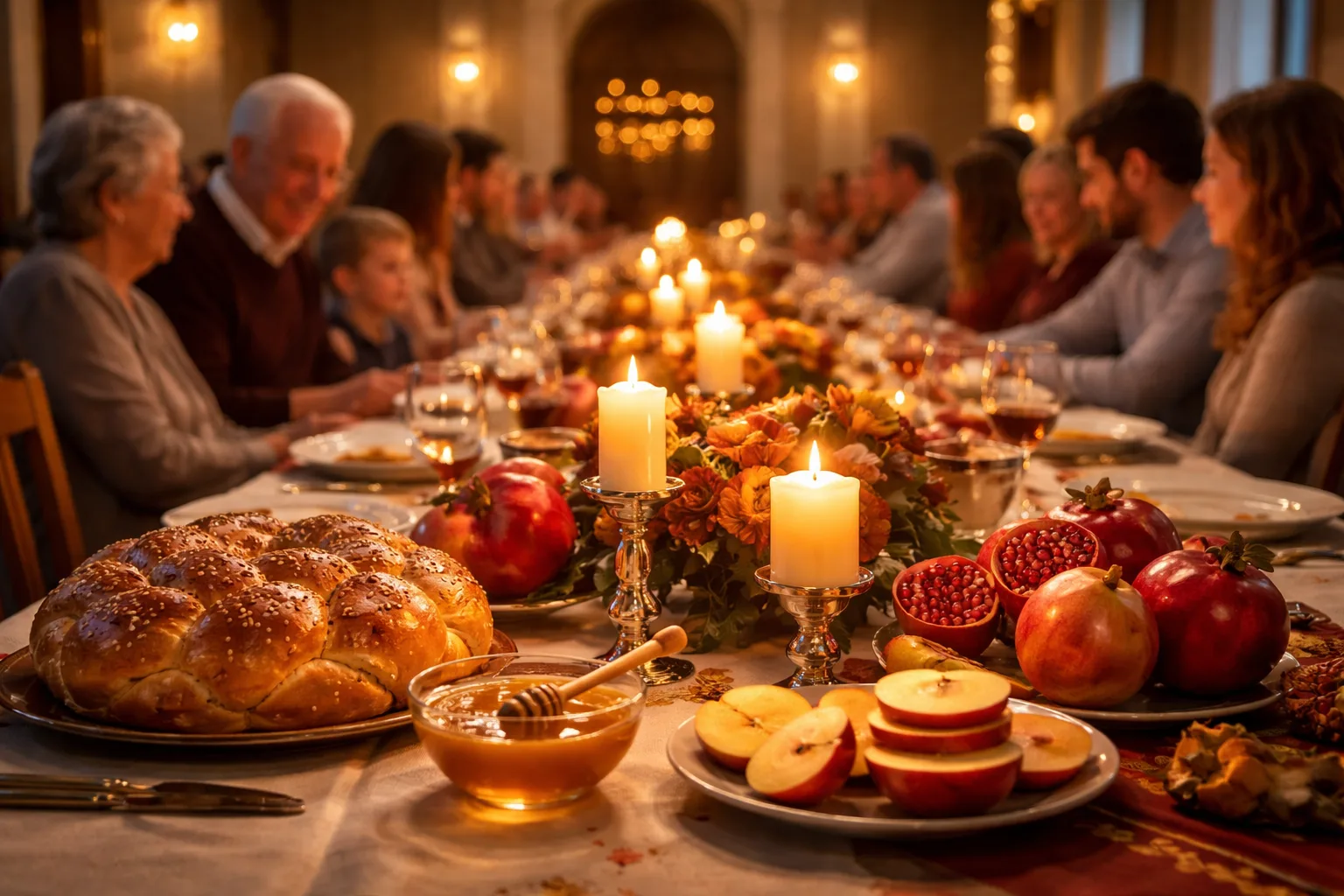
Apples and honey are the centerpiece of any Rosh Hashanah table — simple, meaningful, and universally loved. Round challah (symbolizing the cycle of the year), pomegranates, and honey cake are traditional additions. If you're catering, ask your caterer to incorporate these elements even in a modern menu. If guests are potluck-contributing, your RSVP form can include a sign-up option for specific dishes.
A Shofar Moment
Even at a secular or semi-religious community gathering, a shofar blowing at sundown creates a powerful, unifying moment. Coordinate with a community member who can perform this, and build your evening schedule around it.
A Reflection or Intention-Setting Activity
Rosh Hashanah is about renewal and reflection. Consider a simple group activity: give each guest a card to write one intention for the new year, then read a few aloud or place them in a decorative bowl as a centerpiece. It takes five minutes and transforms a dinner into something meaningful.
Seating That Fosters Connection
Avoid letting people self-select into the same clusters they always sit in. Use your RSVP data to mix tables intentionally — pair longtime members with newer community members, seat families with children near each other, and ensure elderly guests have comfortable, accessible seats near the entrance.
Step 5: Delegate Like a Leader, Not a Martyr
The biggest mistake community organizers make is trying to do everything themselves. Use your RSVP form to identify volunteers early. Assign clear roles:
- Setup crew: 2–3 people to arrive early and arrange tables, decorations, and food stations
- Greeter: Someone warm and welcoming at the door to check guests in
- Food coordinator: One person liaising with the caterer or managing potluck contributions
- Children's corner lead: If families with young kids are attending, one adult to manage a simple activity table
- Cleanup crew: Often the hardest to fill — ask for volunteers explicitly in your RSVP form
The Three Things That Make or Break a Community Rosh Hashanah Celebration
After all the planning, here's what actually determines whether your guests leave feeling uplifted or underwhelmed:
- Warmth over perfection. Guests remember how they felt, not whether the tablecloths matched. A genuine welcome and a sense of belonging matter more than a perfectly catered menu.
- Honoring the meaning. Even a brief acknowledgment of why you're gathered — the Jewish New Year, the themes of reflection and renewal, the sweetness of a new beginning — elevates the evening from a dinner to a celebration.
- Logistics that don't show. When RSVPs are organized, food is right, and seating is thoughtful, guests don't notice the planning — they just feel taken care of. That invisible competence is the mark of a great host.
Your Action Plan: Start Today
You don't need to have everything figured out to begin. Here's what to do in the next 24 hours:
- Confirm your date, venue, and maximum guest count. These three decisions unlock everything else.
- Create your RSVP form with fields for headcount, dietary needs, and any event-specific questions. Set it up on RSVPlinks in under 10 minutes.
- Write and send your invitation — warm, specific, and with a clear RSVP deadline. Don't wait until you have every detail sorted. Get the date on people's calendars now.
Shanah Tovah — may your celebration be sweet, your guest list be manageable, and your inbox be mercifully free of "Wait, what time does it start?" messages.