How to Plan a Fall Church Harvest Festival and Manage Guest Sign-Ups Effortlessly
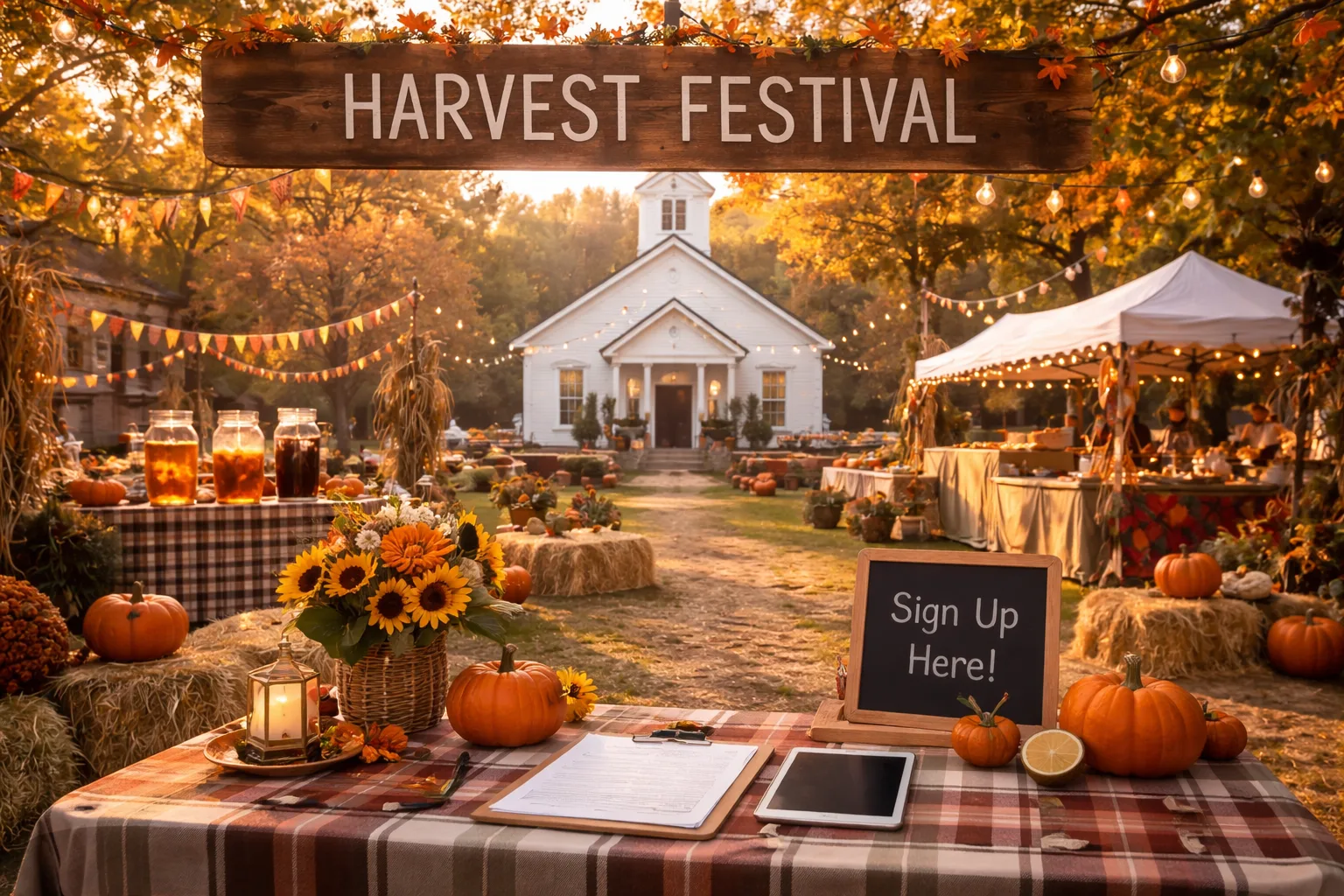
When the Sign-Up Sheet Becomes a Nightmare
Picture this: It's three weeks before your church's annual fall harvest festival. You've got the hay bales ordered, the chili cook-off judges lined up, and the kids' games planned down to the last bean bag toss. But then comes the part that makes every volunteer coordinator's stomach drop — the sign-up sheet.
You tape it to the bulletin board on Sunday morning, and by Tuesday you have no idea how many people actually signed up because someone spilled coffee on it. You've got three different people texting you asking if there's room for their extended family. Your inbox has seven emails from folks who couldn't make it to church last weekend asking how to register. And you still have absolutely no idea whether you should order 50 pumpkins or 150.
If you've ever organized a church harvest festival sign-up, you know this chaos intimately. The good news? It doesn't have to be this way. With the right planning framework and a smarter approach to guest management, your fall festival can be the highlight of your congregation's year — without burning out your volunteers before the first apple cider is poured.
Start With a Clear Festival Vision (Before Anything Else)
The most common mistake church event planners make is jumping straight into logistics before defining what success looks like. Before you book the bounce house or assign the pie-judging committee, answer these three questions as a team:
- Who is this festival for? Is it primarily a community outreach event open to the whole neighborhood, or an intimate celebration for your congregation and their families?
- What's the core experience? A harvest festival can mean a pumpkin patch and crafts for toddlers, a competitive chili cook-off for adults, a full carnival with games and food trucks, or all of the above. Knowing your focus shapes every decision that follows.
- What does a successful turnout look like? Define a realistic attendance goal — 75 families? 300 individuals? This number will drive your food orders, volunteer ratios, and space planning.
Once your vision is locked in, you can build a planning timeline backward from the event date. For a mid-October festival, start your planning no later than early September — ideally in late August.
Build Your Planning Timeline: A Week-by-Week Breakdown
Here's a practical timeline that works for most church harvest festivals with 100–400 expected attendees:
- 8 weeks out: Confirm date, venue, and core committee. Define your vision and budget. Begin vendor outreach for inflatables, pony rides, or food trucks if applicable.
- 6 weeks out: Open guest sign-ups and volunteer registration. Announce the event from the pulpit, in the bulletin, and on social media. Send a save-the-date to your church email list.
- 4 weeks out: Review your RSVP count. Adjust food and supply orders based on actual numbers. Confirm all vendors and volunteers.
- 2 weeks out: Send a reminder to everyone who signed up. Share event details: parking info, what to bring, activity schedule.
- 3 days out: Final headcount check. Brief all volunteers on their roles. Confirm any last-minute logistics.
- Day of: Arrive early, trust your team, and enjoy the festival you worked so hard to create.
The Smartest Way to Manage Church Harvest Festival Sign-Ups
Let's talk about the part that trips up even the most experienced church event coordinators: collecting and managing RSVPs and volunteer sign-ups without losing your mind.
The paper sign-up sheet is a relic. It gets lost, it's unreadable, and it gives you zero data you can actually use. Spreadsheets shared over email are better, but they create version-control headaches and require someone to manually compile responses from multiple sources.
The modern solution is a dedicated RSVP link that you can share everywhere — in your church bulletin, your weekly email newsletter, your Facebook group, and even a QR code printed on a flyer. When someone clicks the link, they fill out a simple form, and you instantly see their response in a centralized dashboard.
This is exactly what RSVPlinks was built for. You can create a free RSVP link for your harvest festival in minutes, customize it with your event details, and start sharing it immediately. No app downloads required for your guests. No spreadsheet juggling for you. Every response is tracked automatically, and you can see your headcount in real time.
Want to see how other churches have set up their event pages? Browse the church event RSVP examples for inspiration on how to structure your sign-up form.
What to Include in Your Harvest Festival RSVP Form
Don't just ask "are you coming?" — use your RSVP form to gather information that actually helps you plan. Consider asking:
- Number of adults and children attending (critical for food and activity planning)
- Whether they're interested in volunteering (and for which shift)
- Any dietary restrictions or allergies (especially important for chili cook-offs and potluck elements)
- Whether they'd like to enter the chili, pie, or baked goods contest
- How they heard about the event (useful for future outreach planning)
This turns your RSVP process from a simple headcount into a genuine planning tool.
Volunteer Management: The Backbone of Your Festival
A harvest festival with 200 attendees typically needs 20–30 volunteers across setup, activities, food service, and breakdown. Managing that many people without a system is a recipe for no-shows and last-minute scrambles.
Here's how to structure your volunteer recruitment effectively:
- Create specific roles with time commitments. "Volunteer" is too vague. Instead, offer: Setup Crew (7–10am), Kids' Game Booth Attendant (11am–1pm), Food Service Team (11am–2pm), and Breakdown Crew (3–5pm). People are far more likely to commit when they know exactly what they're signing up for.
- Open volunteer sign-ups at the same time as guest RSVPs. Use your RSVP form to capture both. A simple checkbox — "I'd like to volunteer" with a dropdown for preferred role — works beautifully.
- Assign a team captain to each area. Your kids' games area, food station, parking, and welcome table should each have one person who owns that zone. This prevents the "I thought someone else was handling it" problem.
- Send role confirmation emails 1 week out and a reminder the day before. Volunteers who feel informed and appreciated show up. Those who feel like an afterthought don't.
Activities That Actually Draw a Crowd
The activities you offer will determine whether families drive across town to attend or stay home. Here's what consistently works for fall church festivals across all age groups:
- Pumpkin decorating station: Low cost, high engagement. Provide small pumpkins, paint, and stickers. Kids love it, parents can sit nearby, and families take home a memento.
- Chili cook-off: Gets your congregation competitive in the best possible way. Charge a small entry fee for tasters to vote — it's a natural fundraiser.
- Hay maze or hay bale photo area: Extremely popular for family photos. Set up a simple backdrop with hay bales, mums, and a scarecrow for an instant Instagram moment.
- Cake walk or pie auction: Classic, beloved, and a great fundraiser for your church's mission fund.
- Live music or worship set: A local worship band or acoustic set creates atmosphere and keeps people lingering longer.
Pro tip: Stagger your activity schedule so that the chili judging, cake walk, and kids' games don't all peak at the same time. Spread the excitement across the full event window.
Day-Of Logistics: The Details That Make or Break the Experience
Even the best-planned festival can unravel on the day if a few critical logistics aren't locked in:
- Parking and arrival flow: Designate a clear entrance, assign a parking volunteer, and have directional signs ready. First impressions matter.
- Weather contingency: Fall weather is unpredictable. Have a rain plan — whether that's a tent rental, an indoor backup space, or a clear communication plan for rescheduling.
- Check-in process: If you used an RSVP system, you can have a printed or digital guest list at the entrance for quick check-ins. This also helps you track actual attendance versus registered guests.
- Waste and cleanup: Assign a dedicated cleanup crew and set up clearly labeled recycling and trash stations throughout the venue.
After the Festival: Follow Up and Capture the Momentum
The harvest festival is often one of the highest-attendance events a church hosts all year — including guests who may be visiting for the first time. Don't let that momentum evaporate.
Within 48 hours of the event, send a thank-you message to everyone who RSVPed, share photos on your church's social media, and include a warm invitation to your upcoming services or community events. If you collected contact information through your RSVP form, you now have a genuine, permission-based list of people who care about your community.
3 Things You Can Do Today to Get Started
You don't need to wait until September to start laying the groundwork for a smooth harvest festival. Here's what to do right now:
- Lock in your date and confirm your venue — even informally. The earlier you claim your date, the more planning runway you have.
- Create your free RSVP link so it's ready to share the moment you make your first announcement. Getting your sign-up infrastructure in place early prevents the last-minute scramble.
- Recruit your core committee of 3–5 people who each own a piece of the festival. You cannot — and should not — do this alone.
A fall church harvest festival done well is more than an event. It's a moment of genuine community, a bridge to neighbors who haven't yet found a church home, and a memory your congregation will talk about until next October. With the right planning and the right tools, you can make it happen without the chaos.
Frequently Asked Questions
How do I manage sign-ups for a church harvest festival online?
The easiest way to manage sign-ups for a church harvest festival online is to create a free RSVP link using a platform like RSVPlinks and share it in your bulletin, email newsletter, and social media. This gives you a real-time headcount and collects guest details automatically. You can also use the same form to capture volunteer interest, dietary needs, and contest entries. Check the RSVPlinks FAQ for step-by-step guidance on setting up your event page.
How many volunteers do I need for a church harvest festival?
A general rule of thumb is one volunteer for every 8–10 attendees for a well-run church harvest festival. For a 200-person event, plan for 20–25 volunteers spread across setup, activities, food service, and breakdown shifts. Assigning specific roles and time slots significantly improves volunteer show-up rates. Always recruit 10–15% more than you think you need to account for last-minute cancellations.
When should I start planning a fall church harvest festival?
You should start planning a fall church harvest festival at least 8 weeks before the event date. For a mid-October festival, that means beginning in late August. Early planning gives you time to secure vendors, open RSVPs, recruit volunteers, and adjust your supply orders based on actual sign-up numbers. The earlier you start, the calmer the final week will be.
What activities are most popular at church harvest festivals?
The most popular activities at church harvest festivals include pumpkin decorating, chili cook-offs, hay bale photo stations, cake walks, and live music. Activities that involve friendly competition — like a chili or pie contest — tend to drive the highest engagement and often double as fundraisers. Offering a mix of kids' activities and adult-focused events ensures the whole family stays engaged throughout the event.
How do I send reminders to people who signed up for my church event?
Once guests have signed up through an online RSVP platform, you can send reminder messages directly through the platform or export your guest list and email them through your church's email system. Send the first reminder two weeks before the event with key details like parking and what to bring, and a second reminder two days before. Guests who feel informed are far more likely to actually show up.