How to Plan a Labor Day Block Party That Brings the Whole Street Together
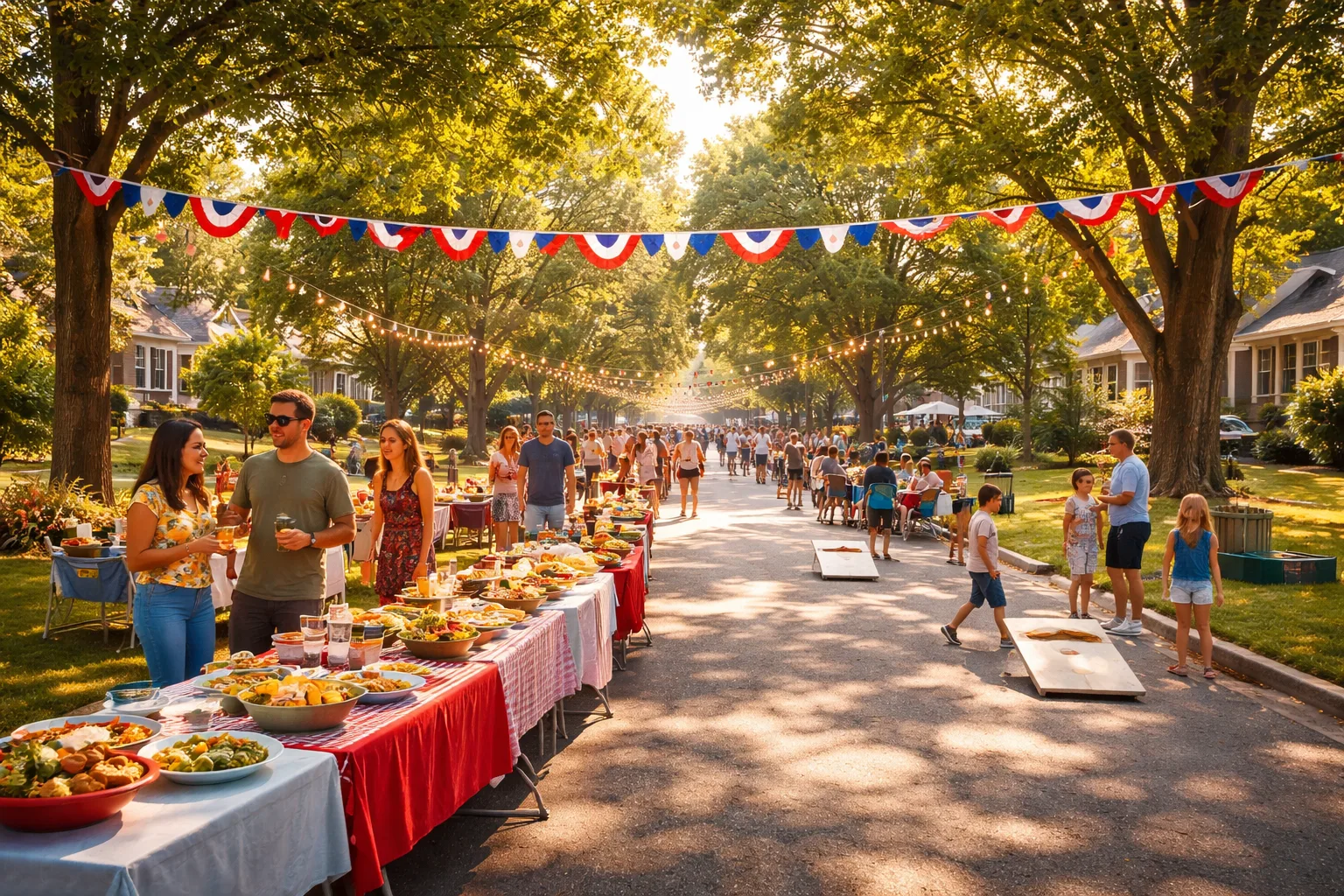
When the Last BBQ of Summer Almost Didn't Happen
Picture this: It's mid-August, and someone on your street finally says what everyone's been thinking — "We should do something for Labor Day." Everyone nods enthusiastically. A group chat gets created. Then... silence. Three weeks later, it's September 1st, you have no permits, no confirmed headcount, half the street thinks it's been canceled, and the other half shows up with lawn chairs expecting a full spread. Sound familiar?
The Labor Day block party is one of those beautiful American traditions that sounds simple but falls apart fast without a real plan. It's the unofficial farewell to summer — the last chance to catch fireflies, share cold drinks with neighbors you've waved at all season but never actually talked to, and let the kids run wild before school routines kick back in. When it comes together, it's magical. When it doesn't, it's a neighborhood-wide disappointment that lingers until Memorial Day.
This guide will walk you through exactly how to pull it off — from getting the right people on board to making sure everyone actually shows up.
Step 1: Appoint a Real Organizer (Not Just a Volunteer)
The number one reason block parties collapse in the planning phase is diffused responsibility. Everyone's "in," but no one's in charge. Fix this first.
Designate one or two people as lead organizers with actual decision-making authority. This doesn't mean they do everything — it means they have final say on the date, the layout, and the budget. Everyone else is a contributor, not a co-captain.
Mini-scenario: On Maple Street in a suburb of Columbus, Ohio, a block party had been "planned" three years in a row and never happened. In year four, a retired teacher named Sandra simply announced: "I'm organizing it. Here's the date. Tell me if you're in." It happened. Forty-three neighbors showed up.
Lesson: Clarity of leadership is more important than consensus in the early stages.
Step 2: Lock In the Logistics Early
Labor Day falls on the first Monday of September — which means you have a hard deadline. Work backward from it.
- Choose your date: Labor Day Monday is traditional, but the Sunday before often works better for families with early school schedules. Decide and commit.
- Get your street permit: Most cities require a permit to close a street or hold a public gathering. Apply at least 4–6 weeks in advance. Check your city's website or call the local parks and recreation department. This step trips up more organizers than any other.
- Define your block: Which houses are included? One block? Two? Be specific so no one feels left out — and so you can estimate attendance accurately.
- Set a rain plan: Labor Day weather is unpredictable. Decide in advance: Do you move it indoors to someone's garage? Postpone 24 hours? Communicate the rain plan to everyone upfront so there's no confusion on the day.
Step 3: Send Real Invitations — Not Just a Group Chat Message
Here's where most neighborhood organizers lose momentum: they rely on a group text or a Facebook post and assume everyone saw it. They didn't. Or they saw it, meant to respond, and forgot.
A proper invitation does three things: it creates excitement, it communicates key details clearly, and it makes RSVP frictionless. That last part is critical. If responding requires effort — tracking down someone's phone number, remembering to reply in a thread from three weeks ago — people won't do it.
This is exactly where a tool like RSVPlinks earns its place in your planning toolkit. You can create a custom event invitation with all the details, share a single link via text, email, or even tape a printed QR code to your neighbors' mailboxes, and track RSVPs in real time. No more guessing whether 15 people are coming or 50.
Mini-scenario: Jake, organizing his first block party in Austin, sent a group text with the date and got four replies. He then created an RSVPlinks event and dropped the link in the same chat. Within 48 hours, 31 households had responded. The difference? One click to say yes.
Step 4: Build a Potluck Structure That Actually Works
"Everyone bring something" is a recipe for 14 bags of chips and zero protein. Structure your potluck with intention.
- Assign categories by house number: Even numbers bring mains or grillables. Odd numbers bring sides or salads. Last digits 0–4 bring desserts. This system is simple, fair, and surprisingly effective.
- Coordinate drinks separately: Ask 3–4 households to handle beverages — a mix of alcoholic and non-alcoholic. Set up a central cooler station so it doesn't become chaotic.
- Designate a grill master: One person runs the grill. Not three. One. Give them a title if it helps — "Grill Commander" works surprisingly well for getting buy-in.
- Account for dietary needs: When you collect RSVPs, include a simple field for dietary restrictions. Knowing you have three vegetarians and one nut allergy in advance is far better than finding out at the table.
Step 5: Plan Activities That Mix Age Groups
A great block party isn't just food — it's the moments that happen between bites. The goal is to create conditions where neighbors who've never spoken end up talking for an hour.
- Set up a kids' zone: Sidewalk chalk, a sprinkler, lawn games like cornhole or ring toss. Keep it contained to one end of the block so parents can relax nearby.
- Run a neighborhood trivia round: Five questions about your own street — when was the oldest house built? Who has lived here the longest? It's surprisingly fun and sparks real conversations.
- Create a "Meet Your Neighbor" moment: At the midpoint of the party, have the organizer do a quick 2-minute intro of each household — name, how long they've lived there, one fun fact. It sounds awkward but people love it.
- End with something collective: A group photo, a toast, a short fireworks display if your city allows it. Shared endings create shared memories.
Step 6: Handle the Budget Transparently
Money is the silent killer of neighborhood events. Address it head-on.
Create a simple shared budget before you start spending. Common costs include: street permit fees ($25–$100 in most cities), rented tables and chairs ($50–$150), a sound system or speaker rental, ice and coolers, and any decorations. A reasonable per-household contribution of $10–$20 typically covers everything beyond what people bring as potluck items.
Use a free tool like Venmo, Zelle, or a shared envelope system to collect contributions. Be transparent about where the money goes — post a simple breakdown in your group chat after the event. This builds trust for next year.
Step 7: Follow Up After the Party
The party ends, the folding chairs go back in garages, and... nothing. Until next August when someone says "we should do something for Labor Day" and the cycle repeats.
Break the cycle with a simple follow-up. Within 48 hours of the party, send a thank-you message to all attendees, share a few photos, and — most importantly — ask one question: "Should we make this an annual tradition?" If the answer is yes, capture that energy immediately. Create a planning group, save your RSVPlinks event as a template, and set a calendar reminder for June to start planning next year.
The neighborhoods that have legendary block parties didn't get there by accident. They got there by doing it once, doing it again, and making it easier each time.
Your Labor Day Block Party Starts Today
You don't need a big budget, a professional event planner, or a perfect neighborhood to pull this off. You need three things:
- One person willing to lead — even imperfectly
- A frictionless way to collect RSVPs — so you know who's actually coming
- A structure that lets neighbors connect — not just coexist
Labor Day is six to eight weeks away. That's enough time. Start with a date, grab a free event link from RSVPlinks, and drop it in your neighborhood group chat today. The hardest part isn't the planning — it's starting. So start now.