Plan a Fall Outdoor Wedding Reception
When the Weather App Becomes Your Worst Enemy
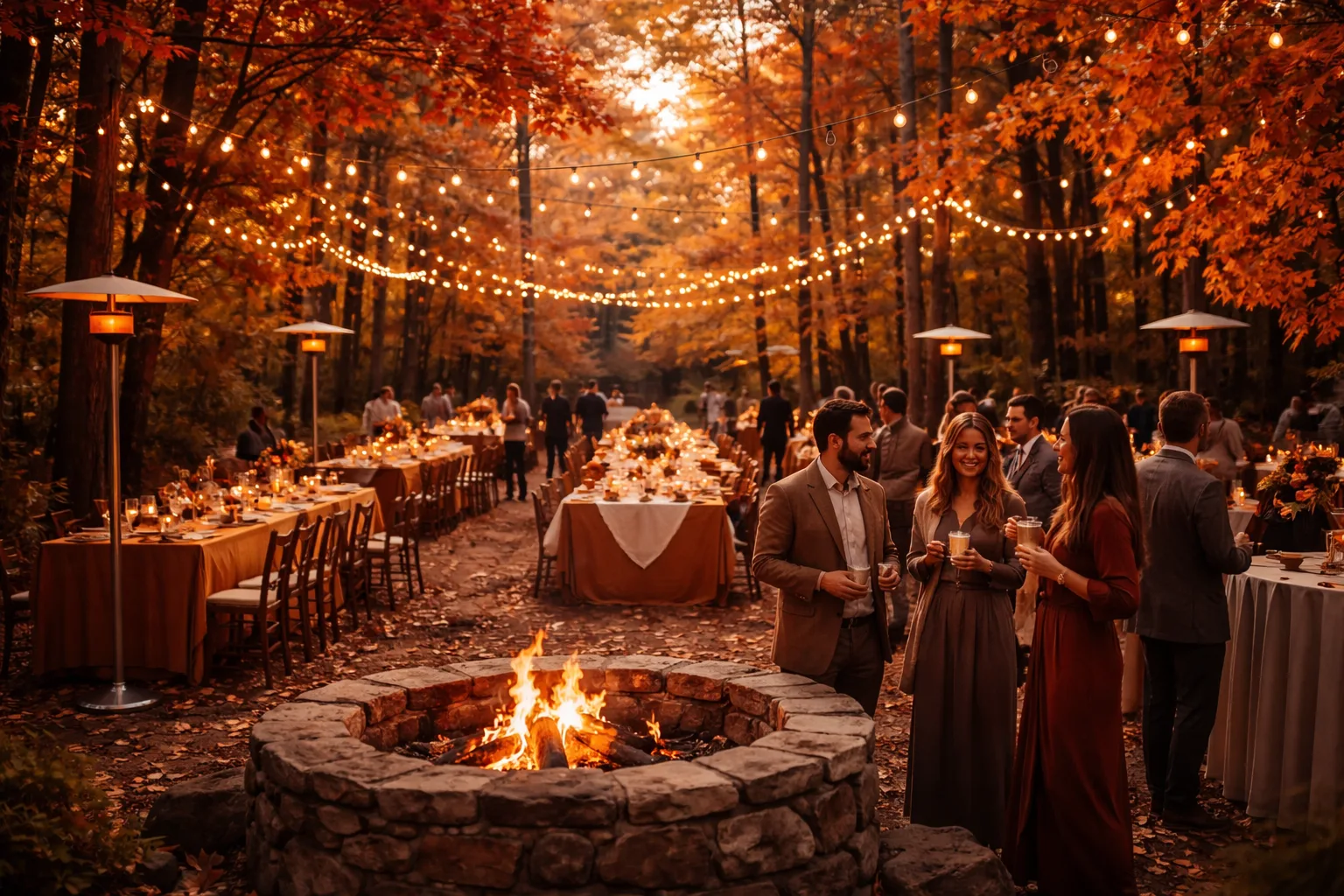
It's 6 PM on a Friday in October. Your outdoor wedding reception starts in less than 18 hours, and your phone is showing a 40% chance of rain with temperatures dropping to 48°F. You've spent eight months planning every detail — the fairy lights strung through the oak trees, the long harvest tables draped in amber linen, the s'mores station your guests have been buzzing about. And now you're staring at a weather forecast, heart in your throat, wondering if you made a catastrophic mistake choosing a fall outdoor wedding reception.
Sound familiar? You're not alone. Autumn weddings are breathtakingly beautiful, but they come with a unique set of logistical challenges that spring and summer celebrations don't face. The good news: with the right preparation, a fall outdoor reception isn't just survivable — it becomes the most memorable, atmospheric event your guests have ever attended. Here's exactly how to make that happen.
Why Fall Outdoor Wedding Receptions Are Worth the Extra Planning
Before we dive into the how, let's talk about the why. Fall weddings consistently rank as the most visually stunning of any season. The natural backdrop does 80% of your décor work for you — crimson maples, golden oaks, and amber-toned light that photographers call "magic hour that lasts all day." Food and drink options expand dramatically: mulled cider, butternut squash soup shooters, spiced cocktails, and hearty comfort menus that guests actually rave about. And compared to peak summer venues, fall dates often come with lower venue costs and greater vendor availability.
The challenges are real, but they're manageable. Let's break them down one by one.
Step 1: Lock In Your Weather Contingency Plan First — Not Last
Most couples treat the weather backup as an afterthought. Don't. Before you book your venue, before you choose your caterer, nail down your contingency plan in writing.
What this looks like in practice: When Sarah and Marcus booked their October vineyard wedding in Virginia, they negotiated a "tent clause" into their venue contract — the venue would provide a 40x60 pole tent at no additional cost if temperatures dropped below 50°F or if rain was forecast within 48 hours. They never needed it, but having that agreement in writing meant they slept soundly the entire week before the wedding.
- Book a tent as insurance, not a last resort. Transparent or sailcloth tents preserve the outdoor aesthetic while providing full weather protection. Budget 10–15% of your total reception cost for this.
- Identify an indoor overflow space. Ask your venue what happens if conditions become dangerous. A barn, a covered pavilion, or even a large garage can serve as emergency shelter.
- Set a decision deadline. Agree with your coordinator that weather decisions will be made by 48 hours before the event — not the morning of. This gives vendors time to adjust.
Step 2: Design for Warmth Without Sacrificing Style
The number one complaint at fall outdoor receptions isn't rain — it's cold. Guests who are shivering can't enjoy themselves, no matter how beautiful the setting. The solution isn't to crank up a single propane heater in the corner; it's to build warmth into every layer of your design.
- Rent patio heaters strategically. Place mushroom heaters or infrared heaters every 8–10 feet along the perimeter of your dining area. For 100 guests, plan for at least 8–10 heaters.
- Create a fire feature. A central fire pit or a row of chimineas does double duty: it provides warmth and becomes a natural gathering point where guests mingle, roast marshmallows, and linger. It's also stunning in photos.
- Offer blanket baskets. Plaid or neutral-toned throw blankets in wicker baskets scattered around the reception area are both practical and photogenic. Guests love them. Budget $3–5 per blanket and let guests take them home as favors.
- Time your reception with the sunset. Schedule dinner to begin before sunset so guests experience the golden hour light, then move to dancing as temperatures drop and the heaters and fire features become more essential.
Step 3: Build a Fall-Forward Menu That Does the Heavy Lifting
Your menu is one of your most powerful tools for keeping guests comfortable and happy in cool weather. A cold shrimp cocktail that works beautifully in July becomes an afterthought in October. Lean into the season aggressively.
Cocktail hour: Offer a warm beverage station from the moment guests arrive — spiced apple cider (spiked and non-spiked), hot chocolate with a toppings bar, or a mulled wine station. This immediately signals to guests that you've thought of their comfort, and it gives them something warm to hold.
Dinner: Hearty, warming dishes outperform lighter fare at outdoor fall events. Think braised short rib, roasted root vegetable sides, butternut squash soup in small cups passed as a starter, and fresh-baked bread. One couple in New England served a "harvest board" as a shared appetizer — cured meats, aged cheeses, roasted nuts, and seasonal fruit — and guests talked about it for months.
Late-night snack: As temperatures drop and dancing winds down, bring out a hot snack station. Mini grilled cheese sandwiches, warm pretzel bites with dipping sauces, or a soup station give guests a second wind and a reason to stay.
Step 4: Get Your Guest Logistics Right Before the Day
Nothing derails a beautiful reception faster than confused guests — people who can't find parking, don't know the dress code for an outdoor October evening, or show up in sandals to a venue with a gravel path.
Your invitations and RSVP process are your first opportunity to set expectations. When you create a free RSVP link for your wedding, include a "what to know" section that tells guests the reception is outdoors, suggests they dress in layers, and notes that the venue has a gravel surface (so skip the stilettos). This isn't just helpful — it prevents the awkward conversations on the day itself.
You can also use your RSVP page to collect meal preferences and any special needs, which helps your caterer plan accurate quantities for a warming menu. Browse wedding RSVP examples to see how other couples have structured their event pages to communicate exactly this kind of logistical detail.
- Send a "day-before" reminder. A brief message to confirmed guests with parking instructions, temperature forecast, and a reminder to bring a jacket goes a long way.
- Provide a shuttle if your venue is remote. Fall foliage venues are often off the beaten path. A shuttle from a central parking area eliminates navigation stress and keeps guests from arriving frazzled.
- Mark pathways clearly. If guests are walking across grass or gravel in the dark, line the path with luminaries, string lights, or solar stake lights. It's inexpensive and prevents twisted ankles.
Step 5: Lean Into the Season for Décor That Costs Less and Looks More
Fall is the only season where nature is actively competing with your florist — and winning. Use that to your advantage.
- Supplement florals with foliage. Ask your florist to incorporate seasonal leaves, branches, and berries into centerpieces. This reduces costs while adding texture and authenticity.
- Use pumpkins and gourds as vessels. Hollow out large pumpkins to hold floral arrangements or use clusters of gourds as table runners. They're inexpensive, widely available, and deeply seasonal.
- String lights are non-negotiable. Bistro lights or Edison bulbs strung overhead transform any outdoor space into something magical as evening falls. Budget at least $300–500 for a quality lighting installation.
- Choose a color palette that works with nature. Burgundy, terracotta, sage, rust, and cream all photograph beautifully against fall foliage. Avoid pastels, which can look washed out against autumn's rich tones.
Step 6: Nail the Timing — Fall Light Fades Fast
Sunset in October arrives between 5:30 and 6:30 PM depending on your location. If your ceremony ends at 5 PM and cocktail hour runs until 6:30 PM, you've lost your natural light before dinner even begins. Work backward from sunset when building your timeline.
A smart fall reception timeline might look like: ceremony at 3:30 PM, cocktail hour 4:15–5:30 PM (capturing golden hour), guests seated for dinner at 5:30 PM as the sun sets, toasts and first dances at 6:15 PM, dancing from 7 PM onward under string lights and stars. This structure means your photographer captures the most important moments in natural light, and the transition to evening feels intentional rather than accidental.
Frequently Asked Questions
What is the best month for a fall outdoor wedding reception?
Late September and early October offer the best combination of foliage color, mild temperatures, and lower rain probability in most of the United States. October 1–15 is often considered the sweet spot — foliage is near peak in many regions, daytime temperatures are comfortable (55–70°F), and the risk of early frost is lower than in late October. Always check historical weather data for your specific region before committing to a date.
How do I keep guests warm at an outdoor fall wedding?
The most effective strategy is layering your warmth sources: rent patio heaters placed every 8–10 feet, incorporate a fire feature like a fire pit or chimineas, and offer warm beverages from the moment guests arrive. Providing blanket baskets is both practical and a guest-favorite touch that doubles as a take-home favor. Communicate the outdoor setting clearly in your invitations so guests dress appropriately.
What should I do if it rains on my outdoor fall wedding?
Book a tent before you need one — negotiate a tent option into your venue contract at the time of booking, not the week before the wedding. Identify an indoor overflow space at your venue as a secondary backup. Set a 48-hour decision deadline with your coordinator so vendors have time to make adjustments without chaos. A transparent or sailcloth tent preserves the outdoor aesthetic even in rain.
How do I communicate outdoor wedding details to guests in my RSVP?
Use your event RSVP page to include a "what to know" section that mentions the outdoor setting, suggests dressing in layers, notes any terrain details (gravel paths, grass), and provides parking or shuttle information. Platforms like RSVPlinks let you add custom notes and event details directly to your RSVP page so guests arrive informed and prepared. Follow up with a day-before reminder to confirmed guests with the weather forecast and any last-minute logistics. See how RSVPlinks works for more on customizing your event page.
When should guests RSVP by for a fall wedding?
Set your RSVP deadline 3–4 weeks before the wedding date. This gives you enough time to finalize headcounts with your caterer and venue, make seating arrangements, and follow up with non-responders before final numbers are due. For fall weddings specifically, an early headcount also helps you order the right number of blankets, heaters, and warm beverage quantities.